
What makes an antenatal education resource useful if it gives you information but doesn't help you make decisions, practise skills, or involve the person supporting you? Pregnancy education can come through public health services, self-paced digital platforms, structured birth methods, peer communities, video, books, and independent professionals. No single format suits every family.
A practical mix depends on your location, budget, learning style, birth preferences, language needs, and clinical circumstances. Official resources can anchor your decisions, while classes and workshops create space to practise. Apps and communities offer convenience and connection, but their advice needs careful checking. Specialist support can fill gaps that general courses leave behind, particularly around pain, feeding, recovery, and individual concerns.
This guide compares eight antenatal education resources by access, cost, personalization, partner involvement, credibility, and practical limitations. It also considers when a resource works best, when it falls short, and how to combine it with clinical care. For nutrition-focused pregnancy learning, you can also explore Feed Mom & Me nutrition education.
1. NHS Antenatal Classes and Resources
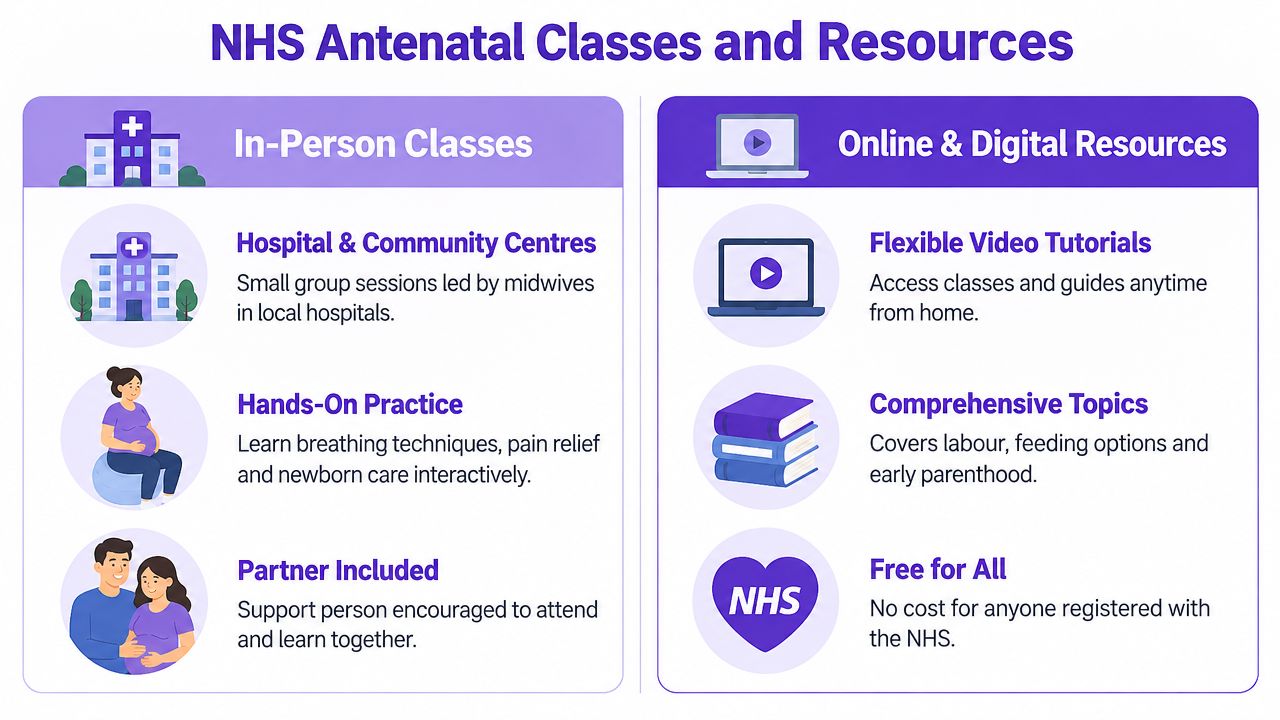
NHS antenatal classes are a strong starting point for families in the United Kingdom because they connect general education with local maternity services. Sessions may take place in hospitals, community centres, or health centres, and they can be led by midwives or other health professionals. Online NHS resources can make the same general guidance easier to access when travel, capacity, or personal circumstances make in-person attendance difficult.
Most NHS antenatal classes start about 8 to 10 weeks before the due date, around 30 to 32 weeks of pregnancy, and usually meet weekly for about 2 hours, according to NHS guidance on antenatal classes. People expecting twins are advised to begin around 24 weeks, since multiples are more likely to arrive early. Those timings make early booking sensible, especially where local classes have limited places.
What works in real use
The best value comes from asking specific questions rather than treating the class as a lecture. Bring your birth partner or support person, take notes on breathing and pain-relief options, and ask how the information applies to your planned place of birth. If English isn't your first language, ask about interpreter support.
NHS education can be less personalized than a private workshop, and local availability varies. A useful companion is this Bornbir birth class guide, especially when you're comparing NHS provision with independent options.
Practical rule: Use the NHS class to understand local procedures, then use another format to practise skills or explore questions that need more time.
2. NHS Bump2Baby Antenatal Booklet and Digital Resources
A booklet and digital companion can turn antenatal education into something you can revisit between appointments. NHS Bump2Baby resources cover pregnancy, labour, birth choices, recovery, infant feeding, and early parenting. Unlike a live class, the material is available at the moment a question appears, whether you're preparing for a midwife appointment or discussing options with your partner at home.
The main advantage is control over pace. Reading everything in one sitting can create information overload, particularly when several choices seem important at once. Instead, work through sections gradually and bookmark the pages that relate to your circumstances. A parent considering different pain-relief options might read that section before an appointment, highlight questions, and use the discussion with the midwife to clarify what's available locally.
A useful shared reference
This format also supports partner involvement without requiring both people to attend every session. Share the sections on labour, feeding, or recovery with the person who'll support you, then discuss what practical help you'd want during and after birth. Translated versions may also help families involve relatives or support people who prefer another language.
The booklet won't respond to a personal medical question, and it can't replace advice from your maternity team. It also may not give the same opportunity for hands-on practice as a class. Treat it as a reliable foundation for informed conversations, not as a complete birth-preparation programme.
3. BabyCentre Antenatal Education Resources
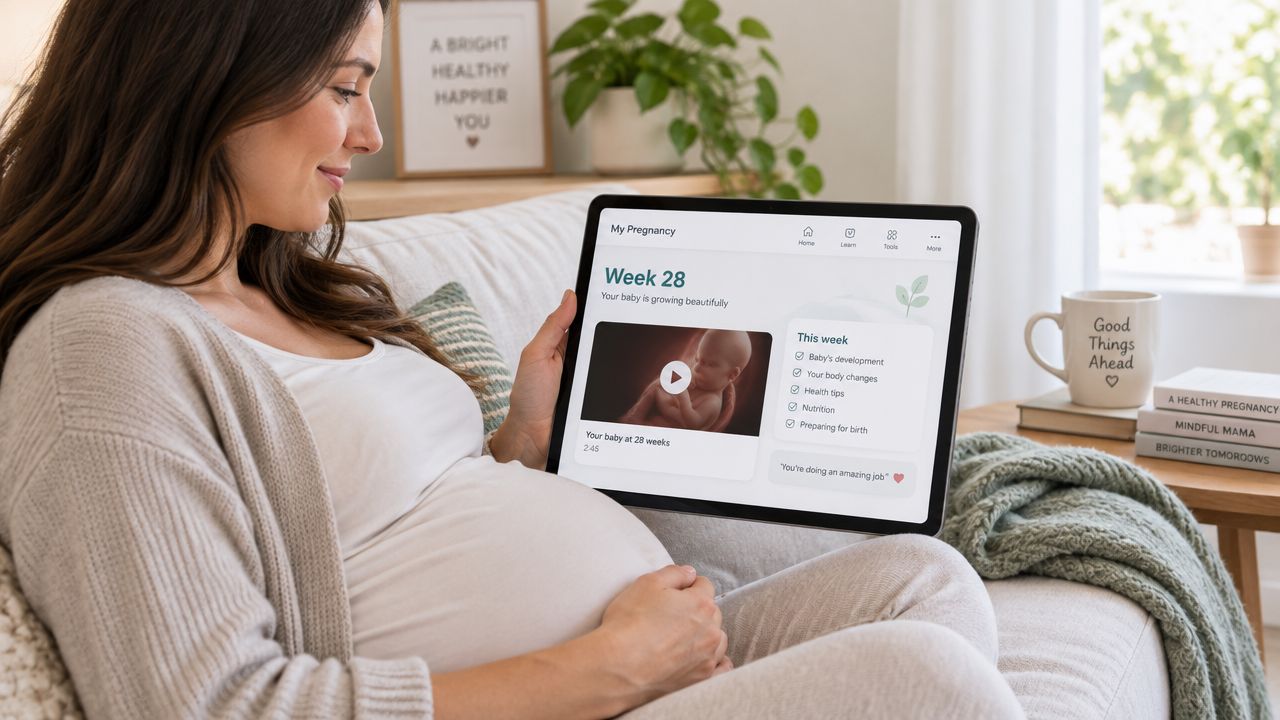
BabyCentre suits parents who prefer short, searchable pieces of information rather than a scheduled course. Its articles, videos, week-by-week pregnancy content, interactive tools, and community discussions cover pregnancy development, labour, feeding, and early parenting. A parent who wants to understand a topic during a lunch break can use it differently from a couple who watches several labour videos together in the evening.
The platform's flexibility is its main strength. You can save useful articles, revisit videos, and use a pregnancy timeline to organize questions for future appointments. For example, someone preparing for labour might watch a demonstration of contraction timing and breathing, then write down what still feels unclear. Someone else might read feeding guidance before birth so the first postpartum conversations feel less rushed.
Where digital convenience needs limits
BabyCentre can support general learning, but it shouldn't be your final authority for symptoms, complications, or treatment choices. Online content may be professionally reviewed, but it still describes general situations rather than your pregnancy. Community threads are especially useful for emotional reassurance and practical peer experience, yet they can mix safe suggestions with advice that doesn't fit everyone.
Peer experience is helpful for showing what daily life can feel like. It isn't a substitute for a midwife, obstetrician, or other qualified clinician assessing your situation.
Use the app to build vocabulary, identify questions, and find relatable experiences. Then cross-check medical decisions with your healthcare team. That approach preserves the convenience of digital learning without treating a community discussion as individualized care.

4. Hypnobirthing Classes and Apps
Hypnobirthing gives families a structured way to practise relaxation, breathing, visualization, self-hypnosis, and mindfulness before labour. It's available through instructor-led classes, online courses, and apps such as Expectful, while providers such as KindBirth and the HypnoBirthing Institute offer teaching through certified instructors in different locations.
This format can work well for people who learn by repetition. Listening to the same relaxation track or practising a breathing pattern regularly may make the technique easier to recall under pressure. A calm space, limited distractions, and a birth partner who understands the cues can make home practice more practical.
Use it as preparation, not a promise
Hypnobirthing is often presented as a way to reduce fear and change how someone experiences pain. The evidence around antenatal education overall is limited, however. A Cochrane review of antenatal education included only nine trials involving 2,284 women and judged the evidence low quality, with the effects of general education still largely unknown. That doesn't make relaxation skills useless. It means educators shouldn't promise a particular labour, intervention pattern, or pain experience.
Practise during the final weeks before birth, include your partner in some sessions, and discuss how the techniques fit alongside medical pain relief. A flexible plan matters because labour can change, and using an epidural, assisted birth, or caesarean birth isn't a failure of the method.
For families seeking practical one-to-one support around this approach, a doula for Hypnobabies birth may be worth comparing with an app or group course.
5. The Bradley Method Classes
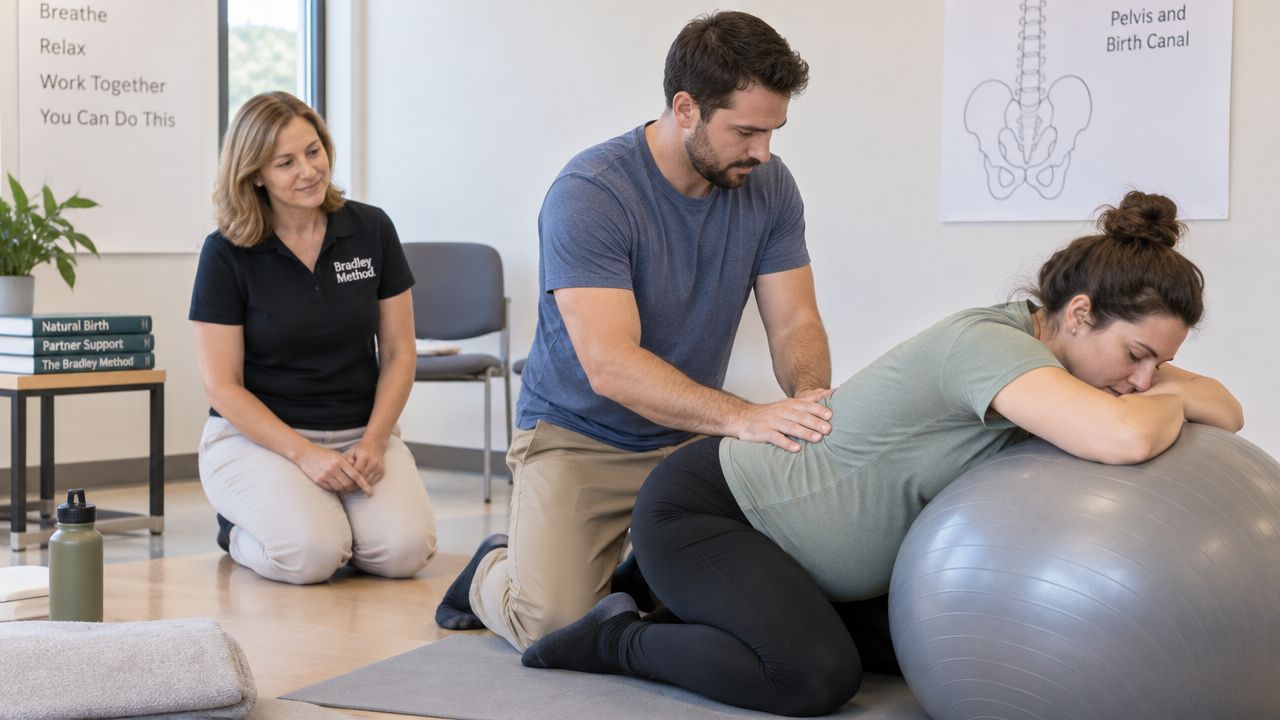
The Bradley Method is a long-form, partner-focused approach to antenatal education. Its 12-week programme covers labour stages, nutrition, exercise, comfort measures, decision-making, and the partner's role as an active coach. That depth is useful for couples who want a clear curriculum and enough time to practise massage, movement, position changes, and communication.
The method's central trade-off is commitment. A partner or support person needs to attend consistently and practise outside class. That can create strong shared preparation, but it's less suitable for families with unpredictable work schedules, limited transport, or no available birth partner.
A method should stay adaptable
Bradley classes often emphasize unmedicated or “natural” birth preparation, but no birth approach should be treated as morally better than another. Ask the instructor how they discuss induction, epidural analgesia, assisted birth, caesarean birth, and unexpected changes. A good class can teach comfort techniques while still respecting medical care and personal choice.
The partner's role should be active, but the pregnant person's preferences and clinical needs remain the centre of the plan.
Before enrolling, ask about the instructor's training, teaching style, and attitude toward interventions. Review the curriculum and consider whether the course spends enough time on postpartum recovery, feeding, and the transition to parenthood. Families comparing structured approaches can browse perinatal education options before committing.
6. Peanut App and In-App Antenatal Community Resources
Peanut is primarily a connection tool. Expectant and new parents can join due-date groups, local communities, interest-based spaces, private chats, and virtual meetups. Its educational content adds context, but the strongest value often comes from finding people who are dealing with a similar stage of pregnancy or early parenthood.
A due-date group can make support feel more immediate than a general online forum. Someone preparing for a first birth might ask how others are organizing hospital bags, while a parent with a rainbow pregnancy may seek a group where the emotional context is better understood. Local connections can also develop into meetups or longer-term friendships.
Connection is not clinical supervision
Community platforms have clear limits. Users may share personal experiences as if they're universal, and moderation can't guarantee that every health-related answer is appropriate. Cross-check advice about symptoms, medication, feeding problems, or birth plans with a qualified professional.
Set up your profile carefully so the groups you join match your interests and circumstances. Use private messaging when a one-to-one conversation feels more useful, but protect personal information and keep reasonable boundaries with people you haven't met. The app works best alongside, rather than instead of, formal antenatal education.
Use peer communities for belonging, questions, and lived experience. Use your healthcare team for assessment and medical decisions.
7. CAPA and Other Broadcast Antenatal Video Series
Broadcast documentaries teach through observation. Series such as Channel 4's One Born Every Minute and BBC pregnancy and birth documentaries show families, labour rooms, procedures, staff communication, and emotional reactions. For visual learners, that can make an unfamiliar setting feel less abstract than written explanations.
Watching with a birth partner can create a shared starting point. Pause after a scene that raises concern, discuss what you noticed, and write down questions for the midwife. You might see a procedure you haven't considered, hear unfamiliar terminology, or recognize an emotion that you'd like to discuss before labour.
Editing changes the learning value
A television programme is made for storytelling, not for balanced clinical teaching. The families shown may not represent every birth choice, and dramatic editing can make rare or intense moments feel more common than they are. Don't use a documentary as your only preparation for pain relief, consent, feeding, or postpartum recovery.
Choose programmes that don't undermine your preferences or increase anxiety without offering context. If a scene leaves you distressed, stop watching and speak with someone you trust or your healthcare professional. Video can build emotional familiarity and prompt useful conversations, but it can't explain how your own maternity unit works.
8. Independent Midwife and Doula Antenatal Workshops
Independent midwives and doulas can offer the personalization that large public classes and digital platforms often can't. A workshop may focus on birth planning, partner support, pain coping, hypnobirthing, positive birth narratives, culturally informed care, feeding, or the early postpartum period. Formats range from a short one-to-one session to a small-group programme.
This option suits families with a specific concern or a clear need for a focused discussion. A parent planning a caesarean birth may want a session focused on recovery and feeding rather than generic labour preparation. Another family may want a doula to rehearse positions, communication, and practical partner support.
Check scope before booking
Personal support doesn't remove the need to verify qualifications. Ask about training, experience, insurance, indemnity coverage, references, cost, cancellation terms, and what the session includes. Confirm whether the practitioner provides education only or also offers labour and postpartum support.
Small groups can encourage questions and social connection. One-to-one work can be more private and specific, but it may cost more and depends heavily on the practitioner's approach. Ireland's National Standards for Antenatal Education resource guide recommends smaller groups to improve interaction, allow questions, and support social networks. It also says people in subsequent pregnancies should still be encouraged to attend refresher classes.
For help finding local options, consider vetted doula matching for new families, then check the provider's credentials and fit yourself.
9. Bornbir for Local Antenatal Support Providers
Bornbir can help families move from general education to local or virtual support. You can describe your location, timing, birth plans, and practical needs, then compare independent providers by services, availability, pricing, credentials, and reviews. The platform includes doulas, midwives, lactation consultants, night nannies, and sleep coaches, so it can support planning beyond the birth class itself.
A family might use it to compare doulas for birth preparation, find a virtual midwife for a focused question, or arrange feeding and overnight postpartum support before the baby arrives. Bornbir also lists childbirth education classes and events, including online prenatal education and provider profiles that advertise antenatal and postnatal sessions.
Compare the service, not just the profile
A provider's listing is a starting point, not a substitute for due diligence. Ask what education is included, what falls outside the provider's scope, whether support is in person or virtual, and how communication works between sessions. Verify licensure where relevant, insurance, references, availability, and whether the practitioner's approach fits your preferences.
Secure messaging can help clarify expectations before booking. Families looking specifically for clinical support can explore the midwife matching service, while remembering that listed professionals are independent and should be assessed individually.
Antenatal Education: 9-Resource Comparison
| Resource | Core features | Experience & quality (★) | Price & value (💰) | Target audience (👥) | Unique selling points (✨) |
|---|---|---|---|---|---|
| NHS Antenatal Classes and Resources | In‑person & online midwife‑led classes; group & 1:1; labour, feeding, newborn care | ★★★★ clinical-led; variable personalization | 💰 Free; scheduling constraints | 👥 All pregnant people registered with NHS; partners welcome | ✨ Free, evidence‑based, integrated with maternity care |
| NHS Bump2Baby Antenatal Booklet and Digital Resources | Printed booklet + searchable digital guide; NICE‑aligned; decision trees | ★★★★ authoritative; information‑dense | 💰 Free; comprehensive reference | 👥 Expectant parents seeking evidence‑based guidance | ✨ NICE‑aligned, multilingual, decision‑making tools |
| BabyCentre Antenatal Education Resources | Articles, videos, week‑by‑week guides, calculators, forums, premium tier | ★★★★ accessible; vast content; community varies | 💰 Free core; optional subscription | 👥 Digitally active parents wanting flexible learning & peer support | ✨ Personalized timeline, expert Q&A, large community |
| Hypnobirthing Classes and Apps | Surge breathing, guided visualisations, MP3s/apps, partner modules | ★★★ effectiveness depends on practice | 💰 Varies, apps low cost; certified courses £300–600+ | 👥 Parents seeking anxiety reduction & non‑pharmacologic coping | ✨ Deep relaxation tools + partner coaching; portable practice |
| The Bradley Method Classes | 12‑week structured curriculum; partner as birth coach; nutrition/exercise | ★★★★ thorough; time‑intensive | 💰 Typically £300–500+; high time commitment | 👥 Couples committed to natural birth & partner‑led coaching | ✨ Intensive partner training, comprehensive 12‑week course |
| Peanut App and In‑App Antenatal Community Resources | Location‑based groups, moderated forums, expert content, meetups | ★★★ community strength varies by area | 💰 Free core; premium optional | 👥 Parents seeking local peer connection & social support | ✨ Real‑time local networks, moderated safety, events |
| CAPA (Channel 4) & Broadcast Antenatal Video Series | Documentary‑style birth stories, expert commentary, visual learning | ★★★ engaging; emotional realism may trigger anxiety | 💰 Often free or on streaming; high production value | 👥 Visual learners wanting real‑life perspectives | ✨ High‑quality, authentic storytelling for emotional prep |
| Independent Midwife & Doula Antenatal Workshops | Small‑group or 1:1 tailored sessions; flexible scheduling; follow‑up support | ★★★★ highly personalized; provider quality varies | 💰 £50–300+ per session; variable value | 👥 Families wanting bespoke, culturally‑informed care | ✨ Personalized, relationship‑based support; flexible timing |
| Bornbir for Local Antenatal Support Providers | Matches to doulas, midwives, lactation consultants; compare services, availability, pricing, reviews; secure messaging | ★★★★★ vetted profiles + real reviews; searchable | 💰 Free to browse; provider prices vary; saves time & money | 👥 Expecting & new parents seeking tailored local or virtual support | ✨ 🏆 Matches to 6,000+ vetted providers; side‑by‑side comparison, secure messaging & location‑specific options |
Build a Resource Mix You Can Use
The most useful antenatal education plan usually combines formats instead of asking one resource to do everything. Start with a free professional or official resource, such as local NHS classes or an NHS booklet, to learn the basic pathways, terminology, and available choices. Then add a structured class, app, or self-paced method that gives you time to practise breathing, movement, relaxation, partner support, or decision-making.
Access remains uneven, so availability shouldn't be treated as a personal failure. In a recent NHS patient survey cited in a 2025 review of antenatal education, fewer than 30% of women said they were offered NHS antenatal classes or courses, 29% weren't offered any classes, and 41% were offered classes but chose not to attend. Attendance also varies across countries, with the same review reporting 84% attendance among first-time mothers in Australia and about 33% in Canada. These figures describe different systems and populations, so they aren't a reason to rank one family's choices over another's.
Structured education can be worthwhile when it's focused on practical needs. One randomized multicenter trial reported higher satisfaction with structured antenatal education than standard care. Women's overall satisfaction was 76% versus 68%, and men's was 73% versus 65%. For childbirth preparation, satisfaction was 78% versus 62% for women and 79% versus 67% for men, as reported in the trial record. The lesson is less about choosing a named method and more about finding education that gives both parents useful skills and a chance to ask questions.
Pain deserves its own place in your resource mix. A 2026 scoping review of pain content in antenatal programmes found that guidance on labour pain, postpartum pain, and pain-management approaches remains limited and inconsistent. Look for resources that explain pain mechanisms, coping options, medical relief, recovery after birth, and when to seek help. Mindfulness or relaxation can sit alongside medical care, not replace it.
Use peer communities and video for perspective, emotional preparation, and everyday questions. Don't treat personal stories or edited programmes as clinical guidance. Finally, seek an independent midwife, doula, or other vetted professional when you need specific preparation, accessibility support, partner coaching, or help with a specific concern.
Before booking anything, compare format, cost, location, timing, credentials, privacy, and scope. Share your questions with your healthcare team, especially if you have a medical condition, a multiple pregnancy, a planned intervention, or concerns about pain, feeding, mental health, or recovery. The right combination is the one you can access, understand, practise, and adapt when birth doesn't follow the original plan.
Bornbir helps expecting and new parents compare vetted independent doulas, midwives, lactation consultants, and other perinatal support providers for in-person or virtual care. Share your needs, review services and availability, and message matched professionals securely by visiting Bornbir.