
The first step in dealing with postpartum anxiety is simply acknowledging that what you're feeling is more than just "new parent nerves." It's giving yourself permission to get help. The best approach combines immediate coping skills, like grounding exercises for those intense moments, with long-term strategies like therapy and building a solid support system. This way, you can manage the day-to-day overwhelm while laying the groundwork for a real recovery.
Understanding Postpartum Anxiety and Its Symptoms
If you feel like you're stuck in a constant loop of worry, you are absolutely not alone. Postpartum anxiety is a very real, very common complication after childbirth, and it says nothing about your ability as a parent. It can feel like an internal alarm that just won’t turn off, turning what should be a special time into a period of dread and fear.
Think about it this way: a new mom checks on her sleeping baby for the tenth time in an hour. Each time, her heart pounds as she leans over the crib, completely convinced something is wrong. Even when she sees the baby is perfectly fine, the relief is gone in a second, replaced by a fresh wave of "what if" scenarios. This isn't just being cautious; it's a sign that postpartum anxiety is taking over.
Distinguishing PPA from Other Postpartum Experiences
It’s crucial to know how postpartum anxiety stands apart from other common experiences. The "baby blues," for instance, usually involves mood swings and tearfulness that go away within two weeks of giving birth. Postpartum depression, on the other hand, often brings on a deep sadness and a lack of interest in the baby or daily activities.
Postpartum anxiety is a different beast, marked by its own set of challenges:
- Constant Worry: A relentless feeling of dread, often laser-focused on the baby's health and safety.
- Racing Thoughts: Your mind just won't shut off, especially when you're desperate for sleep.
- Physical Symptoms: A racing heart, shortness of breath, dizziness, or a perpetually upset stomach.
- Intrusive Thoughts: Unwanted, disturbing thoughts or mental images that can be deeply frightening.
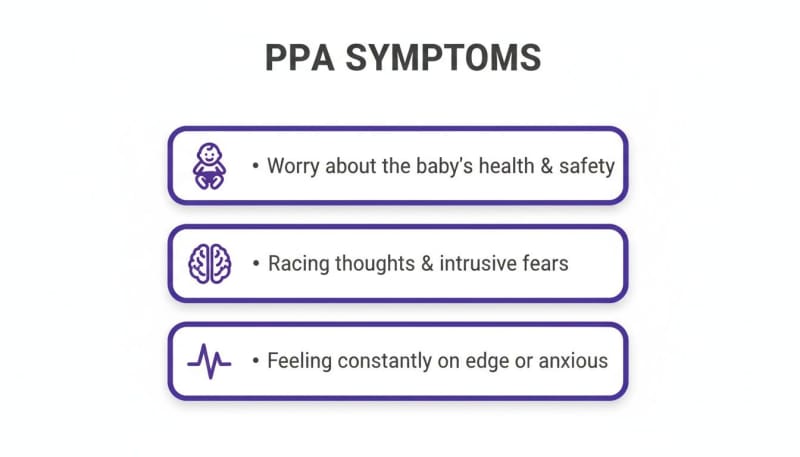
This kind of visual breakdown really helps show how the condition shows up both mentally and physically. It’s so much more than just emotional distress.
To help you see the difference more clearly, here’s a quick comparison.
Postpartum Anxiety Symptoms vs Normal New Parent Worries
| Symptom Area | Normal New Parent Worry | Potential Postpartum Anxiety |
|---|---|---|
| Worry About Baby | Checking on the baby a few times a night; concern about milestones. | Constant, obsessive checking; fixating on worst-case scenarios (SIDS, illness) that disrupt your daily life. |
| Thoughts | Occasional "what if" thoughts that are easily dismissed. | Racing thoughts you can't control; scary, intrusive images about harm coming to the baby. |
| Physical Feelings | Feeling tired, a bit jittery from caffeine or lack of sleep. | Persistent racing heart, dizziness, nausea, shortness of breath, or panic attacks. |
| Sleep | Difficulty sleeping because the baby is awake or you're listening for them. | Inability to sleep even when the baby is sleeping soundly because your mind won't shut off. |
| Daily Function | Feeling overwhelmed but still able to manage daily tasks. | The anxiety is so intense it's hard to eat, leave the house, or care for yourself or the baby. |
Seeing the symptoms laid out like this can be an "aha" moment for many parents, helping them realize that what they're experiencing is a legitimate health issue, not a personal failure.
Normalizing the Struggle
Postpartum anxiety affects up to 17% of new mothers in the U.S., making it a silent struggle that often goes unnoticed next to postpartum depression. Even more shocking, around 50% of mothers with postpartum depression are never diagnosed by a health professional.
This statistic underscores just how critical it is to raise awareness, especially since anxiety and depression often show up together, making the emotional load even heavier.
The experience is often fueled by a perfect storm of hormonal shifts, severe sleep deprivation, and the immense pressure of caring for a newborn. It’s a physiological response, not a personal failing.
Just understanding this can be the first step toward releasing any guilt or shame you might be feeling. For those trying to untangle their feelings, learning about related conditions can also provide clarity. While different, understanding the difference between ADHD and anxiety can help clarify what's happening. Similarly, being able to spot the warning signs of postpartum depression is also key. You can learn more about those in our detailed guide: https://www.bornbir.com/blog/postpartum-depression-warning-signs.
Actionable Coping Skills for Immediate Relief
When a wave of anxiety hits, especially with a newborn in your arms, you don't have time to wait for an appointment. You need something that works right now. Think of these skills as mental health first aid. They are practical, immediate ways to get relief when your thoughts start to spiral.
They won't make the anxiety vanish forever, but they can pull you back into the present moment, which is an incredibly powerful way to regain a sense of control when you feel like you have none. The goal is simple: interrupt the anxiety cycle before it completely takes over. You can do these anywhere, whether you're up for a 3 a.m. feeding or feeling overwhelmed in the grocery store checkout line.
Ground Yourself With Your Senses
One of the quickest ways to quiet a racing mind is to pull your focus out of your head and into the physical world around you. The 5-4-3-2-1 method is a classic grounding exercise for a reason. It’s simple and it works. It just uses your five senses to bring you back to the here and now.
- 5 Things You Can See. Look around and actually name five objects. Notice their color and shape. "I see the blue baby blanket... the white noise machine... the curve of the rocking chair."
- 4 Things You Can Touch. Focus on the physical sensation of four things. It could be the soft fabric of your shirt, the cool glass of water on the nightstand, or the comforting weight of your baby in your arms.
- 3 Things You Can Hear. Listen carefully. What are three distinct sounds? Maybe it's the hum of the refrigerator, the sound of your own breathing, or your baby’s soft coos.
- 2 Things You Can Smell. Take a breath. Notice two different scents in the air, even if they're faint. It could be baby lotion or the clean smell of laundry.
- 1 Thing You Can Taste. What's one thing you can taste? Take a sip of water, pop a mint in your mouth, or even just notice the current taste in your mouth.
This exercise forces your brain to concentrate on the present, making it much harder for those anxious "what if" thoughts to keep their grip.
Postpartum anxiety can feel abstract and overwhelming. Grounding exercises provide a concrete anchor, reminding you that you are physically safe, right here, right now.
Regulate Your Nervous System With Breathing
When you feel anxious, your breathing naturally becomes shallow and quick. That’s a signal to your nervous system that there's danger. The good news is, you can reverse that signal with intentional, deep breathing.
Box breathing is a straightforward technique used by everyone from therapists to Navy SEALs to calm the body's stress response.
- Breathe in slowly through your nose for a count of four.
- Hold your breath for a count of four.
- Exhale slowly through your mouth for a count of four.
- Hold your breath again for a count of four.
Repeat this cycle for just a few minutes, and you'll likely feel your heart rate start to slow down. This rhythmic pattern helps regulate your autonomic nervous system, moving you out of "fight or flight" mode and into a calmer state. For more ideas, exploring how to calm anxiety naturally can offer other evidence-backed techniques for quick relief.
Create a Personal Calm-Down Kit
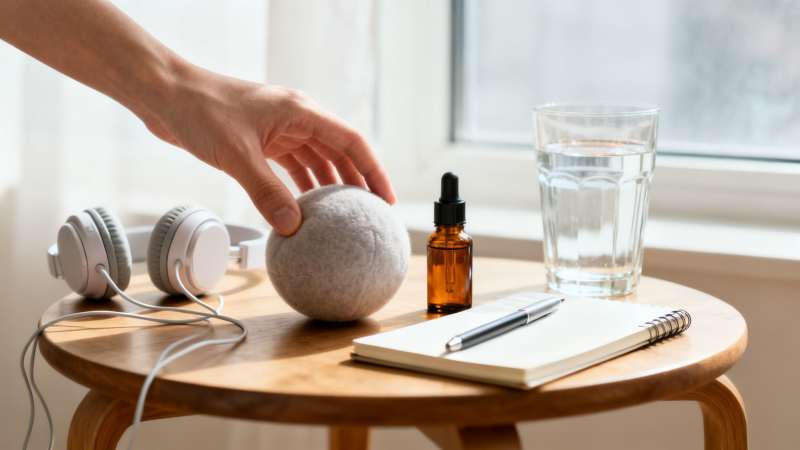
Having a go-to kit of soothing items can be a true lifesaver in a moment of high anxiety. Think of it as your physical toolkit for emotional first aid. The key is to fill it with things that engage your senses in a comforting way.
Here are a few ideas to get you started:
- Scent: A small bottle of lavender essential oil or a sachet of chamomile.
- Touch: A smooth worry stone, a soft piece of velvet, or a stress ball.
- Sound: A dedicated playlist of calming music or a guided meditation saved on your phone.
- Taste: A piece of rich dark chocolate, a strong mint, or a soothing herbal tea bag.
Keep your kit somewhere you can grab it easily, like on your nightstand or tucked into the diaper bag. That way, when you feel overwhelmed, you don’t have to think. You just reach. This kind of proactive step can make a huge difference, especially when sleep deprivation is making everything feel ten times worse. Our guide on how to cope with sleep deprivation offers more tips on that front.
While these coping skills are incredibly useful for in-the-moment relief, it’s important to remember you aren't alone. In high-income countries, the prevalence of perinatal anxiety disorders like GAD and OCD is around 20.7%, with postnatal rates specifically at 13.7%. In some studies across Europe and Central Asia, that number can climb as high as 43.4%, highlighting just how common this is.
How to Build Your Postpartum Support Network
Going through postpartum anxiety alone is an impossibly heavy weight to carry. The good news? You don't have to. Assembling a support network isn't a sign of weakness; it’s one of the most powerful and proactive things you can do to start feeling like yourself again. Think of it as your personal safety net, there to catch you on the hard days and cheer you on during the good ones.
The most effective support systems are layered. They combine the people who know and love you best, like your partner and close friends, with professionals who bring specialized expertise to the table. You're essentially building a team where every single person plays a unique and valuable role in your recovery.
Starting the Conversation with Loved Ones
Telling someone you're struggling might feel like the highest hurdle to clear. It’s so easy to worry about being judged, or worse, being misunderstood. But opening up that door is the first real step toward letting people in. The best approach is often the most direct: be clear about what you're feeling and what you need.
You don't need a perfectly scripted monologue. Just be honest.
Here are a few ways you could start that conversation:
- For your partner: "I've been feeling incredibly anxious lately, and it feels like more than just new-parent stress. My thoughts are racing, and I can't seem to shut them off. Could we sit down tonight, just us, and really talk about it?"
- For a close friend: "I'm having a really tough time with anxiety since the baby came. I feel like I'm on edge all the time. Would you be willing to just listen for a bit? I don't need you to fix anything, it would just help to say it all out loud."
- When you need practical help: "My anxiety is making even simple things feel completely overwhelming right now. It would be a huge relief if you could [take the baby for an hour-long walk / drop off a meal / help me tackle this mountain of laundry]."
Being specific about your needs is a game-changer. It helps your loved ones move from guessing what might help to taking concrete, genuinely useful action.
Finding the Right Professional Help
While the support from friends and family is the heart of your network, professional guidance is often a critical piece of the puzzle. When you seek out someone who specializes in perinatal mental health, you're getting an expert who truly understands the unique challenges of this period. You wouldn’t see a cardiologist for a broken foot, and the same logic applies here.
Several types of professionals can be part of your team:
- Therapists: Look for a licensed therapist (like an LCSW, LPC, LMFT, or Psychologist) who has specific training in perinatal mood and anxiety disorders. Cognitive Behavioral Therapy (CBT) is a highly effective, evidence-based approach for managing anxiety.
- Psychiatrists: These are medical doctors who can prescribe medication if you and your team decide it's a necessary part of your treatment plan. They often work closely with your therapist.
- Postpartum Doulas: These incredible professionals provide hands-on practical and emotional support right in your home after birth. They can help with newborn care, manage light household tasks, and offer a compassionate ear, all of which can drastically reduce the stress that fuels anxiety. Finding the right person is key, so take your time to find a doula near me who feels like a good fit for your family.
- Support Groups: There is immense power in connecting with other parents who get it because they're living it, too. It shatters the sense of isolation that anxiety thrives on. Postpartum Support International (PSI) is a fantastic resource for finding both local and online groups.
Reaching out for professional help is not a last resort. It’s a strategic and smart part of a comprehensive wellness plan. It’s like hiring a skilled guide to help you navigate unfamiliar and difficult terrain.
Creating a Multi-Layered Safety Net
Your support system is strongest when it has multiple layers, because no single person can be your everything. A well-rounded network ensures you have different types of support for different needs, which prevents burnout for everyone, including you.
Think about what each layer provides:
- Your Inner Circle (Partner, Family, Close Friends): This is your emotional core. They provide love, practical day-to-day help, and a vital sense of belonging.
- Professional Care Team (Therapist, Doctor, Doula): This layer offers expert guidance, evidence-based strategies, and a structured path toward recovery.
- Community Connection (Support Groups, Other Parents): This group offers shared experience and validation. They are living proof that you are not alone in this struggle and that recovery is absolutely possible.
Building this team is one of the most important things you can do to manage postpartum anxiety. Each person you invite into your circle adds another layer of strength, turning your journey from one of just enduring to one of true healing.
Developing a Long-Term Wellness Strategy
While those in-the-moment coping skills are your first aid, truly managing postpartum anxiety for the long haul means building a sustainable wellness plan. This isn't just about surviving the newborn haze. It's about creating a solid foundation for your mental health that will support you for years to come.
Think of it as shifting from constantly putting out fires to proactively building a fireproof home for your mind. It’s about creating a personalized roadmap that gets to the root of your anxiety and helps you build resilience, so you feel back in control. Not just for a moment, but for good.
The Role of Therapy in Reshaping Anxious Thoughts
Therapy is an absolute cornerstone for any effective long-term postpartum anxiety plan. It gives you a safe, completely non-judgmental space to untangle that messy web of worries and fears with a professional who gets it. Finding a therapist who specializes in perinatal mental health is key, as they bring strategies specifically designed for this unique, intense life stage.
One of the most powerful tools in their toolkit is Cognitive Behavioral Therapy (CBT). At its core, CBT helps you learn how to identify, challenge, and ultimately reframe the anxious thought patterns that are fueling the fire.
Let's take a common intrusive thought: "What if I accidentally drop the baby?" It’s a thought that can send any new parent into a tailspin. With CBT, you learn to break it down:
- Identify the thought: Simply acknowledge the fear is there, without judging yourself for it.
- Challenge it: "I am always so careful with my baby. This is just an anxious thought, not a prediction of the future."
- Reframe it: "It's completely normal for my brain to be on high alert about the baby's safety. This is my protective instinct, but this particular thought isn't helpful or based in reality."
Practicing this over and over actually helps retrain your brain. Instead of defaulting to panic, you start responding to anxious thoughts with logic and a much-needed dose of self-compassion.
Considering Medication as a Valid Option
For many new moms, medication is a crucial and incredibly effective part of the recovery plan. Let's be clear: there is absolutely no shame in needing medication to help regulate your brain chemistry, especially after the massive hormonal rollercoaster of pregnancy and birth. It can provide the stability you need for therapy and other coping strategies to really sink in and work.
Bringing this up with your doctor can feel intimidating. A simple, direct approach often works best. You could say something like, "I've been struggling with constant anxiety, and I'd like to discuss whether medication might be a helpful option for me right now."
A big worry for many is whether medication is safe while breastfeeding. The good news is that many modern antidepressants, especially SSRIs, are considered low-risk and are often compatible with breastfeeding. Your doctor is the best person to discuss the specific options and help you weigh the benefits and potential risks for your unique situation.
Lifestyle Adjustments That Make a Real Impact
Beyond professional support, simple, consistent lifestyle habits can have a profound effect on your mental well-being. These aren't just "nice-to-haves"; they are powerful, practical tools for managing postpartum anxiety.
Prioritizing Sleep I know, this feels like an impossible ask with a newborn. But we're not aiming for a perfect eight hours. The goal is just to get more consistent, restorative rest wherever you can. Even small improvements make a huge difference. For practical tips on this, check out our detailed guide on navigating the challenges of a newborn sleep schedule by week.
Incorporating Gentle Movement You don't need to sign up for a bootcamp. A simple 15-minute walk outside can do wonders for your state of mind. Movement releases endorphins, helps lower stress hormones, and physically clears your head, giving you a much-needed mental break from the four walls of your home.
Focusing on Supportive Nutrition What you eat directly impacts your mood and energy. Try to focus on whole foods. Things like fruits, veggies, lean proteins, and healthy fats. Keeping your blood sugar stable can help prevent those awful energy crashes that often make anxiety feel ten times worse.
If you're going through this, you are far from alone. Globally, perinatal mental health challenges impact 10% of pregnant women and 13% of those who have recently given birth. Here in the U.S., postpartum anxiety affects around 17% of new mothers. That’s over 629,000 women every single year. You can learn more about these global statistics and the importance of maternal mental health on who.int.
Ultimately, building a long-term wellness strategy is about weaving these elements together. Therapy, medication, and self-care aren't separate choices. They are interconnected parts of a powerful framework for healing and feeling like yourself again.
Practical Ways for Partners to Give Support
It's agonizing to watch someone you love battle postpartum anxiety. Your first instinct might be to try and "fix" it, but that's not really your role. Instead, what your partner needs is a steady, reliable source of support. And that is incredibly powerful. Knowing how to provide real, practical help can make all the difference in their recovery.
This starts by moving past vague offers like, “Let me know if you need anything.” That phrase, while well-intentioned, puts the burden back on the person who is already overwhelmed. The most meaningful support is proactive, specific, and aimed at reducing their mental load. It shows you’re not just willing to help, but you're actively looking for ways to lighten the weight on their shoulders.

Take Ownership of Key Tasks
One of the best things you can do is take things completely off their plate. Don’t ask for permission to handle something; just do it. This proactive approach fights the decision fatigue that so often fuels anxiety.
- Own a "shift" with the baby. Try saying, "I've got the baby from 9 p.m. to 2 a.m. tonight. Go get some uninterrupted sleep." This gives them a real, defined break to truly recharge.
- Manage household chores. Don't just offer to help with the dishes. Take over the entire kitchen routine, or manage all the laundry from start to finish.
- Handle the mental labor. Take charge of scheduling pediatrician appointments, reordering diapers, planning meals for the week, or paying the bills.
These actions do more than just get chores done. They create pockets of quiet in a mind that feels like it’s running a constant, overwhelming monologue.
Practice Active Listening Without Trying to Fix It
When someone opens up about their anxiety, it's natural to want to jump in with solutions. "You just need more sleep," or "Try not to worry so much." While you mean well, these comments can feel dismissive. What they truly need is a safe space to be heard.
Active listening isn't about solving the problem. It's about validating the feeling. Simply saying, "That sounds incredibly hard," or "It makes sense that you feel this way," is far more powerful than any piece of advice.
Your job is to listen with empathy. Let them talk without interruption, and just be present with them in that moment. This simple act builds trust and connection, making them feel less alone in their struggle.
Help Them Connect with Professional Support
Navigating the mental health system is a monumental task when you're already feeling depleted. This is where a partner can be an essential advocate. Offering to research therapists who specialize in perinatal mental health is a huge help.
You can take the lead on making calls, checking insurance coverage, and putting together a short list of potential providers. Presenting a few good options is far less overwhelming than handing over a generic resource list.
When it's time to bring it up, approach the conversation with care. Frame it as a team effort: "We're in this together, and I think getting some expert guidance would be helpful. I found a few people who specialize in this. Can we look at them together?" This makes seeking help feel like a collaborative step toward wellness, not a personal failing. Your support can be the bridge that connects them to the care they need to truly heal.
Frequently Asked Questions About Postpartum Anxiety
When you're navigating postpartum anxiety, questions can pop up faster than you can answer them. Getting clear, straightforward answers makes a world of difference, offering both reassurance and a path forward when you need it most. Let's tackle some of the most common concerns parents face.
My goal here is to give you direct information so you feel more empowered and a lot less alone on this journey. Understanding the specifics helps you know what to expect and what steps to take next.
How Long Does Postpartum Anxiety Last?
This is one of the biggest questions on every parent's mind, and the honest answer is: it really varies. For some, symptoms might start to fade within a few months as hormones level out and sleep (hopefully) improves. For others, it can stick around for a year or even longer without the right support.
But the duration isn't set in stone. The key thing to remember is that with proactive treatment, like therapy, medication, or building a strong support system, you can dramatically shorten its timeline and lessen its grip. It doesn't have to be your new normal.
Can I Have Postpartum Anxiety Without Depression?
Yes, absolutely. While they often show up together, you can definitely experience postpartum anxiety all on its own. Postpartum depression is usually marked by a deep, persistent sadness, feeling numb, or losing interest in things you used to love.
Postpartum anxiety, on the other hand, is all about the relentless worry, racing thoughts, and physical feelings like a pounding heart or shortness of breath. It's entirely possible to feel deeply bonded with your baby and not feel "sad," yet still be completely consumed by fear and panic. Recognizing this difference is so important for getting the right kind of help.
Your experience is valid even if it doesn't fit neatly into the box of postpartum depression. Anxiety has its own unique challenges and deserves its own focused treatment plan.
Will Postpartum Anxiety Go Away on Its Own?
Just waiting for postpartum anxiety to disappear can be a risky game. While very mild cases might get better as life with a newborn settles down, moderate to severe anxiety often needs a real strategy to improve. In fact, leaving it untreated can sometimes make it worse over time.
Think of it like any other health issue. You wouldn't ignore a persistent fever, hoping it will just vanish. Taking action, like talking to your doctor, finding a therapist, or joining a support group, is the most reliable way to start feeling better.
Is It Safe to Take Medication While Breastfeeding?
This is a huge, and completely valid, concern for so many new parents. The good news is that many medications used to treat anxiety, especially certain Selective Serotonin Reuptake Inhibitors (SSRIs), are considered low-risk and are commonly prescribed to breastfeeding mothers.
Ultimately, it’s a personal decision made by weighing the benefits for your mental health against any potential risks. A healthcare provider who specializes in perinatal health is the best person to walk you through the safest options, making sure both you and your baby are cared for. For more on balancing work and your mental health, you can read our guide on how to handle postpartum anxiety and FMLA.
How Is Postpartum Anxiety Different from OCD?
Postpartum anxiety and postpartum obsessive-compulsive disorder (OCD) can feel similar and even overlap, but they are distinct conditions. Postpartum anxiety usually involves a more generalized, "what if" style of worry about a whole range of things related to the baby’s safety and your ability as a parent.
Postpartum OCD is much more specific and involves two key components:
- Obsessions: These are recurring, intrusive, and highly distressing thoughts or mental images, often about something terrible happening to the baby. These thoughts are unwanted and feel out of your control.
- Compulsions: These are repetitive behaviors or mental rituals you do to try to reduce the anxiety caused by the obsessions. This could be constant checking, excessive cleaning, or praying.
For example, a parent with postpartum anxiety might constantly worry if the baby is breathing correctly. A parent with postpartum OCD might have a terrifying, unwanted mental image of accidentally dropping the baby, and then feel compelled to avoid carrying the baby down the stairs altogether. If this sounds like what you're experiencing, it's critical to seek help from a professional trained in perinatal mental health.
Finding the right support is the most important step in your recovery. At Bornbir, we connect parents with a nationwide network of vetted doulas, lactation consultants, and therapists who specialize in the postpartum period. You can easily compare providers, read reviews, and find the perfect match for your family's needs.