
So, you're looking for a lactation consultant. First off, take a deep breath. It's completely normal to feel like you need some extra support, and finding the right person can be a game-changer for your feeding journey.
Your Guide to Finding the Right Lactation Support
Think of this as your road map. My goal is to give you clear, actionable ways to find a qualified professional who really clicks with you and your family. If you're just starting out, it helps to first get a handle on what a lactation consultant does to understand the full scope of support they can offer.
You're definitely not alone in seeking this kind of help. Recent survey data showed that lactation consultants are the number one source of breastfeeding guidance. A full 63% of parents turn to them for support. That was just ahead of internet searches, which came in at 61%. A great lactation consultant is a key partner in your baby's early health, which is so important for everything from boosting your child's immunity to their overall development.
Where to Find a Lactation Consultant at a Glance
To help you figure out where to even begin your search, here’s a quick rundown of the most common places to find lactation support. Each channel has its pros and cons, so it’s all about what works best for your situation.
| Search Channel | Best For | Potential Downside |
|---|---|---|
| Hospital or Birth Center | Immediate, convenient support right after you give birth. | Often has limited availability for follow-up care. |
| Pediatrician or OB-GYN | Trusted referrals from a healthcare provider who already knows you. | The office may only have one or two go-to options. |
| IBCLC Directories | Searching for certified professionals with specific credentials. | Can feel overwhelming to sift through so many profiles. |
| Community Groups | Personal recommendations from other parents in your area. | Advice is based on personal experience, not professional vetting. |
| Care Marketplaces | Comparing multiple providers, reviews, and prices all in one place. | Requires you to do your own outreach and vetting. |
Hopefully, this table gives you a clear starting point. The goal here is to feel empowered, not more stressed. By knowing where to look, you can find someone who truly understands your goals and gives you the guidance you need to feel confident in your feeding journey.
Where to Actually Look for a Qualified Consultant
Knowing you need help is one thing. Figuring out where to find a lactation consultant can feel like another mountain to climb when you're already exhausted. The good news is, there are several reliable places to start your search. You just need to know where to look.
One of the easiest first steps is to check with the very hospital or birth center where you delivered. They often have lactation consultants on staff who can see you right after birth. This is incredibly convenient when you're still recovering and need support, stat.
Ask Your Trusted Healthcare Providers
Your pediatrician or OB-GYN is another fantastic resource. They already know you and your baby's health history and can often refer you to a consultant they personally trust. This can feel much more reassuring than just picking a name from a long list.
Don't underestimate the power of community, either. Word-of-mouth recommendations can be a goldmine.
- La Leche League: These are peer-led support groups run by experienced parents. While they aren't medical professionals, they offer invaluable practical advice and usually know the best local consultants.
- Local Parenting Groups: Check Facebook or other community forums for parenting groups in your area. Asking for personal recommendations here gives you unfiltered, honest feedback from other parents who have been exactly where you are now.
This simple flowchart can help you decide whether to start with a medical referral or jump straight into an online search.
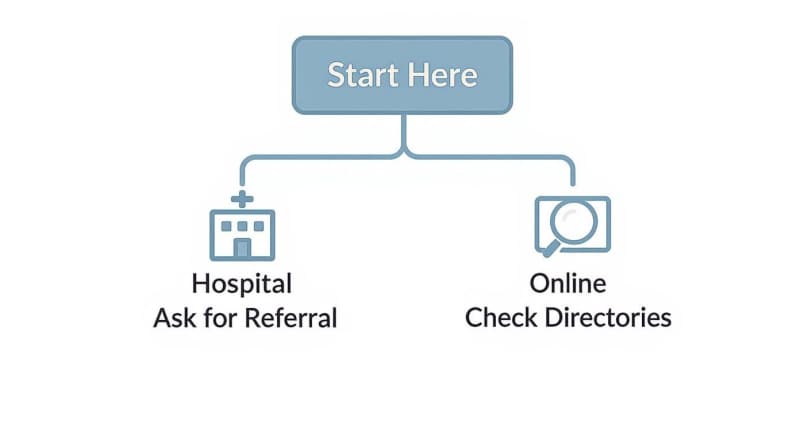
Ultimately, the best path depends on what you value more. The convenience of a direct referral or the wider range of options you'll find online.
Using Digital Tools to Your Advantage
If you'd rather do your own research, the internet has some powerful tools. Professional directories are a solid place to find certified experts. The International Lactation Consultant Association (ILCA), for instance, has a directory that lets you search specifically for International Board Certified Lactation Consultants (IBCLCs), the gold standard in lactation care.
A more modern approach that blends the best of both worlds is using a caregiver marketplace. These platforms let you compare multiple providers at once, saving you a ton of time. You can view their profiles, read reviews from other parents, and check availability and pricing all in one spot.
Platforms like Bornbir, for example, are designed to connect you directly with vetted professionals. You can filter your search based on your specific needs, whether you want someone in your neighborhood for an in-person visit or a virtual consultant you can talk to right away. Understanding the different types of providers is a key first step, so it helps to know what to look for when you find a lactation consultant or lactation counselor.
By combining referrals from people you trust with the smart search tools available online, you can narrow down your options and find a qualified professional who feels like the perfect fit for your family. The goal is to find someone you're comfortable with, so take your time and explore all the avenues available to you.
Understanding Credentials and Finding the Right Fit
Not all lactation support is the same, and knowing who you're hiring is a huge first step. As you start looking, you'll probably see a few different acronyms floating around. The one you really want to keep an eye out for is IBCLC, which stands for International Board Certified Lactation Consultant.
Think of this credential as the gold standard in lactation care. An IBCLC has gone through intense training, logged thousands of hours of direct, hands-on clinical experience, and passed a rigorous international exam. They are true healthcare professionals equipped to handle everything from straightforward questions to complex feeding challenges.
Other certifications, like a Certified Lactation Counselor (CLC), are definitely valuable, but the clinical requirements are typically less extensive. We break down the differences in our guide on CLC or IBCLC if you want to dive deeper.

Virtual vs. In-Person Consultations
Beyond credentials, you’ll need to figure out what kind of visit makes the most sense for you and your family. Both virtual and in-person consultations have real pros, and the best choice often comes down to your specific needs and what you're comfortable with.
An in-person visit is fantastic for hands-on support. There's nothing quite like having an expert physically guide you and your baby into a comfortable latch. They can also do a weighted feed (weighing the baby before and after eating) to see exactly how much milk is being transferred and can properly assess for physical issues like a tongue-tie. That direct, in-person reassurance can be a game-changer.
On the flip side, virtual sessions offer amazing convenience and speed. You can often snag an appointment much faster. This is a total lifesaver when you're facing a stressful issue at 3 a.m. and just need help now. They are perfect for follow-ups, help with creating a pumping plan, or getting advice on concerns that don't need a physical exam.
Finding a good fit isn't just about credentials or the type of visit. It's also about personality. You need someone whose communication style and feeding philosophy align with yours. This person will be supporting you during a vulnerable time, so feeling comfortable and respected is non-negotiable.
Finding a Match for Your Philosophy
Take a moment to think about what you really want in a provider. Are you looking for someone who is strictly evidence-based, or do you prefer a more holistic approach? Do you need a cheerleader, a direct problem-solver, or a gentle guide? Reading reviews from other parents is a great way to get a feel for a consultant's style.
The number of lactation consultants is growing, but getting access isn't always easy. There are about 38,154 IBCLCs worldwide, with roughly 19,000 of them practicing in the United States.
Even with those numbers, availability can be really spotty depending on where you live. This makes finding local, in-person help a real challenge for some families and is a big reason why virtual consultations have become such a vital option for so many parents. You can learn more about global lactation support access on pmc.ncbi.nlm.nih.gov.
Navigating Costs and Insurance Coverage
Worrying about how to pay for care is the last thing you need on your plate. The good news? Thanks to the Affordable Care Act (ACA), many health insurance plans are required to cover lactation services. The tricky part is figuring out exactly what your specific plan offers.
The price tag for a private consultation can swing quite a bit depending on where you live, the consultant's experience, and whether you meet in-person or virtually. An initial in-home visit might run anywhere from $150 to over $400, while virtual sessions or follow-ups are usually more budget-friendly.
Figuring Out Your Insurance Benefits
Before you book anything, your first move should be to call your insurance provider. You can find the number right on the back of your insurance card. When you get someone on the line, having a few specific questions ready will help you get clear, straight answers.
Here’s a quick script of what to ask your insurance company:
- Is lactation support a covered benefit under my plan? This is the big one. Start here.
- Will I need a referral from my pediatrician or OB-GYN? Some plans require this paperwork before they’ll approve coverage.
- How many visits are covered? You might get just one, or you could be covered for multiple follow-ups. It’s important to know the limit.
- Do I have to use an in-network provider? If the answer is yes, ask them to send you a list of covered IBCLCs in your area.
Getting these details sorted out ahead of time can save you from the headache of a surprise bill later. If your plan covers out-of-network providers, you'll likely have to pay upfront and submit a special receipt, known as a superbill, to get reimbursed.
What to Do if Insurance is a Hurdle
If you find out your insurance won’t cover the full cost, don't panic. You still have plenty of options. Many parents use tax-advantaged health accounts to handle the expense. If you want to learn more, check out our guide on whether your HSA can cover lactation consultants.
Beyond that, many hospitals and birth centers offer free or low-cost breastfeeding support groups and clinics. These are fantastic resources for troubleshooting common issues and, just as importantly, connecting with other new parents who get what you're going through.
You can also look into community-based organizations like WIC (Women, Infants, and Children) or La Leche League, which provide free peer support and can point you toward professional help. No matter your budget, there are paths to getting the guidance you and your baby deserve.
How to Prepare for Your Consultation
A successful visit with a lactation consultant starts long before they walk through your door or appear on your screen. Getting organized beforehand helps you make the most of your time together.
Being ready ensures you don’t forget any pressing questions and gives the consultant the full picture of what’s happening. A little prep work goes a long way.
If you’re just starting your journey, you can also explore our guide on how to prepare for breastfeeding, which covers the essentials before your baby even arrives.

What to Do Before Your Visit
Once you've booked your appointment, a few simple steps will set you up for success. Don't stress about this part, it’s just about gathering some useful data.
For a day or two leading up to the consultation, keep a simple log. Note down:
- Feeding times and duration. How long does your baby nurse on each side?
- Diaper output. Track the number of wet and dirty diapers your baby has.
- Your observations. Jot down when your baby seems fussy, content, or sleepy at the breast.
This information is like a snapshot of your current situation, giving your consultant valuable clues right from the start.
What to Have Ready on the Day
On the day of the visit, try to have a few things handy so you're not searching for them mid-conversation.
First, make sure your baby is hungry and ready for a feed. The consultant will almost always want to observe a full feeding session from start to finish.
Next, gather any feeding tools you regularly use.
- Your breast pump. Have all the parts clean and assembled, just in case.
- Any nipple shields, bottles, or supplemental feeding systems.
- Pillows or cushions. Grab whatever you normally use to get comfortable.
The most important thing to have ready is your list of questions. In the moment, with a crying baby and a new person in your space, it’s so easy to forget what you wanted to ask. Writing everything down ensures all your concerns get addressed.
During the consultation, expect the consultant to take a detailed health history for both you and your baby. They will likely observe a feeding, gently check the baby's mouth for things like a tongue-tie, and may perform a weighted feed to measure milk intake.
This whole process is collaborative. It's about finding what works for your body, your baby, and your goals. Feeling prepared can help ease any anxiety, allowing you to be present and confident during the visit.
What to Expect After Your First Visit
The support shouldn't stop the moment your consultant walks out the door. A good visit always ends with a clear, written care plan. Think of this as your personalized roadmap. It'll have everything from latching adjustments to pumping schedules. Following it closely is your best bet for seeing real progress.
Your consultant will also want you to keep track of how things are going. A simple log of feedings, wet and dirty diapers, and even just how you are feeling is incredibly valuable. This isn't just busywork. It's the data that helps you both see what’s working and what needs tweaking.
Knowing When to Follow Up
It's completely normal to need more than one visit. Babies and bodies change, and sometimes new challenges pop up just as you've figured out the old ones.
Plan to schedule a follow-up if you feel stuck, if a new issue arises (like a sudden drop in supply or nipple pain), or if the plan just isn't giving you the results you hoped for. So many families need ongoing support, and that's okay. Globally, only about 48% of babies are exclusively breastfed for the first six months, and the rate is even lower in the U.S. This isn't a reflection on parents. It's a sign that continued guidance is often necessary. You can dive deeper into the data on global breastfeeding rates on the ILCA's website.
Sometimes, the first consultant you see isn't the right fit. And that is perfectly okay. Trust your gut. If the advice feels off, overly rigid, or like your own concerns are being brushed aside, you have every right to seek a second opinion.
Feeling pressured, judged, or unsupported is a major red flag. This is your personal journey. The right professional will empower you with options and respect your goals, not dictate a one-size-fits-all approach. You should walk away from every interaction feeling confident and in control.
A Few Common Questions About Finding Support
Getting into the world of lactation support can feel like learning a new language. You've got questions, and you need clear, straightforward answers to feel confident in your next steps. Let's break down a few of the most common things parents ask when they start looking for a lactation consultant.
When Is the Best Time to Look for Help?
Ideally, start looking during your third trimester. This gives you a little breathing room to research your options, figure out your insurance situation, and maybe even book a prenatal consultation. Having an expert you trust on speed dial before the baby arrives is a huge weight off your shoulders.
But life happens. If you're reading this with a newborn in your arms, don't panic. It is never too late. You can find a lactation consultant at any point, whether it's day one or month six. The right time is simply whenever you feel you need a hand.
Understanding Key Credentials
You'll probably see a few different acronyms floating around. What do they actually mean?
- IBCLC (International Board Certified Lactation Consultant): This is the gold standard in lactation care. To earn this title, consultants have to go through extensive education, log thousands of hours of supervised clinical practice, and pass a tough international exam.
- CLC (Certified Lactation Counselor): This is another great credential indicating specialized training. CLCs are incredibly helpful, but their clinical requirements are generally not as extensive as an IBCLC's.
For more complex issues like tongue ties, medical complications, or significant supply challenges, an IBCLC is usually the best choice. Their advanced training gives them the tools to navigate a wider and more complicated range of feeding problems.
A quick note on visits. There's no magic number. Some families feel totally set after one solid meeting, while others prefer a few follow-ups to track progress and fine-tune their plan. Your consultant will give you a sense of what to expect.
For example, a simple latch adjustment might only take one visit to solve. But if you're dealing with something more persistent, like slow weight gain or low milk supply, a few check-ins are often a good idea. A good consultant will be upfront about their recommendations after your first meeting so you know exactly what the path forward looks like.
Finding the right support shouldn't add more stress to your plate. On Bornbir, you can easily compare vetted lactation consultants, read reviews from real parents, and find someone who fits your family’s unique needs and budget. Get matched with trusted lactation support today.