
A midwife who attends a home birth is a skilled professional who specializes in supporting families through childbirth outside of a hospital. These dedicated providers offer deeply personalized, continuous care throughout your entire journey. Pregnancy, labor, and postpartum, all within the familiar comfort of your own home.
The Role Of A Home Birth Midwife
When you picture a home birth, you probably imagine a serene, calm setting. The person guiding that experience, besides you and your baby, is the midwife. A midwife is so much more than just a healthcare provider; they are a guide, an advocate, and a steady source of support.
Think of it this way: choosing a provider for your birth is a bit like commissioning a custom piece of furniture. You could go to a huge factory that churns out thousands of identical pieces on an assembly line. Or, you could partner with a skilled artisan who works with you from the initial sketch to the final polish, understanding your vision and creating something truly unique.
Midwives who attend home births are the artisans of the birth world. They build a close, trusting relationship with you, centered on shared decision-making.
Different Paths To Midwifery
Not all midwives have the same background, and understanding their credentials is a crucial first step. The two most common types of midwives you'll encounter for a home birth in the United States are Certified Nurse-Midwives (CNMs) and Certified Professional Midwives (CPMs). Each has a distinct training path and scope of practice.
- Certified Nurse-Midwives (CNMs): These professionals begin as registered nurses and then go on to complete a graduate-level midwifery program. Thanks to their nursing foundation, they are licensed to practice in all 50 states and often work in hospitals and birth centers as well as homes. They can also prescribe certain medications.
- Certified Professional Midwives (CPMs): These midwives are true specialists in out-of-hospital birth. Their entire training is laser-focused on pregnancy and childbirth in home and birth center settings. They earn their credential through coursework and a hands-on apprenticeship, but their legal status to practice varies by state.
The choice between a CNM and a CPM often boils down to your state's regulations and what you're looking for in your care. Both are highly skilled professionals dedicated to safe, out-of-hospital birth for low-risk pregnancies. For a deeper dive into their qualifications, you can learn more about the differences between a Certified Nurse-Midwife vs. a Certified Professional Midwife in our detailed guide.
To make it even clearer, here's a quick comparison of the most common midwifery credentials you'll see in the U.S. This can help you understand the key differences in their training, authority, and where they typically practice.
Comparing Common Types Of Home Birth Midwives
| Credential Type | Primary Training Path | Prescriptive Authority | Common Practice Setting |
|---|---|---|---|
| Certified Nurse-Midwife (CNM) | Nursing degree + Master's in Midwifery | Yes, in all states | Hospitals, Birth Centers, Homes |
| Certified Professional Midwife (CPM) | Apprenticeship & Midwifery-specific education | Varies by state | Homes, Birth Centers |
Ultimately, whether you choose a CNM or a CPM, you're choosing a provider who is an expert in supporting physiological birth in a low-intervention setting.
What A Midwife Actually Does
A midwife's role goes far beyond just "catching the baby." Their care is a continuous relationship that starts long before labor and extends well into the postpartum period. They become your primary point of contact for everything related to your pregnancy.
Prenatal appointments with a midwife feel different. They're often longer and more personal than typical OB visits. They cover all the essential clinical checks, like monitoring your blood pressure and listening to the baby's heartbeat. But they also carve out plenty of time to talk about your emotional well-being, nutrition, and what you want for your birth. This holistic approach ensures you feel truly prepared and supported.
The heart of midwifery care is the belief that birth is a normal, natural process. Midwives are experts in normal birth, trained to protect that process while also being skilled at recognizing when things are deviating from the norm.
During labor, your midwife is right there with you, providing continuous, hands-on support. They monitor you and your baby's health, suggest comfort measures and position changes, and help maintain a calm, reassuring atmosphere. They also bring all the essential medical equipment for safety, including oxygen, medications to control bleeding, and infant resuscitation tools. Their presence is both a comfort and a safeguard, ensuring a safe passage for you and your baby.
Is a Home Birth With a Midwife the Right Choice For You?
Choosing where to have your baby is one of the most personal decisions you'll make. For a growing number of families, the idea of a home birth guided by a midwife just feels right, but it's crucial to know if it's the right fit for your specific situation. Midwives who attend home births are experts in what’s called a low-risk pregnancy.
So, what exactly does “low-risk” mean? It’s not a judgment call. It's a clinical assessment to ensure the highest level of safety for you and your baby outside of a hospital. Think of it like a pilot's pre-flight check. Before taking off, they confirm every system is normal to ensure the planned route is the safest one.
A midwife uses a similar checklist, making sure a home birth is a safe and appropriate path for your birthing journey.
Defining a Low-Risk Pregnancy
While every midwife will have their own detailed criteria, the general green lights for a planned home birth are pretty consistent across the board. These are the factors that signal you're a strong candidate.
Here’s what that typically looks like:
- Good Overall Health. You don’t have any major pre-existing health issues like uncontrolled high blood pressure, diabetes, or heart conditions.
- A Single Baby. You're pregnant with one baby, not twins, triplets, or more.
- Head-Down Position. As your due date gets closer, your baby is settled in the ideal head-down (vertex) position for birth.
- Full-Term Pregnancy. Labor begins sometime between 37 and 42 weeks of pregnancy.
These factors create a predictable, straightforward path for labor. Exactly the kind of environment where the midwifery model of care truly shines. This focus on safety is the bedrock of responsible home birth practice.
A planned home birth isn't about avoiding medical care. It's about choosing a different type of expert care for a normal, physiological process, with a clear and rehearsed plan for when hospital-level support might be needed.
Who Chooses Home Birth Today
The old stereotypes about who chooses a home birth are long gone. Today, it’s a much more diverse group of families, all seeking a more personalized and empowering way to welcome their babies.
This chart can help you see how your own priorities, whether you lean toward a more medical or a more holistic approach, can point you toward the right type of midwife for you.
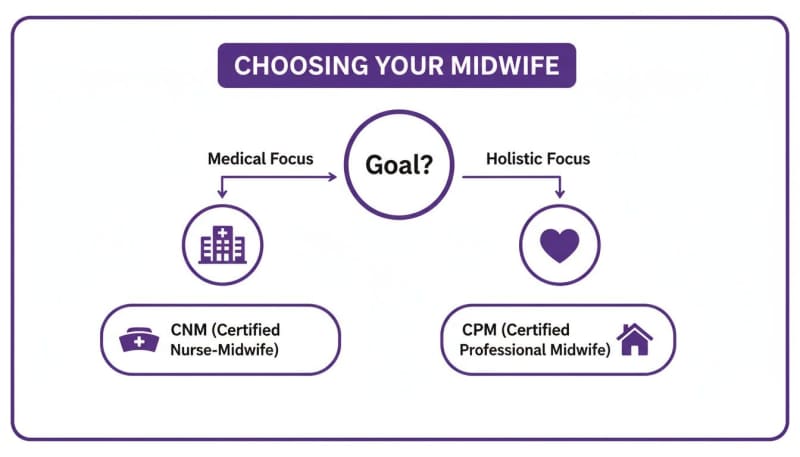
As the flowchart shows, your core goals can help guide you from the very beginning.
The families seeking midwives for home births have also broadened in incredible ways. For instance, data from 2016 to 2022 shows the number of Black women in the U.S. giving birth at home more than tripled, jumping from 823 to 2,733. This shift often reflects a desire for community-based care, partly in response to the significant racial disparities seen in hospital outcomes.
We're seeing similar trends elsewhere, too. During that same period, there was a 63% increase in home vaginal births after a cesarean (VBAC). These growing numbers make it absolutely essential for families to have clear, transparent access to a midwife’s credentials and safety protocols. To dig into the numbers, you can explore the research on home birth demographics.
Considering a VBAC or Other Special Circumstances
But what if your situation feels a bit more complex? Many families hoping for a VBAC (vaginal birth after cesarean) successfully plan home births with experienced midwives.
A midwife will take a deep dive into your medical history, paying close attention to the reason for your previous C-section, to see if you’re a good candidate. They’re looking for specific factors that point to a high likelihood of a safe and successful VBAC at home.
Ultimately, the choice to have a home birth is a partnership between you and your midwife. It’s built on open conversation, a complete health assessment, and a shared understanding of both the benefits and the risks. This collaborative relationship is what makes a planned home birth a responsible and empowering option for the right families.
What To Expect During Your Home Birth Journey
Choosing a home birth with a midwife isn't just about where you deliver; it's about the entire experience, from those first prenatal check-ins to the cozy postpartum visits. It’s a journey built on a foundation of trust and partnership, where your care is centered around you, not a rigid hospital schedule.
Forget rushed, 15-minute appointments. Your prenatal visits are thorough, relaxed conversations that often last an hour. They can happen in your home or your midwife's office and cover all the essentials. Measuring your belly, listening to the baby's heartbeat, checking your vitals. But they go so much deeper, creating space to talk about nutrition, your emotional well-being, and your hopes for the birth. The goal is to make sure you feel heard, prepared, and truly cared for.
During Labor And Birth
When labor begins, your midwife becomes a calm, steady presence. She doesn't just show up for the final push. She arrives when you need her support, often with a trained assistant, and transforms your space into a safe haven for birth.
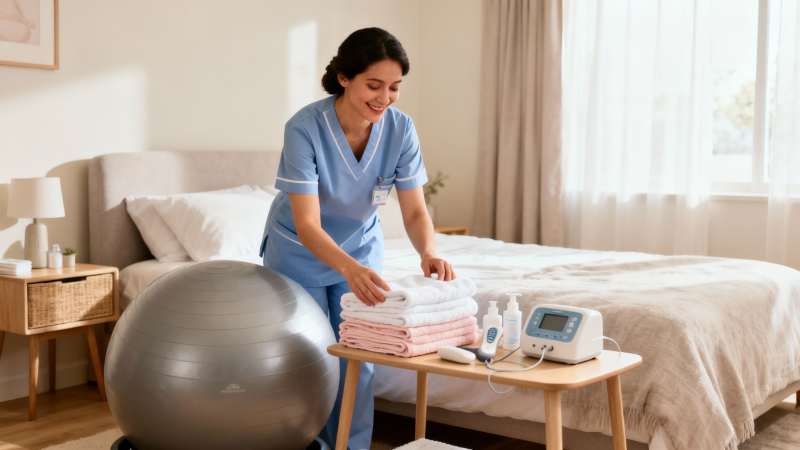
Think of her birth bag as a mobile clinic. She brings everything needed to safely manage a low-risk birth, prepared for routine care and unexpected situations.
Her equipment typically includes:
- Monitoring Tools: A handheld Doppler to listen to your baby's heart rate, a blood pressure cuff, and a thermometer.
- Emergency Supplies: Oxygen, resuscitation equipment for the baby, and medications to manage postpartum hemorrhage.
- Birth Essentials: Sterile instruments, suturing materials for any necessary repairs, and sometimes herbs or homeopathic remedies for comfort.
Throughout your labor, she’s right there with you, offering hands-on support. She might suggest a new position to help things progress, offer a massage, or just make sure you’re staying hydrated. All the while, she’s keeping a watchful eye on you and your baby, practicing a philosophy of watchful waiting rather than routine intervention. You can explore the entire process in our guide on how to have a home birth.
After Your Baby Arrives
Those first few hours after birth are sacred. Your midwife knows this and honors that time for bonding by keeping interruptions to a minimum. Once your baby is born, they are placed directly on your chest for that crucial skin-to-skin contact.
Your midwife will perform a quiet, thorough newborn exam right there on your bed, beside you. She’ll monitor you closely for bleeding and make sure the placenta is delivered safely. She won't pack up and leave until you and your baby are stable, fed, and comfortably tucked into bed.
This person-centered approach is gaining global recognition. The World Health Organization reports that births attended by skilled personnel, like midwives, jumped from 61% in 2000 to 87% in 2024. For low-risk pregnancies, planned home birth with a midwife can achieve outcomes comparable to a hospital birth while significantly reducing interventions. Research from Spain, for instance, showed that women planning home births were 3.43 times more likely to have a spontaneous birth and had far lower rates of medicalized delivery.
Postpartum Care In Your Own Home
The support doesn't stop when the birth is over. A true hallmark of the midwifery model is comprehensive postpartum care, and it all happens in the comfort of your own home.
Your midwife will typically visit you several times in the first week, with continued check-ins for up to six weeks.
These postpartum visits focus on everyone's well-being:
- Your Physical Recovery: She’ll check your healing, take your vitals, and talk through any physical discomfort you're having.
- Your Baby's Health: This includes weighing the baby, performing newborn screenings, and helping with any feeding challenges.
- Your Emotional Well-being: It’s a safe space to process your birth experience and navigate the huge adjustment to parenthood.
As you start to feel stronger, it’s a great idea to learn about gentle postpartum core strengthening exercises. Your midwife can offer guidance on when and how to begin. This continuous, in-home support makes for a much smoother, more supported transition into life with your new baby.
Navigating The Costs And Logistics Of Home Birth
Once you've decided a home birth feels right for your family, the next step is wading into the practical details. The costs and logistics can feel a little overwhelming at first, but with some solid planning, they are absolutely manageable. Getting a handle on the finances, understanding the laws in your area, and having a bulletproof backup plan are all part of a responsible home birth journey.
Let's start with the big question on everyone's mind: the cost. A midwife's services for a home birth are usually bundled into a "global fee." This single price tag covers everything from prenatal care and the birth itself to all those important postpartum check-ins. You can expect this fee to range anywhere from $3,000 to over $8,000, which varies quite a bit depending on your location and your midwife's level of experience.
While that number might cause a little sticker shock, it’s important to put it in perspective. This one fee often takes the place of separate bills from an OB-GYN, the hospital facility, an anesthesiologist, and the pediatrician's initial newborn exam.
Understanding Insurance And Midwife Fees
Navigating insurance coverage for a home birth midwife is, frankly, a mixed bag. It can change dramatically based on your state, your insurance carrier, and even your specific policy. Some plans are fantastic and cover out-of-hospital midwifery care well, while others offer very limited coverage, or none at all.
The only way to get a clear answer is to get on the phone with your insurance company. Here are the essential questions to ask:
- Do you cover services from a Certified Professional Midwife (CPM) or a Certified Nurse-Midwife (CNM) for a planned home birth?
- What is my out-of-network coverage for maternity care? (Many home birth midwives fall into this category).
- Will I need pre-authorization for a home birth with a midwife?
A midwife's global fee typically includes all prenatal appointments, 24/7 on-call availability for your birth, attendance at your labor and delivery, an assistant's fee, and about six weeks of postpartum care for both you and your baby. Things like lab work, ultrasounds, and the cost of a birth supply kit are usually separate. You can get a more detailed look at what's included in our guide to midwife cost.
Legal Considerations And State Regulations
The legality of home birth is another critical piece of the puzzle you'll need to solve. Midwifery is regulated state by state, which means the laws can look incredibly different just one town over. In some states, CPMs are licensed and seamlessly integrated into the healthcare system. In others, their legal standing might be a bit murky.
It's vital to get familiar with the specific regulations where you live. This knowledge not only helps you find a midwife with the proper credentials but also empowers you to make a fully informed choice. Knowing the local laws helps you find qualified midwives who do home births who are practicing safely and legally.
A well-thought-out hospital transfer plan is not a sign of failure. It is a hallmark of a safe, responsible, and prepared home birth team.
Creating A Hospital Transfer Plan
Finally, let's talk about the hospital transfer plan. This is an absolutely non-negotiable part of planning a safe home birth. Your midwife will work closely with you to map out a clear, step-by-step plan for what happens if you need, or simply want, to move to a hospital during your labor.
This isn’t just a vague idea; it's a concrete strategy. It involves choosing a specific, midwife-friendly hospital nearby, having your medical records packed and ready to go, and discussing the exact signs that would trigger a transfer. It's reassuring to know that most transfers are for non-urgent reasons, like a labor that’s progressing slowly or a parent’s desire for pain relief.
Having this plan locked in provides peace of mind and ensures a smooth, seamless transition of care if it becomes necessary. It's a true sign of excellent preparation and a deep commitment to the safety of you and your baby.
How To Find And Choose The Right Midwife
Okay, you've got the handle on the process, costs, and logistics. Now comes the most important part: finding the person you’ll trust to guide you through your home birth. This is so much more than just hiring a provider. It's about building a deep, personal partnership. The right fit comes down to both stellar qualifications and a genuine connection that makes you feel completely safe and supported.
Think of your search like house hunting. You start with a wide net to see what’s out there, narrow it down to a few top contenders, and then visit each one to get a real feel for the place. Platforms like Bornbir are a fantastic place to start, letting you filter local midwives by their credentials, services, and reviews from other parents.
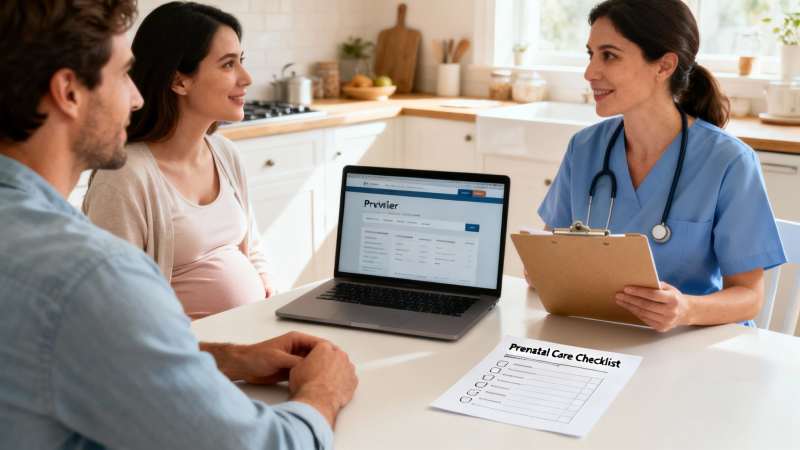
This initial search helps you create a shortlist. From there, the real work begins with the interview. This is your chance to ask the detailed questions and get a true sense of each midwife’s philosophy and practice style.
The Importance Of The Interview
The interview is the heart of this whole process. This isn’t just a quick phone call. It's a dedicated conversation, often an hour long, where you and your partner can really dig into every aspect of a midwife's care. It’s your opportunity to make sure their approach aligns perfectly with your vision for your birth.
Come prepared with a list of questions, but don’t be afraid to let the conversation flow naturally. You're trying to gauge more than just experience. You're looking for a personality and energy that just clicks with you.
In the United States, home birth is still a small but growing choice, with midwives at the forefront of this shift. While just 1.5% of births nationally happened at home in 2023, those numbers can look very different from state to state. In Idaho, for example, 4.7% of all births took place at home. More than triple the national average. Since 2016, the U.S. has seen a 56% jump in home births, with the vast majority attended by midwives. These trends show a clear and growing demand for vetted, trusted midwives who do home births, especially where community birth is gaining ground. You can discover more insights about these state-by-state home birth trends on Statista.
Key Questions To Ask Your Potential Midwife
When you sit down for these interviews, you’ll want to cover a few key areas: their background, their approach to care, and how they handle emergencies. Think of these questions as your toolkit for making a confident, informed decision.
Here are some essential topics to guide your conversation:
- Experience and Training
- What are your credentials (CPM, CNM, etc.), and how long have you been attending home births?
- How many births do you typically attend per month? (This gives you a sense of their caseload and availability.)
- Are your certifications in neonatal resuscitation (NRP) and CPR current?
- Philosophy of Care
- How do you view birth? What is your role as the midwife in that process?
- What are your thoughts on things like due dates, going post-term, or pain management options at home?
- What do you expect from your clients in terms of their own involvement and preparation?
- Emergency Preparedness
- What specific situations would lead you to recommend a transfer to the hospital?
- What emergency equipment do you bring to every single birth?
- Could you walk me through your exact hospital transfer plan, from the moment the decision is made to arriving at the hospital?
For a more exhaustive list, check out our complete guide on questions to ask a midwife. Having these answers will give you a clear picture of how each midwife operates under pressure and in routine care.
The goal of the interview isn't to quiz the midwife. It's to start a dialogue and discover if you can build a relationship based on mutual respect and shared decision-making.
Making Your Final Choice
After you've interviewed your top candidates, take some time with your partner to just sit with it. Go over your notes and compare their answers, but also tune into your gut feeling.
Who did you feel most comfortable with? Who really listened to you? The technical skills and experience are absolutely critical, but that intangible sense of connection is just as important.
You are inviting this person into one of the most intimate and powerful moments of your life. The right midwife won't just have the credentials you’re looking for; they'll also be someone whose presence feels reassuring and empowering. Choosing this person is the final, crucial piece in building the confident, supported home birth experience you envision for your family.
Common Questions About Home Birth With A Midwife
Even after hours of research, it's totally normal to have a few nagging questions. Deciding to have a home birth is a huge deal, and you deserve to feel 100% confident in your plan. This last section is all about tackling those common "what ifs" that pop up when families are considering midwives who do home births.
What Happens In An Emergency
Let's start with the big one, because this is usually the number one concern. A safe home birth isn't about ignoring the possibility of an emergency; it's about being incredibly prepared for one. Your midwife is a pro at spotting the subtle signs of a complication long before it becomes a true crisis.
She'll have essential medical gear on hand. Things like oxygen, medications to stop heavy bleeding, and tools for infant resuscitation. Your prenatal care includes creating a clear, practiced emergency plan, which outlines exactly when a hospital transfer is necessary and names a pre-selected hospital. It’s also reassuring to know that most transfers aren't frantic, lights-and-sirens situations. They're usually for non-urgent reasons like a labor that's taking a very long time or mom deciding she'd like an epidural after all.
In a true emergency, your midwife's job is to stabilize you and your baby, get transport on the way, and speak directly with the hospital staff. This ensures everyone is on the same page for a smooth handover of care.
Is A Home Birth Messy And What Do I Need
This is another question we hear all the time, and it's a very practical one! Yes, birth can be messy, but your midwife is an absolute expert at managing the mess so you don't have to.
She’ll give you a supply list ahead of time for a "birth kit." It’s not as intimidating as it sounds. The kit usually includes simple things to protect your home and make cleanup a breeze:
- Plastic-backed absorbent pads (often called "chux pads") to place under you.
- A big disposable plastic sheet to protect your mattress.
- Large trash bags for easy disposal.
During the birth and right after, your midwife and her assistant are on cleanup duty. They’ll manage soiled linens, gather all the waste, and make sure your space is tidy before they leave. Most families are truly shocked at how little mess is left behind.
Can I Have A Water Birth At Home
Absolutely! A lot of midwives who attend home births are huge fans of water birth and have plenty of experience with it. Soaking in a warm tub can be an amazing tool for pain relief, helping you to relax and move more freely during labor.
If a water birth sounds like something you'd love, make sure to bring it up when you interview potential midwives. Many will rent inflatable birth tubs directly to their clients, or they can point you to a good local rental company. It’s a great topic to discuss as you figure out when to hire a midwife for a home birth, giving you lots of time to plan. Your midwife will go over all the logistics and safety considerations to make sure it's a great option for you.
Ready to find the perfect perinatal support for your journey? Bornbir connects you with over 6,000 vetted doulas, midwives, and lactation consultants. Compare providers, read real reviews, and find the right fit for your family in under 30 seconds at https://www.bornbir.com.