
The idea of toilet training a newborn might sound a bit out there. But we’re not talking about the kind of potty training you do with a toddler. This is a gentle, responsive practice called Elimination Communication (EC), and it’s all about tuning into your baby's natural signals and giving them a chance to use a potty right from the start.
The Reality of Newborn Toilet Training
Think of Elimination Communication less as "training" and more as a conversation with your baby. It’s a way to recognize and respond to their innate needs, viewing diapers as a helpful backup rather than a full-time toilet. This is a huge shift from the Western approach of waiting until a child is 2 or 3 to even begin the process.
This practice isn't some new fad; it has deep roots and is the standard in many cultures around the world. It's interesting to see how much the potty training age has shifted in higher-income countries. Back in the 1950s, American kids were typically out of diapers by 28 months. By the 2000s, that age had crept up to nearly 37 months. That’s a world away from places like Türkiye, where the average is around 22 months, or communities practicing EC where babies can achieve daytime continence as early as 9-12 months, according to research from bigtoiletproject.org.
What Is Elimination Communication?
At its heart, EC is about observing your baby for their unique cues that they need to pee or poop and then offering them a potty. It’s a way to honor their instinct to not soil themselves or their caregiver.
Elimination Communication vs Traditional Potty Training
To get a clearer picture, it helps to see how these two approaches stack up side-by-side.
| Aspect | Elimination Communication (Newborns) | Traditional Potty Training (Toddlers) |
|---|---|---|
| Starting Age | From birth to 18 months | Typically 18 months to 3+ years |
| Core Principle | Communication and responding to natural cues | Training a learned behavior |
| Parent's Role | Observer and facilitator | Teacher and instructor |
| Goal | Build awareness and meet a natural need | Achieve independent toileting |
| Diapers | Used as a backup | Used as a primary toilet until training begins |
| Pressure | Low-pressure, intuitive, and flexible | Can sometimes involve pressure and rewards |
This table really highlights that EC is a fundamentally different philosophy centered on connection from day one.
Setting Realistic Expectations
It’s important to remember that EC isn't a race to ditch diapers. The real goal is to build a strong, two-way dialogue around your baby's elimination needs, which deepens your bond.
The core of this approach is connection, not perfection. Every successful "catch" in the potty is a moment of understanding between you and your baby, but misses are an expected and normal part of the learning process.
Here are a few things to keep in mind as you explore toilet training your newborn:
- It’s a spectrum. You can practice EC full-time, part-time, or just when it feels easy and convenient. There are no rigid rules.
- The focus is on awareness. You'll get to know your baby’s little signals. Maybe it’s a specific grunt, a squirmy dance, or a sudden stillness right before they need to go.
- It's about opportunity. The practice simply involves offering the potty at predictable times, like right after they wake up, after a feed, or during a diaper change.
Debunking Common Myths
Many parents worry that starting this early will be stressful or confusing for their baby. On the contrary, EC is designed to be a gentle, responsive process. It actually works with a newborn's natural instincts.
While it might seem demanding at first, with the right mindset and support, it can become a seamless part of your daily routine. For families wanting some extra hands-on guidance in those early weeks, learning about what a newborn care specialist can offer might be a game-changer. It’s all about finding a rhythm that works for your family, without adding any pressure.
Learning Your Newborns Cues and Rhythms
Success with Elimination Communication is all about observation. It might sound intimidating, but the truth is, your newborn is already telling you exactly what they need. You just have to learn their language. The whole practice is built on recognizing the specific signals babies give right before they need to pee or poop.
Think of yourself as a detective, learning your baby’s unique communication style. What looks like random fidgeting at first soon becomes a crystal-clear signal once you know what you’re looking for.
Spotting Common Elimination Cues
Babies are surprisingly consistent. While every child has their own special "tell," many of the big cues are almost universal. You’ll probably start noticing a distinct pattern of behavior that happens right before a wet or dirty diaper.
These signals can be subtle, or they can be pretty obvious.
- Sudden Stillness or Fussiness: A baby who was happily wiggling might suddenly stop and stare into space. Or, a calm baby might start fussing for no clear reason at all.
- Physical Squirming: You might notice your baby squirming, grunting, or bearing down with a super concentrated look on their face. Some babies even clench their little fists.
- Specific Cries: Many parents swear they can identify a particular cry that’s different from a hunger or tired cry. It might be a short, sharp, grunt-like sound.
- Passing Gas: Often, a bit of gas is the warm-up act for a bowel movement.
For example, a classic real-world scenario is the baby who always gets a tense look on his face and clenches his fists right before a poop. Another parent might notice their newborn makes a little "eh eh" sound just before she pees. Paying attention to these tiny details is everything.
Understanding Natural Rhythms and Timing
Beyond the physical cues, timing is your other best friend. Newborns have predictable rhythms that are tied to their daily activities. Offering the potty during these key moments can lead to a ton of successful catches, even if you miss a specific physical signal.
You're essentially anticipating their needs based on their natural schedule.
The goal isn't to create a rigid schedule for your baby. Instead, it's about recognizing their inherent rhythm and offering the potty at logical intervals when they are most likely to need to go.
These high-probability moments often include:
- Right After Waking: This is the most reliable time for almost every baby. As soon as they wake up from a nap or a long stretch of nighttime sleep, their body is ready to release.
- During or After Feeding: The act of sucking and digesting stimulates the bowels, making this another prime potty opportunity. You might even offer the potty mid-feed if your baby tends to pause and squirm.
- Before Transitions: Think about the moments of change in their day. Before placing your baby in a carrier, car seat, or stroller, or right after taking them out, is a great time to offer.
These timing patterns are often linked to their sleep cycles. As you get to know their cues, understanding the typical structure of a newborn sleep schedule by week can really help you anticipate when those post-nap potty opportunities will pop up.
How to Start Tracking Cues and Timing
To make all of this easier, just start a simple log. You don't need a fancy app or anything complicated; a small notebook or the notes app on your phone works perfectly. For a couple of days, just observe without any pressure to "catch" anything.
This simple act of observation helps patterns jump right out at you.
Your Simple EC Log
| Time | Baby's Activity | Observed Cues | Outcome (Pee/Poop) |
|---|---|---|---|
| 7:05 AM | Woke up from sleep | Stared blankly, slight squirm | Pee in diaper |
| 9:15 AM | Mid-nursing | Paused, grunted, face turned red | Poop in diaper |
| 11:30 AM | Woke from nap | Fussy, kicking legs | Pee in diaper |
| 1:00 PM | During tummy time | Became still, made "eh" sound | Pee on mat (miss) |
After just 24-48 hours of this, you’ll likely see a clear connection between a certain cue and the result. You'll notice they almost always pee within five minutes of waking, or that a red face while feeding is a sure sign a poop is coming. This log isn't a long-term chore; it’s a short-term tool to fast-track your learning curve. This observational phase is the real foundation of EC, turning you into an expert on your baby’s unique needs.
Your Practical Guide to Getting Started with EC
Ready to give Elimination Communication a try? Let's walk through your first few days, step-by-step. This is a practical, no-pressure guide. Just remember, the real goal here is communication and offering opportunities, not getting it perfect every single time.
Gathering Your Minimalist EC Gear
You really don't need a lot of fancy equipment to get started. In fact, keeping things simple is usually the best approach. You want to be prepared, not buried in new gadgets.
Here’s a quick list of what you’ll actually find helpful:
- A Small Potty or Bowl. A "top hat" potty is a fan favorite for a reason. It's small, light, and easy to hold between your thighs while you support your baby. Honestly, a small bowl from your kitchen will work just fine when you're starting out.
- Absorbent Cloths or Prefolds. Keep a healthy stack of small, absorbent cloths nearby. You’ll want them for wiping and for catching any small misses. Simple burp cloths or small towels are perfect for this.
- Waterproof Mats. A waterproof lap pad or a larger mat is a lifesaver for diaper-free time on the floor, bed, or changing table. It gives you some peace of mind while your baby gets to enjoy a little freedom.
That's it. This simple setup is all you truly need to start tuning into your baby's signals.
Mastering the Classic EC Hold
The heart of EC is holding your baby securely over the potty. The "classic EC hold" is designed to be both safe for your newborn and very effective at encouraging them to go.
It’s pretty simple: hold your baby with their back resting against your chest and stomach. Then, place your hands under their thighs, supporting them in a natural, squat-like position. This posture helps relax their pelvic floor muscles, making it much easier for them to pee or poop. Always, always make sure their head and neck are well-supported, especially in those very early weeks.
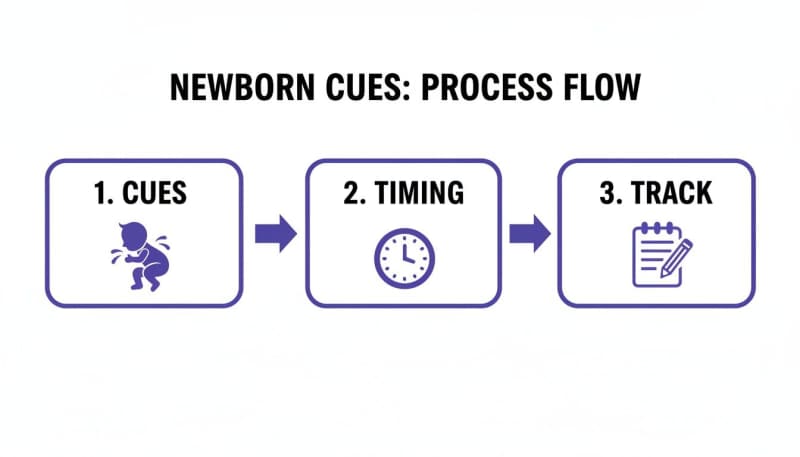
This whole process flows from watching for cues, learning their timing, and tracking patterns. It's the foundation of making EC work for you.
Your First Potty Opportunity
Okay, time to put it all together and try to "catch" a pee or poop. The key here is to be calm and responsive, not rushed.
When you notice a cue or know it's a likely potty time (like right after they wake up), calmly take your baby to the potty. Settle them into that classic EC hold, making sure they feel safe and secure. As you hold them over the potty, make a consistent sound. Lots of parents use a gentle "psss" sound for pee and a soft grunt for poop. Over time, your baby will start to connect that sound with the action, which becomes a powerful cue in itself.
The most important thing is to stay relaxed. You are going to miss. A lot. And that is completely okay. Every single time you offer the potty, it's a win because you're strengthening that line of communication, regardless of what happens.
Don't get discouraged if nothing happens the first few times. Just say something positive like, "All done," and move on. You're just offering the chance, not forcing a result.
Integrating EC into Your Daily Life
For this to feel sustainable, it has to fit into your real life. Weaving EC into your existing routine is the best way to make it a natural part of your day. Exploring ideas for a flexible daily schedule for parents can help you find those natural moments for potty offers without feeling like you've added another chore to an already long list.
Here are a few practical tips for making it work:
- During the Night. Keep a small potty right next to your bed. When your baby stirs or wakes up for a feed, you can offer the potty in the dim light without a big fuss. You might be surprised how cooperative a sleepy baby can be.
- When You're Out. A top hat potty is portable enough to take with you. You can offer it in the car before heading into a store or find a quiet corner in a public restroom. Using diapers as a backup when you're out and about is a common, stress-free strategy.
- Partner Involvement. Getting your partner or another caregiver on board is a great way to share the load and keep things consistent. Show them the classic hold and point out the common cues you've noticed. It can be a very good bonding experience for them, too.
For example, your partner could handle the post-nap potty offer while you get ready for the next feeding. That kind of teamwork makes the whole process feel so much more manageable. This is especially true if you're breastfeeding; a clued-in partner is a huge support. And if you're navigating feeding challenges, knowing what a lactation consultant does can bring in another layer of expert help for your family. The key is just finding a rhythm that works for everyone.
The Real Benefits for Your Baby and Family

So, why even try Elimination Communication (EC) when diapers are so easy? The truth is, the upsides of this gentle approach to toilet training a newborn go way beyond just catching pees and poops in a potty. It can have a real, lasting impact on your baby’s health, your connection, and even your family’s budget.
At its heart, this practice is about deepening your connection. You're essentially learning a new, nonverbal language with your baby, responding to their needs in a way that feels very intuitive. This back-and-forth communication strengthens the parent-child bond, fostering a profound sense of trust and security from day one.
It’s a shift in perspective, seeing your baby as a capable communicator right from the start. This can change how you interact with them across the board, recognizing their innate ability to express their needs long before they can say a single word.
A Healthier Start for Your Baby
One of the biggest draws for many parents is the potential to improve their baby's digestive health. Newborns often struggle with things like colic, constipation, and general tummy troubles as their little systems mature. The natural, squat-like position used in EC is actually the most ergonomic way for a human to go to the bathroom. It helps them empty their bladder and bowels more completely and with less effort.
This isn't just a hunch. Formal research is starting to catch up with what parents have been saying for years. For instance, the BABITT study protocol is a randomized trial looking into whether infant toilet training from birth can significantly cut down on functional gastrointestinal issues like colic and constipation. The study is also exploring how early training might prevent bladder problems later in childhood. You can read more about these findings on PMC.
By supporting their natural body functions, you're helping them stay in tune with their body's signals instead of teaching them to ignore them. The result is often a much more comfortable and happy baby.
The Financial and Environmental Impact
Beyond the bonding and health perks, the practical benefits are hard to ignore. The cost of disposable diapers adds up faster than you can imagine, and the environmental toll is staggering.
A newborn can easily go through 8-12 diapers a day. That's thousands of diapers in the first year alone.
- Cost Savings: An average family can spend $70 to $80 per month on disposables. Over 2.5 years, that's over $2,400. Even practicing EC part-time can slice that number in half, leaving a significant amount of money in your pocket.
- Environmental Relief: A single disposable diaper can take up to 500 years to decompose. By choosing EC, you are keeping thousands of diapers out of landfills and dramatically reducing your family's carbon footprint.
While the cost savings and environmental benefits are incredible bonuses, the real reward of Elimination Communication is the deeper, more responsive connection you build with your child.
Building a Strong Support System
Let’s be honest, practicing EC can feel a little unconventional at times. That makes having a strong support system absolutely essential. Sharing the experience with a partner, family members, or friends can make the journey more sustainable and a lot more fun.
For families looking for extra guidance during the newborn phase, exploring the benefits of having a doula can provide that critical layer of professional and emotional support.
Ultimately, EC isn’t about racing to have a diaper-free baby. It's about listening, responding, and building a unique line of communication. A happier tummy, a healthier planet, and a fatter wallet are simply the wonderful side effects of this journey.
Working Through Common EC Challenges
Elimination Communication is a beautiful journey of connection, but it's definitely not a perfect science. You'll have amazing moments where you feel completely in sync, and then you'll hit some very real bumps in the road. Knowing what to expect can help you navigate these hurdles with more calm and confidence, keeping the focus on communication, not perfection.
Honestly, every family hits a snag at some point. The real key is to stay flexible and remember that every phase, even the frustrating ones, is temporary.
The Dreaded "Potty Pause"
One of the most common frustrations you'll hear about is the "potty pause." This is when your baby, who was catching on beautifully, suddenly starts resisting. They might arch their back, cry when you offer the potty, or just refuse to go... only to have an accident in their diaper moments later.
It's maddening, but this pause almost always lines up with a major developmental leap, like learning to roll, starting to crawl, or cutting a new tooth. Their little brain is working overtime to master a new skill, and pottying simply takes a backseat for a bit.
- Don't force it. If your baby resists, just calmly say something like, "Okay, all done," and move on. Trying to force them onto the potty can create a negative feeling around it, which is the last thing you want.
- Go back to basics. Take a day or two and just observe again, like you did in the very beginning. Watch for their cues without any pressure to actually catch a pee or poo.
- Change things up. Try offering the potty in a totally new spot. Maybe hold them over the bathroom sink, the toilet, or even take the little potty outside in the yard. Sometimes a simple change of scenery is all it takes to break the strike.
A potty pause is almost always a sign of development, not a rejection of EC. The best thing you can do is be patient. Just ride out the wave, and you'll find your rhythm again on the other side.
Managing Misses and Staying Positive
Misses are not failures; they are a guaranteed part of the process. How you react to them matters so much more than the miss itself. Getting frustrated or upset can create stress for both you and your baby, which completely undermines the connection EC is meant to build.
Keep some cloths and a spray bottle handy and try to adopt a casual, matter-of-fact attitude. A simple, "Oops, we had a miss. We'll try for the potty next time," is all that's needed. This becomes especially important once your baby is on the move. A crawling or walking baby presents a whole new set of challenges, but the principle is the same: respond calmly and consistently. Exhaustion can make this a lot harder, so learning how to cope with sleep deprivation is absolutely crucial for keeping your patience intact.
Dealing with Skeptical Family and Friends
Let's be real: explaining that you're doing toilet training with a newborn can earn you some raised eyebrows. Friends or family might not get it and may offer plenty of unsolicited advice.
It helps to have a simple, confident explanation ready. You could say something like, "It's a practice called Elimination Communication. We're just learning his natural signals to offer him a chance to use the potty. It's been great for our bond and helps him with his body awareness."
Focus on your "why." You don't need to justify your parenting choices to everyone, but feeling confident in your own reasons will help you brush off any skepticism.
The Bigger Picture on Potty Training
It’s helpful to remember that modern delays in toilet training are a relatively new trend, creating readiness challenges down the line. A 2025 UK census revealed that only 61% of children are trained by the 2.5-year mark, a significant drop from 95% two decades ago. Interestingly, the same data showed that babies in reusable nappies, who can feel wetness more easily, tend to train earlier. These delays are linked more to social shifts than biology, highlighting the value of newborn-aware practices like EC. You can find more details in this census report from thenappygurus.com.
The Importance of Flexibility
Life happens. You might be traveling, your baby might be sick, or you might just be having an overwhelming day where you can't even think about holding a baby over a potty. On those days, it is perfectly okay to take a break or just practice EC part-time.
- Use diapers as a tool, not a failure. Let diapers be your backup without an ounce of guilt. Use them for outings, overnight, or anytime you just need a mental break.
- Focus on the easy catches. If you only have the energy for a few offers, stick to the most reliable ones, like right after your baby wakes up from a nap.
- Remember the real goal. The primary goal is communication and connection. Even one successful catch a day reinforces that you're listening to your baby's needs. The journey itself is what builds the bond, not achieving a diaper-free baby by a certain age.
Common Questions About Newborn Toilet Training
Diving into something like toilet training a newborn naturally brings up a lot of questions. It’s a pretty different path from what most of us are used to, so let's clear up some of the most common concerns parents have when they first hear about Elimination Communication.
Is It Safe to Hold a Newborn Over a Potty
Yes, it’s completely safe when you do it correctly. There's a specific hold, often called the "classic EC hold," that’s designed to be ergonomic and supportive for your baby.
You simply hold their back against your chest and stomach, then gently support them under their thighs. This naturally puts them into a comfortable squat position.
This posture is actually great for them. It helps relax their pelvic floor muscles, making it physically easier to go. The main thing to remember is to always support their head and neck, especially in those very early weeks. And, of course, never leave a baby unattended on or near a potty, not even for a second.
Will This Confuse My Baby for Later Potty Training
This is a big worry for many parents, but the reality is quite the opposite. EC builds a foundation of body awareness right from the start. Instead of teaching a baby to ignore their body’s signals by using a diaper as a toilet, you're consistently showing them that their signals are heard and understood.
Elimination Communication doesn't confuse a child. It validates their innate instinct to be clean and builds a communication pathway that makes the transition to full potty independence much smoother and often earlier.
Many parents who practice EC find that their children have a much easier time with "traditional" potty training when they're toddlers. The concept of using a potty isn't some new, strange thing. It's something they've been familiar with their whole lives. It's all about a gentle, consistent response, not pressure.
Do I Have to Do This All the Time for It to Work
Absolutely not. This is probably the biggest misconception about EC. The whole point is for it to be flexible and fit into your life, not the other way around.
There's a whole spectrum of how you can approach it:
- Full-time: Some families decide to go all-in from day one, using very few diapers.
- Part-time: Many parents just offer the potty when they're at home and use diapers as a backup when they're out or overnight. This is a very popular and less stressful approach.
- Casually: Some simply offer the potty at convenient times, like during every diaper change or right after a nap.
Even catching just one pee a day in the potty reinforces that connection. The goal is to find a rhythm that feels good for your family and doesn't add any stress. Think of it as providing an opportunity, not fulfilling an obligation.
Navigating the newborn phase comes with many questions. Bornbir is here to connect you with the support you need. Find vetted and reviewed doulas, lactation consultants, and night nannies to help you on your journey at https://www.bornbir.com.