What Is Vernix Caseosa

Pregnancy and Postpartum Care for Everyone

When you first meet your newborn, you might notice a creamy, white, waxy substance coating their skin. That’s vernix caseosa, and it's a completely normal and healthy part of birth. This natural coating develops during the third trimester, acting as your baby’s very first moisturizer and protective barrier.

What Is Vernix Caseosa and Why Does It Matter?

At first glance, vernix caseosa can look a bit unusual, almost like a cheesy or greasy film. But this amazing substance is one of nature’s most brilliant skincare products. Instead of seeing it as something to be wiped away immediately, think of it as a custom-made protective layer, designed specifically for your baby's delicate skin.

This natural coating starts to form around the 20th week of pregnancy, acting as a waterproof shield against the amniotic fluid. Without it, your baby's skin would get waterlogged and irritated, kind of like your own skin after a really long bath. This protective function is absolutely crucial for skin development in the womb.

To simplify, here’s a quick overview of vernix caseosa.

Vernix Caseosa at a Glance

Characteristic Description
Appearance White, creamy, waxy, or cheese-like substance.
Composition Made of 80% water, 10% lipids (fats), and 10% proteins.
Timing Forms during the third trimester, thickest on preterm babies.
Main Function Protects fetal skin from amniotic fluid in the womb.
Post-Birth Role Acts as a moisturizer, insulator, and antimicrobial barrier.

This table highlights just how multifaceted vernix is, serving different purposes before, during, and after birth.

Understanding Its Role in Birth and Beyond

Vernix also plays a part during labor and delivery. Its slippery texture helps ease the baby's journey through the birth canal, acting as a natural lubricant. Once your baby is born, the benefits just keep coming.

  • Natural Moisturizer: Vernix helps the skin transition from the wet environment of the womb to the dry air outside, preventing moisture loss and cracking.
  • Temperature Regulation: This coating provides a thin layer of insulation, helping your newborn maintain a stable body temperature in those critical first few hours.
  • Protective Shield: It contains antimicrobial properties that help guard against infections while your baby’s immune system is just getting started.
Understanding the purpose of vernix caseosa empowers new parents to make informed choices for their birth plan. A common request is to delay the first bath, allowing the baby to fully benefit from this natural shield.

This practice is widely supported by healthcare providers, including midwives and doulas. If you're building a birth team that aligns with your preferences, you can find a doula near me to discuss your options. Delaying the bath lets this incredible substance absorb naturally, giving your baby’s skin the best possible start.

The Science Behind Your Baby's First Skin Cream

Vernix caseosa isn't just some random gunk. Think of it as a high-tech, waterproof lotion custom-made by nature just for your baby. This brilliant substance has a surprisingly sophisticated structure, all designed to protect delicate, developing skin.

At its core, the composition is quite simple yet incredibly effective. It's made up of about 80% water, which provides some serious hydration. The remaining 20% is a powerful mix of lipids (fats) and proteins that create a resilient, waxy barrier. It's the ultimate skin cream, perfectly balanced to moisturize and defend.

A Breakdown of Nature’s Formula

The lipids in vernix are the real stars of the show. They’re packed with crucial components like ceramides, cholesterol, and free fatty acids, the very same building blocks of healthy skin. These elements work together to lock in moisture and shield the skin from the outside world.

  • Ceramides: These lipids act like the mortar between bricks, holding skin cells together to form a protective layer that prevents moisture from escaping.
  • Cholesterol and Fatty Acids: These help maintain the skin's natural barrier, keeping it soft, supple, and strong against potential irritants.

These components aren't just sitting on the surface; they are organized in a way that perfectly mimics the structure of the skin itself, making it an ideal match for a newborn's needs.

The image below gives a great visual of the three core functions of this amazing substance.

A diagram details Vernix Caseosa's benefits as a natural protective layer for newborns, including hydration, barrier against microbes, moisturization, and its natural biological development.

This shows how vernix acts as a natural moisturizer, a protective barrier, and an organic substance all in one.

Unique Variations in Composition

Interestingly, the makeup of vernix caseosa isn't exactly the same for every baby. Its composition can vary, and one of the most fascinating differences is between newborn boys and girls. Research has revealed that the lipid profile can show distinct sex-specific patterns.

For instance, newborn girls often have higher proportions of certain protective long-chain lipids, like wax esters and triacylglycerols, which are secreted from their sebaceous glands. These compounds contribute to an even more robust skin barrier right from birth.

This suggests that nature fine-tunes this protective coating in subtle but meaningful ways. These differences highlight just how complex and personalized this natural substance truly is. You can learn more about these unique findings on vernix caseosa and other gestational changes from the original research.

The Protective Benefits of Vernix for Your Newborn

Close-up of a baby's shoulder with white cream applied, held by an adult hand.

Far from being something that needs to be scrubbed away, vernix caseosa is your baby’s first amazing line of defense. Its benefits are practical and powerful, kicking in the moment your baby is born to help them adjust to a brand new world.

Think of it as a smart, multi-purpose shield that gets to work immediately.

One of its most important jobs is temperature regulation. Newborns, especially in those first few hours, have a tough time keeping their body heat steady. Vernix acts like a natural, waterproof blanket that helps stabilize their temperature so they don’t get too cold.

A Natural Moisturizer and Skin Shield

Imagine going from a cozy, watery home to the dry, open air. It’s a big shock for a newborn's skin! This is where vernix truly shines, acting as an incredible natural moisturizer. Its waxy, greasy texture is rich in lipids and water, locking in hydration and keeping that delicate new skin from drying out or cracking.

But it’s not just about softness. Vernix also helps establish a healthy foundation for your baby’s skin microbiome.

  • Supports Healthy Bacteria: By conditioning the skin, vernix creates the perfect environment for beneficial bacteria to flourish, which is crucial for a balanced and strong skin barrier.
  • Acts as a Barrier: This waxy layer physically blocks irritants and potential allergens from getting to the skin.
  • Reduces Water Loss: It dramatically slows down how quickly moisture evaporates from the skin, a process known as trans-epidermal water loss (TEWL).

For premature babies, this moisture protection is even more critical. Their skin is incredibly thin and can lose water at a dangerously fast rate. Research has shown that preemies can have a TEWL of around 50 grams per square meter per hour. The protective layer of vernix can slash this down to as low as 10 g/m²/h in lab tests, helping them stay hydrated and warm. You can read more about these crucial protective findings for newborn health.

By leaving vernix on the skin, you are allowing nature’s perfect moisturizer to do its job. It’s a gentle introduction to the outside world, setting the stage for long-term skin health from the very first day.

The Antimicrobial Powerhouse

Beyond just moisturizing and insulating, vernix caseosa is also packed with antimicrobial power. It contains special peptides and proteins that have been shown to fight off bacteria and fungi. It’s like an invisible shield against germs a newborn might encounter right after birth.

This is a massive boost for your baby’s brand-new immune system. While their internal defenses are still getting up and running, vernix provides a ready-made external layer of protection. This natural defense is a key reason why so many healthcare professionals now recommend delaying the first bath.

This practice, combined with early skin-to-skin contact, creates a comforting and protective bubble for your baby. As you bond with your newborn, you might be interested in our guide on the amazing benefits of skin-to-skin contact for both baby and parents. Letting the vernix stay put gives the immune system a helping hand and helps your baby thrive in those precious first hours and days.

How Much Vernix Is Normal for a Newborn?

When you meet your baby for the first time, one of the first things you might wonder about is the creamy, white substance on their skin. Some babies are born with a thick coating, while others have just a little bit tucked into their skin folds. So, how much is "normal"?

The simple answer is that there's no single normal amount. The quantity of vernix varies wildly from one baby to the next, and it’s almost never a sign that something is wrong. Instead, it’s just a reflection of a few different factors, with your baby’s gestational age being the most important one.

Factors Influencing Vernix Amount

The timing of your baby's arrival is the biggest clue to how much vernix you'll see. This waxy substance builds up during the third trimester, hitting its peak thickness around 38 to 39 weeks. After that, it naturally starts to thin out as the due date gets closer and eventually passes.

Because of this, the range of what's considered normal is pretty wide.

  • Preterm Babies: Often arrive with the thickest, most generous coating of vernix. Their skin is incredibly delicate and needs that extra layer of protection as it finishes developing.
  • Full-Term Babies: Usually have a moderate amount. You'll likely see it concentrated in the creases of their skin, think armpits, the groin area, behind the ears, and in those adorable neck folds.
  • Post-Term Babies: Babies born after 41 or 42 weeks typically have very little, if any, vernix left. Most of it has already been absorbed into their skin while they were still in the womb.

This natural variation is completely expected and okay. If you're looking for more hands-on guidance for your newborn's skin and other early needs, our guide on what a newborn care specialist does can be a huge help.

What Does the Research Say?

While the presence of some vernix is common, a full head-to-toe coating is actually quite rare. Research shows it covers about 54.7% of newborns to some degree. In one study of 888 newborns, only a small fraction, just 2.6%, were completely blanketed in this protective layer. These numbers really highlight how much the amount can differ from baby to baby. You can discover more insights about these vernix findings on PMC.

The key takeaway is that whether your baby has a lot of vernix, a little, or none at all, it's usually just a reflection of their gestational age. It’s not an indicator of their health.

The way your baby was born can also play a small role. A baby delivered via Cesarean section might seem to have more vernix, but that's often just because it wasn't rubbed off during the journey through the birth canal. At the end of the day, every baby's vernix story is unique.

Practical Advice for Handling Vernix After Birth

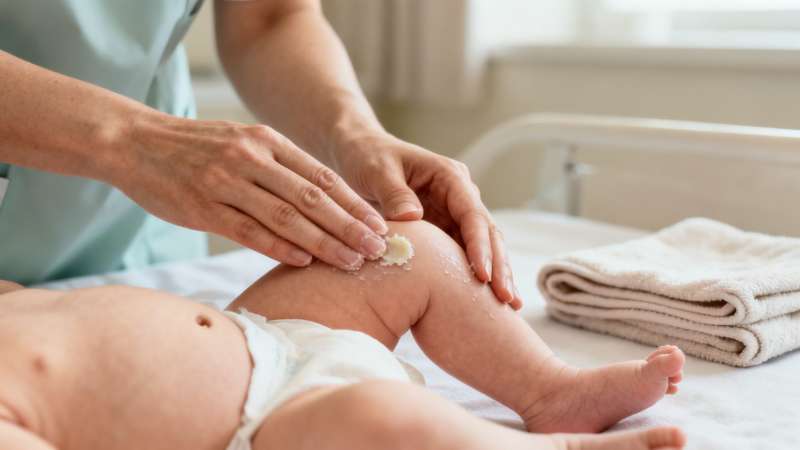
A nurse gently applies a creamy substance, possibly vernix caseosa, to a baby's leg.

Once your baby arrives, the immediate focus is all about their care. One of the best first things you can do for their skin is simply to let the vernix do its job. Think of it as your baby's first, and most perfect, skincare treatment, custom-made just for them.

The current wisdom, backed by major health bodies like the World Health Organization (WHO), is to delay that first bath. The recommendation is to wait at least 24 hours, though many families choose to wait even longer. This simple pause allows all the amazing benefits of the vernix to fully support your baby as they adjust to the world.

This delay gives the vernix time to act as a barrier against germs, help regulate body temperature, and deeply moisturize their brand-new skin. It’s a powerful, natural process that helps build a healthy foundation from day one.

What to Do Instead of Bathing

So, if you're holding off on the first bath, what's the plan? It’s refreshingly simple. Less is more. Instead of trying to wash the vernix off, you can gently massage any thick patches into your baby’s skin, just like you would with a lotion.

You’ll often find it collects in the little folds of their neck, under their arms, and in the groin area. Gently rubbing it in not only helps the skin absorb all those beneficial lipids and proteins but also creates a beautiful bonding moment between you and your newborn.

For parents who might be a little thrown off by the waxy, cheesy appearance, rest assured that it will absorb on its own. Within a couple of days, the vernix will naturally disappear, leaving behind incredibly soft, well-hydrated skin without any extra effort from you.

The most practical advice is to let nature take its course. The vernix is a temporary, highly functional layer designed to give your newborn the best possible start. Allowing it to absorb is a gentle, supportive choice.

As the vernix naturally fades, you'll start thinking about what products to use on your baby's delicate skin. A guide to chemical free baby products can be a really helpful resource at this stage. And for more on navigating postpartum care, you might find our guide on baths after a C-section useful.

Aligning Your Care Team

To make sure your wishes are respected, it's a great idea to add your preferences about the vernix directly into your birth plan. A simple note can make a world of difference.

You could include statements like:

  • "We request to delay the baby’s first bath for at least 24 hours."
  • "Please do not wipe off the vernix. We would prefer to gently rub it into the baby's skin."

Chatting about this with your doula, midwife, and the hospital staff beforehand helps get everyone on the same page. When your entire care team understands your plan, you can focus on welcoming your new baby in a calm and supportive environment.

Frequently Asked Questions About Vernix Caseosa

Navigating those first few days with your newborn is an amazing, whirlwind experience that naturally brings up a lot of questions. Here are some clear, reassuring answers to the most common things parents wonder about vernix caseosa.

Is It Okay to Leave Vernix on My Baby?

Yes, absolutely! In fact, it’s highly recommended. Leading health organizations, including the World Health Organization (WHO), suggest leaving the vernix on your baby's skin for at least 24 hours.

Think of it as your baby’s first spa treatment. A super-powered, all-natural moisturizer that helps regulate their temperature, lock in hydration, and protect them from infection. Instead of wiping it away, you can gently massage it right into their skin. It will absorb on its own in a day or two, leaving their skin incredibly soft.

What if My Baby Is Born Without Much Vernix?

It's completely normal for some babies to have very little or even no visible vernix. This is often the case for babies born a little after their due date or, on the flip side, very prematurely.

Its absence isn't a sign of a problem at all. Your postpartum care team will keep a close eye on your baby's skin and temperature. All you need to do is focus on using gentle, fragrance-free moisturizers to keep their delicate skin happy as it gets used to the outside world.

The amount of vernix caseosa isn't a reflection of your baby's health. Whether they have a thick, creamy coating or just a little in their skin folds, it’s just a normal variation based on their gestational age.

Does Vernix Have a Smell?

Most parents find that vernix has a very mild, sometimes slightly sweet or musky scent that is actually quite comforting. The smell is subtle and a natural part of that unique, new-baby sensory experience.

However, if you ever notice a strong or unusual odor coming from your baby's skin, it's always a good idea to mention it to your pediatrician, just to rule out any other issues.

A strong smell could be related to something else, so keeping the lines of communication open with your healthcare provider is key. This is especially true in those early days as you're learning all of your baby's cues. If you're looking for extra guidance, finding a lactation consultant near me can provide expert support for feeding and other newborn care questions.

How Should I Include Vernix in My Birth Plan?

Adding your preferences about vernix to your birth plan is a fantastic way to communicate clearly with your care team. A simple statement is all you need to make your wishes known.

  • "We request to delay the baby's first bath for at least 24 hours to allow the vernix to absorb naturally."
  • "Please do not wipe off the vernix. We would like to gently rub it into the baby's skin."

Chatting about this with your midwife or doula ahead of time also helps ensure everyone is on the same page. Having these conversations early creates a collaborative and supportive atmosphere for your birth. Your team wants what's best for you, and a clear birth plan helps them do just that.


At Bornbir, we connect you with vetted, top-rated birth and postpartum professionals to support your journey. Find the perfect doula, midwife, or lactation consultant to help you feel confident and cared for every step of the way. Explore your options at https://www.bornbir.com.