
If you're asking when you will start lactating during pregnancy, the answer might surprise you. It's probably a lot sooner than you think. Your body is incredibly proactive and begins the amazing process of making milk during your second trimester, preparing a special first milk called colostrum long before your baby arrives.
Your Body's Early Start On Lactation
Many new parents assume lactation is something that kicks in only after the baby is born, but your body gets a significant head start. The whole journey begins quietly, often without you even noticing, right around the middle of your pregnancy. Think of it as your body’s built-in insurance plan, making sure your baby has the perfect, immediate nutrition from their very first breath.
This early stage is all about creating colostrum, famously known as "liquid gold." This first milk is thick, often yellowish, and absolutely packed with antibodies and nutrients. It’s like a super-concentrated first meal designed to kickstart your newborn's immune system.
The First Signs Of Milk Production
The initial phase of making milk is called Lactogenesis I. This process typically gets going between weeks 16 and 22 of your pregnancy. Hormonal shifts signal your breasts to start producing colostrum. For some, this might lead to a few faint yellow stains on their bra, a clear sign that colostrum production is underway. This is a completely normal and healthy part of pregnancy. For a deeper dive, check out our complete guide on lactating basics.
It's really important to know that not everyone leaks colostrum during pregnancy, and that’s perfectly okay. If you don't leak, it doesn't mean your body isn't making it. The real activation of your milk supply happens after delivery.
This simple timeline gives you a great visual of the key milestones, from colostrum production in pregnancy to your mature milk coming in after birth.
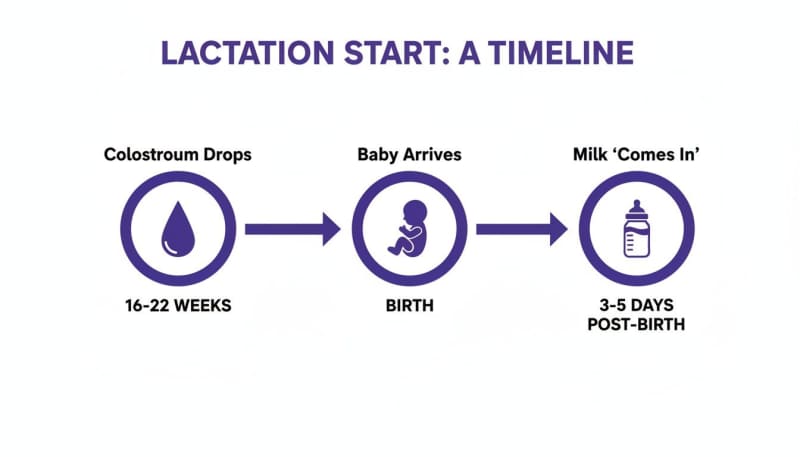
As the infographic highlights, your body is busy preparing milk for more than half of your pregnancy. This ensures everything is ready to go the moment your baby arrives.
Your Lactation Timeline At A Glance
Getting familiar with the different phases can make the whole process feel a lot less mysterious. Each stage has a unique and vital purpose in nourishing your newborn. This table breaks it all down, giving you a simplified overview of what to expect from mid-pregnancy through the first week with your baby.
| Stage | When It Happens | What Your Body Is Doing |
|---|---|---|
| Colostrum Production | 16-22 Weeks Pregnant | Your breasts start making small amounts of that nutrient-dense "first milk." |
| Birth & First Feedings | Immediately Postpartum | Your baby gets colostrum, which is crucial for protecting their new immune system. |
| Milk "Coming In" | 3-5 Days Postpartum | Your body shifts from producing colostrum to a much larger volume of mature milk. |
Seeing it laid out like this can help you feel more prepared and confident as you get ready to meet your little one and begin your feeding journey.
The Two Key Stages of Milk Production Explained
Many expecting parents think of lactation as a single event, the moment their milk "comes in." But it's more of a journey with two very distinct, beautifully timed stages. Thinking of it as a two-part project can make the whole process feel much less mysterious. Part one is all about preparation; part two is the grand activation.
This first stage, Lactogenesis I, is all the behind-the-scenes work. It starts quietly around your second trimester when your body begins producing that amazing first milk, colostrum. The whole operation is managed by pregnancy hormones, especially progesterone, which acts like a construction foreman, building up the milk-making infrastructure inside your breasts.
Even though your body is making colostrum, high levels of progesterone keep the production on a slow drip. This is a brilliant safety measure. It prevents your body from making large volumes of milk before your baby has actually arrived. This stage is all about being ready, not about full-scale production.
The Switch to Full Production
The second stage, Lactogenesis II, is what most people think of as their milk "coming in." This is the main event, the activation phase. It’s triggered by a dramatic hormonal shift that happens the moment you give birth.
The key trigger? The delivery of the placenta. Once the placenta is out, your body's progesterone levels plummet. This sudden drop is the green light your body has been waiting for. It allows another crucial hormone, prolactin, to finally take the lead and ramp up milk production in a big way.
This shift from small amounts of colostrum to a higher volume of milk is a biological response to childbirth. The removal of the placenta signals that the baby has arrived and needs a much larger food supply.
Within about three to five days after birth, you'll likely feel your breasts become noticeably fuller, heavier, and maybe even a bit tender. This is the physical sign that Lactogenesis II is in full swing. Your body is officially transitioning from making that precious, low-volume colostrum to producing mature milk in much greater quantities. Understanding this two-stage process helps you see just how perfectly your body times everything for your baby's arrival.
Signs Your Body Is Preparing to Make Milk
Long before you see a single drop of milk, your body is hard at work, sending out clues that it’s getting ready for your baby. Understanding these physical changes can make the whole process feel less mysterious and a lot more empowering. Think of them as positive signs that your body is right on track.
One of the earliest and most common hints is a change in your breasts. They might feel tender, sore, or noticeably heavier than usual. This is all thanks to a surge of hormones that encourage milk-making tissues to grow and increase blood flow to the area.
You might also notice your breasts getting bigger, sometimes by a full cup size or more. This expansion is your body literally building the factory and making room for the milk ducts and glands that will nourish your baby.
Visible Changes to Expect
Beyond just how they feel, your breasts will probably start to look different, too. These visual cues are all part of the natural prep work.
- Darkening Areolas: The area around your nipple, called the areola, may get darker and larger. It's thought that this acts like a little bullseye, helping your newborn find their food source more easily.
- Visible Veins: Don't be surprised if you see more prominent blue veins crisscrossing your breasts. This is simply a sign of increased blood supply, which is absolutely essential for milk production.
- Leaking Colostrum: Some people start to notice small drops of a thick, yellowish fluid leaking from their nipples, especially in the third trimester. This is colostrum, your baby's very first food, and it’s perfectly normal for a little to leak out ahead of time.
It’s also completely normal not to leak. The absence of leaking colostrum says absolutely nothing about your ability to produce plenty of milk later. Every body is different, and whether you leak or not, your body is still making that "liquid gold" on the inside. Getting familiar with these changes is a great first step, and you can learn even more about how to prepare for your breastfeeding journey in our detailed guide.
A key thing to remember is that while colostrum is produced during pregnancy, the switch to a high volume of milk usually happens 48 to 72 hours after birth.
This event, known as lactogenesis II, is triggered by the delivery of the placenta. The resulting drop in progesterone allows other hormones to kickstart full milk production. For most vaginal deliveries, about 90% of moms will experience their milk coming in by day three postpartum. To see more on this topic, you can review the findings from this study on lactation.
What Happens with Lactation Right After Birth
The big moment is here, and your baby has finally arrived. This is when your body’s lactation process really kicks into high gear, shifting from quiet preparation to active production. The most critical trigger for this change is the delivery of your placenta. This event causes a sharp drop in progesterone levels, giving the milk-making hormone, prolactin, the green light to take over.

For the first day or two, your baby will be drinking that powerful first milk, colostrum. It’s produced in small, concentrated amounts that are perfect for a newborn’s tiny stomach, which is only about the size of a cherry at birth.
These initial feeds are incredibly important. Not only do they provide your baby with vital antibodies, but they also signal your body to start making more milk. Frequent skin-to-skin contact and nursing within the first hour of birth can help make these signals even stronger.
Your Milk 'Coming In'
Usually, around day three to five postpartum, you’ll notice a pretty significant change. Your breasts will likely feel much fuller, heavier, and perhaps a bit warm or tender. This is the moment most people are talking about when they say their milk is "coming in."
This feeling of fullness, sometimes called engorgement, is a clear sign that your body has successfully shifted from producing low-volume colostrum to a much more abundant supply of transitional milk. This milk is thinner and whiter than colostrum.
By the end of the first week, this transitional milk will ramp up in volume, often reaching 500-750ml per day. It’s also higher in fat and lactose to support your baby’s rapid growth. In the United States, where breastfeeding initiation rates are high at 87.4% but drop off significantly by three months, understanding this early timeline is key to building confidence.
Your body is essentially responding to demand. The more frequently and effectively your baby removes milk, the more milk your body is signaled to produce. It's a beautiful supply-and-demand system.
This initial period can feel intense, but remember that the fullness is temporary and a positive sign of healthy milk production. For more support during this time, you can check out our helpful breastfeeding tips for new moms. This transition sets the stage for establishing a strong, long-term milk supply for your little one.
Factors That Can Affect Your Lactation Timeline
While there's a general roadmap for when you’ll start making milk, every person's timeline is unique. A handful of factors can influence how quickly your body ramps up into full milk production. Understanding these variables isn't about causing worry. It's about being prepared and knowing when it might be time to ask for a little extra support.
For instance, if this is your first baby, your milk might take just a little longer to come in compared to someone who has breastfed before. Your body is navigating a brand-new process, so it can sometimes take an extra day or so for all the hormonal signals to click into place.
The type of birth you have can also play a role. A long or particularly stressful labor can sometimes delay when your milk arrives. In a similar way, a scheduled C-section that happens before labor begins might mean your body didn't get the same cascade of labor hormones that a vaginal birth provides.
Medical and Health Considerations
Certain pre-existing health conditions can also shift your lactation schedule. Being aware of these can help you and your healthcare team get ahead of any potential challenges before they start.
- Hormonal Conditions: Issues like Polycystic Ovary Syndrome (PCOS) or thyroid imbalances can interfere with the very hormones that govern milk production.
- Retained Placental Fragments: Since delivering the placenta is the trigger for your milk to come in, any small pieces left behind can trick your body into thinking it’s still pregnant, putting the process on hold.
- Previous Breast Surgery: Any surgery on the breast tissue has the potential to impact milk ducts or nerve function, which could affect your supply.
Even when things don't go exactly as planned, your body is incredibly resilient. Proactive steps like frequent hand expression or pumping can help stimulate milk production and keep your supply building, even if there’s a delay.
Mothers of preterm babies might also find their journey looks a bit different. One study focusing on babies born between 23-29 weeks found that lactation can be trickier, which really highlights the vital role of pumping since preemies often can't suckle effectively at first. Stressful births can also postpone milk onset, but proactive milk removal helps keep the process moving forward. You can find more insights in this detailed lactation research.
To give you a clearer picture, let's break down how different situations can play out.
How Different Factors Can Influence Milk Onset
This table lays out how various circumstances might affect the timing of when your milk fully transitions from colostrum to mature milk.
| Factor | Potential Impact on Timeline |
|---|---|
| First-Time Mother | May experience a slight delay (12-24 hours) as the body learns new signals. |
| Previous Breastfeeding Experience | Milk may come in sooner, as the body has established pathways. |
| Stressful or Long Labor | Can delay lactogenesis II due to elevated stress hormones like cortisol. |
| Scheduled C-Section (no labor) | The absence of labor hormones can sometimes slow the initial hormonal shift. |
| Retained Placental Fragments | Can significantly delay milk until the fragments are removed. |
| PCOS or Thyroid Issues | Hormonal imbalances may interfere with prolactin, potentially delaying milk. |
| Preterm Delivery | The body may not be fully prepared, and baby may be unable to nurse effectively. |
Remember, these are just potential influences, not guarantees. Many people with these factors go on to breastfeed without a hitch.
Understanding what can affect your timeline empowers you to advocate for yourself. If you have any concerns about how things are progressing, don't ever hesitate to talk to a lactation consultant. For a deeper dive, you can also check out our guide on the common causes of low milk supply.
When to Talk to a Lactation Expert
Knowing when to ask for help is a superpower on your parenting journey. Your body has been gearing up for this since the middle of your pregnancy, but that doesn't mean the first few days and weeks after birth are always a smooth ride. Reaching out for support early can make all the difference.
It’s a good idea to have a lactation professional on speed dial if you notice a few red flags. For instance, if your milk doesn't seem to be coming in or increasing in volume by day four or five postpartum, that's a sign to call someone. The same goes for significant pain that goes beyond that initial tenderness.
You should also seek guidance if you have any concerns about your baby's weight. If they seem overly sleepy or aren't waking up to feed at least eight times in a 24-hour period, an expert can help figure out what's going on.
Finding the Right Support for You
Thankfully, there are a few different types of help available. An International Board Certified Lactation Consultant (IBCLC) is really the gold standard for clinical, expert-level help, especially if you're dealing with more complex issues. You can also find incredible support from local breastfeeding groups or peer counselors. To get a better handle on what they do, you can check out our article on what a lactation consultant does.
The goal is to feel empowered, not overwhelmed. Normalizing the need for help is crucial, as getting expert advice early can prevent small issues from becoming bigger hurdles.
Health organizations all over the world recommend immediate skin-to-skin contact right after birth to get milk production going. This is especially vital for the roughly 10% of babies born preterm. The early colostrum your body produces is a lifesaver, packed with critical nutrition they desperately need. You can learn more about the science behind early lactation support.
While a lactation expert is your go-to for the mechanics of breastfeeding, don't forget the emotional side of this journey. The transition into parenthood is huge. If you're feeling significant emotional distress, it might be beneficial to understand what counselling is and how it can help. Being your own advocate and building a strong, multi-faceted support system are key to a positive feeding experience for both you and your baby.
Common Questions About Lactation During Pregnancy
With all the information out there, it's natural to still have questions about your own unique experience. Let's walk through some of the most common ones that come up when you're wondering, "when will I start lactating during pregnancy?"
Is It Normal If I Don't Leak Colostrum During Pregnancy?
Yes, it is completely normal. Plenty of people produce colostrum without ever leaking a single drop before their baby arrives.
Whether you leak or not isn't a reliable sign of your future milk supply. Your body is still doing all the important prep work on the inside. It's the huge hormonal shift after the birth that really kicks abundant milk production into high gear.
Can I Make My Milk Come In Faster?
While the main trigger is hormonal and largely out of your control, you can absolutely support the process. Getting lots of skin-to-skin contact with your baby right after birth is a fantastic way to stimulate all the right hormones.
Attempting to breastfeed or hand express colostrum within the first hour of birth is also highly encouraged. Frequent and effective milk removal, whether by your baby nursing or by using a pump, is the best way to signal your body to ramp up production once the process begins.
Will a C-Section Prevent Me from Breastfeeding?
Not at all. While having a C-section can sometimes cause a slight delay in when your milk fully comes in (often by a day or so), it absolutely does not prevent you from breastfeeding successfully. The key is to start skin-to-skin contact and try to nurse as soon as you're able to in recovery.
Don't hesitate to ask the hospital staff for help with positioning. Finding a comfortable hold is crucial after surgery and helps you effectively remove milk. Consistent stimulation is the name of the game for encouraging your supply, no matter how you deliver.
At Bornbir, we connect you with vetted, top-rated lactation consultants, doulas, and other perinatal experts to support you on your journey. Find the perfect provider for your family at https://www.bornbir.com.