
When you're preparing for labor, focused breathing is one of the most powerful tools you have. These aren't just any deep breaths; they are specific, intentional patterns used to manage pain, stay calm, and conserve precious energy during childbirth. Techniques like slow breathing and patterned breathing are designed to help you work with your body's contractions, not against them. They are a cornerstone of natural pain management during labor.
Why Breathing Is Your Superpower During Labor

The thought of labor can feel overwhelming. But what if I told you that you already possess a built-in tool to stay grounded and in control? That's your breath. It's so much more than just taking in air. It's an anchor that can steady you through the most intense moments.
When you consciously focus on your breath, you send a powerful signal to your nervous system to relax. This simple act triggers the release of endorphins, your body's own amazing pain relievers. It also dials down the production of stress hormones that can actually stall or slow down labor. Plus, good breathing ensures a steady flow of oxygen to you and your baby, which is vital for stamina.
The Science Behind the Breath
This isn't just theory; the benefits are backed by research. A major meta-analysis involving 1,418 participants showed that women who practiced breathing exercises had a significantly shorter second stage of labor. The average for the group that used these techniques was 5.51 hours, compared to 7.24 hours for the control group. That’s nearly two hours saved just by breathing with intention.
Think of this section as your foundation for learning how to cooperate with your body when the big day finally arrives.
The goal is to make these breathing patterns second nature. When a contraction begins, instead of tensing up, your body's automatic response will be to breathe through it. This simple shift can make each surge feel far more manageable.
A Preview of What You'll Learn
We're going to dive into several core techniques, each tailored for different phases of labor. Every pattern serves a unique purpose, from saving your energy in the early hours to helping you cope with the intensity of transition. You'll learn how to practice them now so you're ready when you need them most.
By the end, you'll feel empowered and prepared, knowing you have an effective strategy right at your fingertips. This is your first step toward a more centered and confident birth experience.
Your Breathing Toolkit For Every Stage Of Labor
Think of your breath as your most adaptable tool during labor. Just like you wouldn't use a hammer to turn a screw, you won’t rely on the same breathing pattern from the first contraction to the last. Each technique has a specific job, to help you conserve energy, manage intensity, and stay centered as you move through each stage.
The real magic happens when you can match your breath to the moment. By practicing these different patterns ahead of time, they’ll become second nature. You'll be able to respond to your body's cues without even thinking about it. Consider this toolkit your roadmap for working with your body, not against it.
The Foundational Cleansing Breath
Before we get into the specifics, let's start with the one breath you'll use over and over: the cleansing breath. It’s a simple, deep breath that acts as a powerful signal for the beginning and end of every single contraction. Think of it as your mental reset button.
- How to do it: As you feel a contraction begin, take a long, deep breath in through your nose. Then, as you exhale, release it slowly and audibly through your mouth with a sigh. Do it again as the contraction fades away.
- Why it works: This simple practice creates a clear boundary around each surge. It tells your mind and body, "Okay, a wave is coming, I'm ready," and then, "That one is over, I can rest now."
This small action is huge for staying present and tackling labor one contraction at a time. It keeps the whole experience from blurring into one long, overwhelming event.
Slow Breathing For Early Labor
When you first notice those early twinges at home, your first instinct might be to start breathing hard and fast. Resist that urge. Early labor is a marathon, not a sprint, and your number one goal is to conserve energy. This is where slow breathing is your best friend.
The idea is to imagine you’re breathing in calmness and breathing out any tension. Your pace should be about half your normal rate, roughly six to nine breaths per minute.
To practice, try this scenario: You're timing contractions, and they're still about 10 minutes apart. Inhale slowly through your nose for a count of four, feeling your belly expand. Then, exhale just as slowly through your mouth for a count of six. That longer exhale is the secret sauce for triggering your body's relaxation response.
Your partner can make a huge difference here by breathing with you or counting softly. The entire focus is on rhythm and relaxation, keeping your body as loose and soft as possible.
Matching Breathing Techniques to Labor Stages
Knowing which tool to pull out of your toolkit and when can make all the difference. Here’s a quick-reference guide to help you match the right breathing technique to the right moment.
| Labor Stage | Recommended Breathing Technique | When To Use It |
|---|---|---|
| Early Labor | Slow Breathing | During early, milder contractions to conserve energy and promote relaxation. |
| Active Labor | Patterned Breathing ("hee-hee-hoo") | When contractions intensify and slow breathing is no longer enough to manage them. |
| Transition | Pant-Blow Breathing | During the most intense phase, especially when you feel the urge to push but it's not time. |
| Throughout Labor | Cleansing Breath | At the beginning and end of every contraction to signal a reset. |
Practicing this progression beforehand will help the transitions from one technique to the next feel smooth and instinctive on the big day.
Patterned Breathing For Active Labor
As your labor progresses and contractions become stronger, longer, and closer together, you’ll probably find that slow breathing just isn't cutting it anymore. That’s your cue to switch gears to patterned breathing, sometimes called "hee-hee-hoo" breathing. This technique is designed to distract your mind and, crucially, prevent you from holding your breath when things get intense.
This approach isn't new. The evolution of structured breathing for labor, especially through Lamaze methods, was a major shift in how birthing people could manage labor without medication. Modern research continues to validate these techniques, studying their effectiveness by measuring pain perception before and after the exercises at specific points of cervical dilation.
Here’s a simple pattern to practice:
- Start with a deep cleansing breath as the contraction builds.
- Take a series of light, shallow breaths in and out through your mouth ("hee-hee-hee"). Keep your jaw and shoulders soft.
- Follow the series with one longer, more deliberate exhale ("hoo").
- Repeat this "hee-hee-hoo" pattern for the duration of the contraction.
- End with another cleansing breath as the contraction fades.
Giving your brain a specific, rhythmic task makes it much harder to fixate on the pain. Understanding what to expect during labor can also make these shifts in intensity and technique feel much more manageable.
Pant-Blow Breathing For Transition
Transition is famous for being the most intense part of labor, but it's also usually the shortest. During this phase, you might feel a powerful, overwhelming urge to push before your cervix is fully dilated. The pant-blow technique is an absolute lifesaver here, specifically designed to help you ride out that urge without tensing up.
Think of it as a faster, lighter version of patterned breathing. A common pattern is a series of three or four quick pants followed by a more forceful "blow" out, like you’re blowing out a candle. For example: "pant-pant-pant-BLOW."
This technique keeps your breathing shallow and high in your chest, which physically helps prevent you from bearing down. Your partner can be invaluable here. Ask them to get close, make eye contact, and do the pattern with you. It can be the one thing that keeps you focused when you feel like you're losing control.
How To Practice Breathing Before Your Due Date
Let’s be real: the delivery room is not the place you want to be learning a new skill for the first time. Just like you wouldn't show up to a marathon without ever having gone for a run, you don't want to wait until your first big contraction to figure out your breathing.
Practicing beforehand is all about building muscle memory. The goal is to make these breathing patterns so automatic that you can fall back on them without even thinking when labor gets intense.
You can start today with a simple routine. Set aside just five to ten minutes a day to get comfortable. Find a quiet spot, sit down, close your eyes, and just cycle through the different techniques we’ve discussed, from the slow, deep breaths to the lighter, patterned ones.
Building Muscle Memory Under Pressure
To really get the hang of it, try using these techniques during moments of minor, everyday discomfort. Woken up by a leg cramp at 3 a.m.? Perfect. Use your slow, deep breathing to work through the sensation. Feeling your shoulders tense up after a long day? Take a few cleansing breaths to release that stress and recenter yourself.
This is how you train your body to associate the breath with relief, making it a natural, go-to coping mechanism.
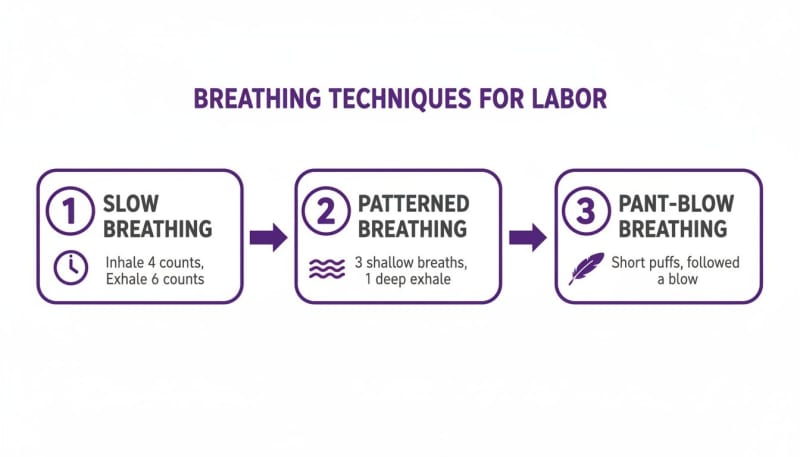
Think of it like a roadmap for your labor. Visualizing how you'll move from those deep, clock-like breaths to the lighter, feathery ones helps turn an abstract idea into a solid plan you can count on.
Integrating Practice Into Daily Life
The best kind of practice is the kind that doesn’t feel like a chore. The good news is you can weave these exercises right into your existing routine.
- On your commute: Instead of zoning out to the radio, focus on your breath. You could try timing your inhales and exhales with the traffic lights.
- While doing chores: Mundane tasks like folding laundry or washing dishes are actually great opportunities for mindful breathing. Focus on a steady, rhythmic pattern as you work.
- As you wind down for bed: Use slow breathing to quiet your mind and relax your body. It's a fantastic way to ease into a better night's sleep, which is precious during pregnancy.
Attending great childbirth prep classes is another fantastic way to get structured practice time with expert feedback.
How Your Partner Can Help
Your birth partner isn't just a bystander here. They're your coach. Practicing together is one of the best ways to prepare as a team.
Have your partner time "practice contractions" for you. They can start with 45 seconds and gradually work up to a minute or more, giving you a chance to hold your focus through the duration. They can also offer gentle cues if you start to lose your rhythm, like saying "breathe down into your belly" or "relax your jaw."
Making eye contact with you and breathing along can be an incredibly powerful way to keep you grounded during an intense surge. This shared experience does more than just prepare you for labor; it strengthens your connection and gets you both ready to work together on the big day.
Combining Breathing With Other Comfort Measures
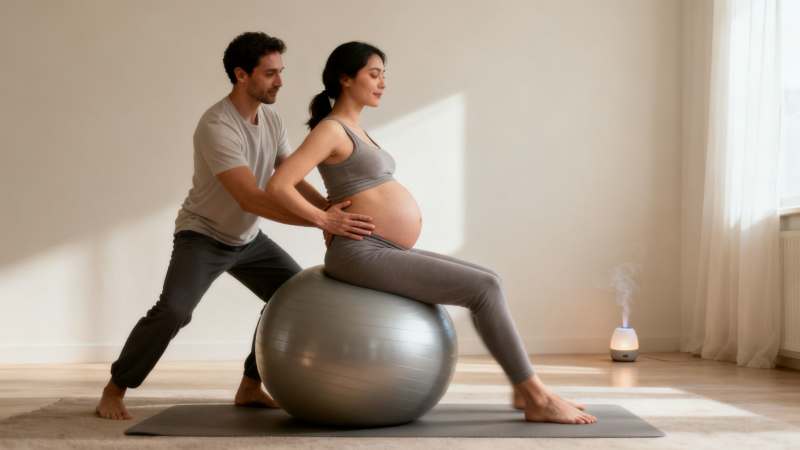
While your breath is an incredible anchor during labor, it becomes a true superpower when you pair it with other comfort measures. Think of it as building a complete toolkit for your birth experience. The goal is to layer different strategies, using your breath to stay centered while your body finds comfort through movement and positioning.
This synergy allows you to listen and respond to what your body needs in the moment. You can adapt and adjust, finding the unique combination that works best for you as your labor progresses. Your breathing is the foundation, and these other measures are the supports that hold everything up.
Syncing Breath With Movement And Positioning
Movement is an absolute game-changer during labor. When you sync it with your breath, it’s even better. The rhythm of your breathing can guide your body’s motion, creating a calming, meditative effect that helps you ride the wave of each contraction. This active approach can ease pain, help your baby descend, and even help labor move along.
Here are a few practical ways to pair them:
- On a birth ball. Sit on the ball and gently sway your hips in a figure-eight pattern. Sync this movement with slow, deep breathing, inhaling as you circle one way and exhaling as you circle back. This is fantastic for relieving pressure from back labor.
- Rocking in a chair. If you need a break, sit backward on a sturdy chair and lean forward over the backrest. Use your slow breathing pattern while gently rocking back and forth. This opens your pelvis while giving your legs a rest.
- Hands-and-knees position. This classic position takes pressure off your spine. When a contraction hits, you can switch to a patterned "hee-hee-hoo" breath to stay on top of the intensity. Gently rocking your hips adds another layer of relief here.
The real magic happens when you let your breath lead the movement. Instead of just moving to distract yourself, allow your inhales and exhales to create a steady, predictable rhythm for your body to follow. This is what keeps you feeling grounded and in control.
Creating A Supportive Environment
The space you labor in can dramatically affect your ability to relax and focus. A calm, supportive environment amplifies the power of your breathing techniques. Think about what makes you feel safe and relaxed, and try to bring those elements into your birth space, whether you're at home or in the hospital.
Beyond the immediate environment, integrating practices like prenatal chiropractic care for pregnant women can offer significant physical comfort and help prepare your body for the work of labor.
The benefits aren't just about feeling better, either. Research shows that specific techniques have a measurable impact. For example, one study found that using deep breathing with long exhalations during the pushing stage shortened it by as much as 50 minutes compared to women who didn't use the technique.
Simple additions to your environment can make a world of difference:
- Calming music or sounds.
- Dim lighting.
- Aromatherapy with scents like lavender.
These small details signal to your brain that it's safe to relax, making it that much easier to sink into your breathing patterns. You can also explore other pain management options by checking out our guide on nitrous oxide during labor vs epidural.
Finding The Right Professional Support For Your Birth
Learning breathing techniques on your own is a fantastic start. But let's be real. Having an expert in your corner can be a total game-changer. This is where professional support bridges the gap between knowing what to do and feeling truly confident when the time comes.
A doula or childbirth educator offers hands-on, personalized coaching. They can watch you practice, offer gentle corrections, and help you fine-tune your breathing until it feels like second nature. Think of them as an essential part of your birth toolkit.
Personalized Guidance When It Matters Most
Every labor is unique, and a technique that works wonders for one person might not click for another. A professional can pivot in the moment, suggesting new breathing patterns or comfort measures based on how your labor is unfolding. They offer the kind of focused encouragement that keeps you grounded when your energy starts to dip.
For instance, they might notice you’re tensing your shoulders during slow breathing and give you a gentle physical reminder to release. Or, if patterned breathing isn’t quite cutting it through a particularly intense contraction, they can suggest a new rhythm or help you shift into a better position. This is the kind of real-time feedback you just can't get from a book or a video.
Building Your Ideal Support Team
Finding the right person is everything. You want someone who gets your birth philosophy and makes you feel safe, heard, and supported. Platforms like Bornbir make it easier than ever to find a doula near me by letting you browse profiles, read reviews from other parents, and connect with vetted perinatal professionals right in your community.
Investing in professional support is an investment in a more positive, empowered birth experience. It’s about having someone on your team whose sole focus is your physical and emotional well-being.
Sometimes, the birth journey can be emotionally challenging or even traumatic. It's important to know that support extends beyond the delivery room. For anyone who experiences emotional distress related to their birth, specialized Trauma Counselling can be an invaluable resource for healing. Having the right people in place, both during and after, ensures you are cared for every step of the way.
Common Questions About Breathing For Labor
It’s completely normal to have a few lingering questions, even after you’ve practiced your breathing techniques. Let's walk through some of the most common "what ifs" to help you feel confident and prepared for whatever comes your way.
Thinking about all the possibilities on the big day can feel a little daunting, but having a game plan for these scenarios is one of the best ways to stay in the driver's seat. Your breath is your anchor, and knowing how to find it again, even when things get intense, is what this is all about.
What If I Forget The Techniques In The Moment?
First, take a deep breath right now. It is one of the most common fears that all your practice will fly out the window once labor really ramps up. This is exactly why you practice. To build muscle memory that your body can tap into even when your brain feels foggy.
If you find yourself losing the rhythm, don't panic. This is the perfect moment for your partner or doula to step in.
- Make eye contact. Ask them to look you right in the eye and breathe with you. Syncing up with their calm rhythm can get you back on track almost instantly.
- Use simple cues. A quiet reminder like, "let your exhale be longer," or, "breathe down into my hand on your back," can be incredibly grounding.
- Go back to the basics. When in doubt, just focus on a simple, slow breath. Inhale through your nose, exhale through your mouth. That’s it. That alone is powerful enough.
Remember, this isn't about perfection. The goal is to use your breath to stay as relaxed and present as possible, one contraction at a time.
Can My Partner Really Help With My Breathing?
Absolutely. Your partner's role goes way beyond just holding your hand. Think of them as your coach, your mirror, and your steady presence all in one. Research consistently shows that continuous support during labor leads to more positive birth experiences.
Their most important job is to help you stay grounded in your breathing, especially when a wave of contractions feels overwhelming.
They can breathe with you, count out the rhythm for you, and give you gentle physical reminders to relax your jaw or drop your shoulders. When they actively participate, it transforms the experience into a true team effort, which can be incredibly empowering for both of you.
They can also be your advocate, helping to keep the room calm and reminding the medical team of your preferences. This frees you up to focus completely on the work your body is doing.
Is It Ever Too Late To Start Practicing?
It is never, ever too late. Even if you're reading this just a week before your due date, you can still gain a huge benefit from practicing breathing techniques. While more time is always nice, any amount of focused practice will help.
Just dedicating 10-15 minutes a day from now until labor begins can make a world of difference. Focus on mastering just two essential techniques:
- Slow Breathing: Your go-to for managing early contractions and saving your energy.
- Cleansing Breath: The perfect way to start and end every single contraction with intention.
Even this small amount of practice can build the muscle memory you need to feel calm and in control when it matters most. The key is to just start now. You've got this.
Finding the right support is a key step in preparing for a positive birth experience. Bornbir connects you with thousands of vetted doulas, childbirth educators, and other perinatal professionals who can provide personalized guidance on breathing techniques and more. Find your ideal birth support team on Bornbir.