
Thinking about hiring a doula for a hospital birth can feel a bit like mixing oil and water. Many people still picture doulas exclusively at home births, but the reality is they're an incredibly powerful asset within the structured environment of a hospital. Think of a doula as your personal, non-medical birth coach, whose entire focus is on your physical comfort and emotional well-being through every stage of labor and delivery.
Understanding the Role of a Hospital Birth Doula
Let's get clear on what it really means to have a doula by your side in a hospital room. A doula doesn't take the place of your partner or your medical team. Instead, they become an experienced and seamless addition to your support system, working right alongside everyone else.
Imagine your birth is a major expedition up a mountain. Your doctors and nurses are the expert guides. They know the terrain, monitor safety, and handle all the technical, clinical aspects of the climb. Your doula? They're your personal sherpa. They're the one providing continuous encouragement, anticipating your needs before you even voice them, and carrying the emotional and physical comfort tools to help you reach the summit.
Debunking a Common Myth
The idea that doulas are only for out-of-hospital births is simply outdated. The data actually tells a completely different story. A comprehensive analysis revealed that a staggering 88.8% of all doula-assisted births happen in hospitals. This shows just how well doula care has been integrated into mainstream maternity services. Of those hospital births, the vast majority, 68.5%, were attended by an OB/GYN.
This widespread presence in hospitals proves how valuable their support is within a medical setting. They know the ropes, understand hospital policies, and can be incredibly effective advocates and communicators for you.
A doula’s purpose is not to speak for you, but to help you find your own voice. They ensure your questions are heard and your preferences are respected by the medical staff, creating a bridge of communication.
To clarify these distinct yet complementary roles, here’s a quick breakdown of how your doula and your medical team work together.
Doula vs. Medical Team: A Quick Comparison
This table helps illustrate the different, yet equally important, roles your doula and the hospital staff play during your labor and delivery.
| Area of Focus | Your Doula's Role | Your Medical Team's Role (Nurses, OB/GYN) |
|---|---|---|
| Primary Goal | Emotional & physical comfort, continuous presence, advocacy. | Clinical safety, medical monitoring, and delivery of the baby. |
| Type of Support | Non-medical: comfort measures, positioning, encouragement, information. | Medical: Fetal monitoring, vaginal exams, administering medication, performing procedures. |
| Continuity of Care | Stays with you continuously throughout labor and delivery. | Works in shifts; care is provided by whoever is on duty. |
| Relationship | Hired by you; builds a personal relationship over time. | Assigned to you by the hospital; professional and clinical relationship. |
| Communication | Facilitates communication, helps you ask questions and understand options. | Provides medical information, explains procedures, and documents progress. |
Ultimately, your doula and your medical team are both there to ensure you and your baby have a safe and positive experience. They just approach it from different, complementary angles.
Your Advocate and Coach
So, what does this support actually look like in the delivery room? A doula for a hospital birth might:
- Suggest different laboring positions to help things progress and manage pain.
- Provide hands-on comfort like massage, counter-pressure on your hips, or applying cool cloths.
- Help you and your partner make sense of medical terms and procedures as they come up.
- Offer steady emotional reassurance when labor feels intense or overwhelming.
In a setting that can often feel busy and impersonal, your doula is a constant, calming presence. Their one and only job is to focus on you and your experience. To get an even deeper sense of their specific duties, you can learn more about what a birth doula does in our detailed guide.
Platforms like Bornbir are specifically designed to connect you with vetted doulas who have extensive experience supporting families in hospital settings, ensuring you find the perfect fit for your birth team.
The Tangible Benefits of Doula Support in the Hospital
Bringing a doula into your hospital birth offers so much more than just having a friendly face in the room. Their presence provides real, evidence-backed advantages that can completely reshape your birth experience. These benefits fall into three main buckets: emotional, physical, and informational support.
A bustling hospital, with its clinical feel and rotating shifts of nurses and doctors, can be overwhelming. A doula is your constant. They are an anchor, there exclusively for you and your partner, which can dramatically lower anxiety and help you feel more grounded and in control of the situation.
Emotional and Physical Comfort
This unwavering emotional stability is a game-changer. When you feel safe and supported, your body can relax and do the hard work of labor more effectively. Your doula is right there with you, offering a steady stream of encouragement and helping you ride the intensity of each contraction with confidence.
But it’s not just about emotional reassurance. A doula also provides incredibly practical, hands-on physical support. This is where their experience really shines.
- Counter-pressure: They know just the right spots on your lower back or hips to apply firm pressure, bringing incredible relief during back labor.
- Position changes: A doula can suggest new positions to keep labor moving and manage pain, whether it’s using a birth ball, leaning over the bed, or trying something new.
- Comfort measures: They might offer a soothing massage, place a cool cloth on your forehead, or simply guide you through your breathing when things get tough.
This kind of dedicated physical support makes a huge difference in your comfort and stamina throughout labor.
Informational Advocacy and Better Outcomes
Perhaps one of the most vital roles a doula plays in the hospital is as an information bridge. It's important to know they don't offer medical advice. What they do is help you process the information coming from your medical team so you can make choices that feel right for you.
A doula empowers you to be an active participant in your own care. They might quietly ask, "Would you like me to help you rephrase that question for the doctor?" or "How are you feeling about that suggestion? Do you want to ask if there are other options?"
This kind of support ensures you fully understand the pros and cons of potential interventions, like an epidural or Pitocin. Having someone to help you talk through these decisions in the moment is invaluable. It’s not about avoiding medical support. It’s about making sure the support you receive aligns with your personal preferences and goals. You can take a deeper dive into these advantages by reading our guide on the many benefits of having a doula.
The graphic below shows just how common it is for doulas to be providing this support right inside a hospital.
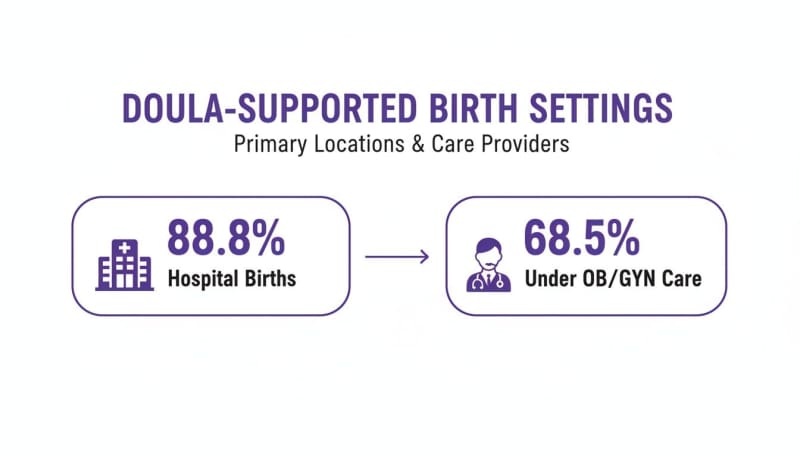
This data confirms that the vast majority of doula-supported births happen right where most people give birth: in a hospital, under the care of an OB/GYN.
And this support has a measurable positive impact on clinical outcomes. Research has consistently shown that having a doula present in a hospital setting is linked to real improvements. For instance, one study found that doula care was associated with a 7.8% reduction in cesarean surgeries. The C-section rate dropped to just 12.6% for those with doula support, compared to a national average of 20.4%. The same research also pointed to lower rates of prematurity and low birth weight, highlighting the tangible, health-boosting benefits a doula brings to the entire birth team.
How a Doula and Hospital Staff Work Together

One of the biggest worries I hear from expecting parents is how their doula will get along with the doctors and nurses. It’s a totally valid concern, but the relationship is truly designed to be collaborative, not confrontational. A professional doula understands the hospital environment and sees themselves as part of your team, not an outsider.
Think of your doula as a communication bridge. They work to foster a positive and respectful atmosphere, making sure your voice is heard without stepping on anyone’s toes. Their goal is to help you and the medical staff work together seamlessly for the best possible experience.
Fostering a Collaborative Environment
A skilled doula knows the lay of the land. They understand hospital protocols and the roles of each medical professional. They respect the clinical expertise of the nurses and doctors. Their job isn't to challenge medical authority but to make sure you have the information and support you need to make your own informed decisions.
This collaborative spirit is what makes a doula for a hospital birth so effective. By building a good rapport with the staff, they help create a more relaxed and supportive birth room for everyone.
For instance, instead of questioning a nurse’s actions, a doula might gently remind you of a comfort measure you wanted to try. This subtle shift keeps you at the center of your own care. You can get more insight into this dynamic by exploring our article on what doctors think about doulas.
What a Doula Does and Doesn't Do
Understanding the clear boundaries of a doula’s role is key to seeing how they fit into the hospital setting. Their support is entirely non-medical, focused completely on you and your partner.
Here’s what you can expect a doula to do in the hospital:
- Help you ask questions. They can assist you in figuring out what to ask your doctor, ensuring you get the clarity you need.
- Offer physical support. This includes hands-on things like massage, suggesting position changes, and applying counter-pressure during contractions.
- Provide emotional encouragement. A doula is a constant, calming presence during what can be an intense experience.
- Gently remind staff of your preferences. If you have a birth plan, they can help you advocate for your wishes in a respectful, productive way.
It is just as important to know what a doula does not do. Their professional scope of practice has firm boundaries that ensure they never interfere with medical care.
A doula is not there to give medical advice, perform clinical tasks like cervical checks, or make decisions on your behalf. Their purpose is to empower you with information and support so you can make your own choices with confidence.
A Real-World Example in Action
Let’s walk through a common hospital scenario. Your doctor comes in and suggests an intervention, like starting Pitocin to speed up labor. The moment might feel overwhelming, and it can be hard to think clearly under pressure.
This is where your doula steps in, not to argue with the doctor, but to support you. They might quietly turn to you and ask, "How are you feeling about this suggestion? Would you like to ask about the benefits, risks, or if we have any alternatives we could try first?"
That simple, gentle prompt changes everything. It creates a pause, giving you the space to process the information and communicate your own needs. It keeps the dialogue open and respectful, paving the way for a smoother, more communicative experience for everyone involved in your hospital birth.
How To Find the Right Doula for Your Hospital Birth
Alright, let's get into the practical side of things. How do you actually find the right person to join your birth team in the hospital?
Finding the perfect doula for your hospital birth isn't about ticking boxes on a resume. It’s much more about finding a professional whose energy and approach make you feel completely supported and seen. This is someone who will be with you during one of the most intense and vulnerable moments of your life, so feeling comfortable with them on a personal level is non-negotiable.
Starting Your Search for a Hospital Doula
A great place to kick off your search is a platform designed specifically to connect you with perinatal pros. Services like Bornbir let you filter your search to find doulas who have real-world experience in the exact hospital where you plan to deliver. That kind of insider knowledge can be a game-changer.
You can also go the old-fashioned route and ask for recommendations from your OB/GYN, midwife, or friends who’ve had positive birth experiences. Once you have a shortlist of a few potential doulas, it's time to set up some interviews. This is your chance to really see if your personalities and birth philosophies click.
The demand for this kind of support is booming for a reason. The global doula care services market was valued at about USD 1.5 billion in 2023 and is projected to hit USD 3.8 billion by 2032. This isn't just a trend. It's a major shift as more families recognize just how beneficial personalized maternal care can be. Discover more insights about the expanding doula market on dataintelo.com.
The Importance of the Interview
Think of the interview as a two-way conversation, not a one-sided interrogation. You're getting to know them, and they're getting to know you. The ultimate goal is to find out if you vibe well together.
While certifications from organizations like DONA International or CAPPA are a good sign of foundational training, remember that a doula's hands-on experience and personality are just as critical. Many incredibly effective doulas practice without formal certification. Don’t let credentials be the only thing you consider. That personal connection is what truly matters.
The "right" doula isn't just the one with the longest resume. It's the one who makes you feel heard, respected, and safe. Trust your gut during the interview process.
Key Questions to Ask a Potential Doula
To find the best fit, you need to ask questions that dig deeper than the basics. You want to understand their approach, their experience, and how they navigate the unique environment of a hospital. Having a list of questions ready will help you compare candidates and make a decision you feel great about. For a more exhaustive list of what to ask, check out our complete guide on how to choose a doula.
To get you started, we've put together a practical checklist to guide your conversations and help you find the perfect match for your hospital birth experience.
Essential Questions for Your Doula Interview
This table is a practical checklist to help you interview potential doulas and find the perfect match for your hospital birth experience.
| Category | Key Questions to Ask |
|---|---|
| Experience & Philosophy | What is your philosophy on birth? How do you see your role in a hospital setting? How many hospital births have you attended? |
| Hospital-Specific Knowledge | Are you familiar with my hospital's policies on support people? Have you worked with my doctor or midwife before? |
| Support for Your Choices | How do you support someone who wants an epidural? What's your approach if I need a C-section? |
| Handling Challenges | How do you handle disagreements with medical staff? What do you do if a birth isn't going according to our plan? |
| Partner Support | How do you involve and support my partner during labor? How do you make sure they feel included and confident? |
| Logistics & Fees | What are your fees and what do they include? When do you go on call for me? Do you have a backup doula in case of an emergency? |
Using these questions as a starting point will give you a clear picture of each candidate’s style and experience. Their answers will help you find a professional who not only has the right skills but also feels like a natural, supportive addition to your birth team.
Preparing for Your Birth With Your Doula
Hiring your doula is a huge step, but this is where the real teamwork begins. The time you spend together before your first contraction is what lays the foundation for a positive hospital birth. Think of this prenatal prep phase as crucial for building trust and getting everyone on the same page.
Most doula support packages include one or two prenatal visits. These aren't just casual get-to-know-you chats; they're dedicated working sessions. The goal is to align on what you want, explore your preferences, and build a strong rapport between you, your partner, and your doula.
Making the Most of Prenatal Visits
Think of these prenatal meetings as your strategy sessions before the main event. Your doula will want to hear everything. Your hopes, your worries, and what an ideal birth looks like to you. This is a safe space to be completely open.
The more your doula understands your perspective, the better they can show up for you. This is also the perfect time for your partner to ask questions and figure out how their role and the doula’s will complement each other. What you're aiming for is a seamless, intuitive support system on the big day.
Beyond the emotional and physical prep, your doula can also help you make sense of the medical side of things, like understanding essential pregnancy blood tests. Having a guide to help process all that information can be incredibly reassuring.
Creating a Flexible Birth Plan Together
One of the main things you'll do in these visits is create a birth plan. But the way a doula approaches this is different. It’s not about writing a rigid, unchangeable script. It’s about creating a flexible guide to your preferences.
Your doula will help you think through different scenarios that might pop up in a hospital. This process is less about the piece of paper itself and more about the conversations it sparks. You'll dig into your feelings on:
- Pain Management: Exploring your thoughts on everything from an epidural to unmedicated approaches.
- Labor Environment: Talking about what you'd prefer for lighting, music, and who is in the room with you.
- Interventions: Walking through common hospital procedures and how you’d like to approach them.
This creates a clear communication tool for your hospital care team. For some great starting points, you can explore practical tips on how to create a birth plan that really works for you.
A birth plan isn't a contract; it’s a conversation starter. It helps you explore your options and clarify your priorities, so your doula can advocate for what matters most to you, even when plans change.
Practicing Comfort Measures and Positions
Prenatal visits are also your time to practice. Your doula will demonstrate hands-on comfort techniques and laboring positions that actually work within the confines of a hospital room. This physical prep is just as important as the emotional prep.
You and your partner might practice things like:
- Counter-pressure techniques to relieve that intense back labor.
- Using a peanut ball to help open your pelvis while resting in bed.
- Different laboring positions that work around monitors and IV lines, such as leaning over the back of the hospital bed.
Practicing these ahead of time helps them feel like second nature when you're in labor. It gives your partner concrete, helpful things to do and helps you figure out what feels most soothing before the intensity really kicks in. This hands-on preparation ensures your whole team—you, your partner, and your doula—feels confident and ready for the big day.
How a Doula Supports Your Partner

One of the most common worries we hear is that bringing a doula into the birth room will push the partner to the sidelines. It’s a totally fair question, but in reality, the exact opposite happens. A doula doesn’t replace your partner; they empower them.
Think of it like this: You and your partner are climbing a mountain for the first time. The trail gets steep, and you're not sure which way to go. A doula is the experienced guide who knows the mountain like the back of their hand. They don't carry you up the mountain. They point out the best footholds, remind you to drink water, and cheer you on, making the climb a shared success story for you and your partner.
An Extra Set of Hands and a Calmer Mind
A doula’s support for a partner is both intensely practical and deeply emotional. Labor is a marathon, not a sprint, and it’s unrealistic to expect one person to be “on” for the entire time without a single break. This is where a doula becomes a game-changer for a partner’s stamina and confidence.
The doula can easily tag-team with your partner, making sure you are never left alone. This simple act of teamwork allows your partner to grab a meal, make a quick phone call to family, or just step into the hallway to breathe and process everything. That short reset can make all the difference, helping them come back feeling more present and ready to support you.
A doula’s presence gives the partner permission to be human. They can take breaks, feel their emotions, and ask for help without ever feeling like they’re failing at their role as the primary support person.
This support goes way beyond just covering for breaks. A doula also acts as a coach for the partner, too.
Turning Your Partner into a Support Superstar
It’s one thing for a partner to want to help. It’s another to know how to help when contractions are intense and things are moving fast. A doula can offer specific, in-the-moment guidance that turns a partner’s loving intentions into incredibly effective action.
For example, a doula can show a partner:
- The exact spot on your lower back to apply counter-pressure for maximum relief.
- Specific words of encouragement that might land better during a tough wave.
- How to help you safely change positions while navigating IV lines and monitors.
This kind of collaboration is a huge confidence booster. Instead of feeling like a worried bystander, your partner becomes an active, essential participant in the birth. With a knowledgeable guide on their team, your partner is freed up to focus on what only they can do, providing that intimate, loving connection.
The result is a stronger, more connected experience for everyone in the room. This teamwork is a huge part of what makes having a doula for a hospital birth so incredibly powerful.
Your Top Questions About Hospital Doulas, Answered
Planning a birth is full of questions, especially when you're bringing a doula into a hospital setting. It’s a fantastic way to blend personalized, continuous support with your medical care team. Let's clear up some of the most common questions we hear from parents-to-be.
What if I Want an Epidural?
This is a huge one, and thankfully, the answer is simple. A doula's job is to support your choices, period. If an epidural is part of your plan, your doula is 100% on board to help you through that process, judgment-free.
They’re invaluable before the epidural, helping you cope with contractions. As the anesthesiologist does their work, your doula can help you stay calm and hold the required position. Afterwards, since your mobility is limited, they are experts at helping you change positions in bed to encourage labor progression and keep you comfortable.
A doula supports the birthing person, not a specific type of birth. Their goal is to help you have a positive experience, and that includes fully supporting your decisions around pain management like an epidural.
How Much Do Doulas Cost?
The cost for a birth doula can vary quite a bit based on where you live, their level of experience, and what's included in their services. Generally, you can expect the fee to range from a few hundred to a couple of thousand dollars.
The good news is that professional support is becoming more accessible. A growing number of insurance plans are starting to cover doula services. Many families can also use funds from their FSA (Flexible Spending Account) or HSA (Health Savings Account) to pay for their doula, which can make a big difference.
Are Doulas Allowed in Hospitals?
Yes! The overwhelming majority of hospitals not only allow but welcome doulas as a valuable part of the birth team. They're recognized as essential support persons, not just another visitor.
Of course, it's always smart to double-check your hospital's most current visitor policy, just in case rules have recently changed. But you can feel confident that in most delivery rooms, your doula will be a welcomed presence.
When Is the Best Time To Hire a Doula?
Our sweet spot recommendation is to start your search during the second trimester. This gives you plenty of breathing room to look into a few different candidates, do some interviews, and make a decision without feeling rushed.
Hiring your doula by mid-pregnancy also gives you a fantastic opportunity to build a real connection over several prenatal visits. That trust and rapport are what make the support feel so seamless and powerful when your birthing day finally arrives.
Finding the right support shouldn't add more to your plate. On the Bornbir marketplace, you can easily find and compare vetted doulas who have experience at your specific hospital, ensuring you build the perfect team for your birth. Find your doula on Bornbir.