
Many common herbal teas are considered safe in moderation, but some are risky, and the final decision should always include a conversation with your perinatal provider. Guidance ranges from two cups a day in some sources to four cups a day in NHS advice, while caffeine from green or black tea should stay below 200 milligrams daily.
You may be standing in the kitchen with nausea, tiredness, and a mug of peppermint, ginger, or chamomile tea cooling beside you. The label says “natural,” the ingredients seem familiar, and you want relief without taking something that could affect your pregnancy. That's a sensible question, not an overreaction.
The practical answer depends on the exact plant, amount, preparation, product quality, medications, and stage of pregnancy. A tea bag used occasionally isn't the same as a concentrated extract, tincture, or supplement. Cultural traditions matter too, because the same common name can describe different plants or blends in different countries.
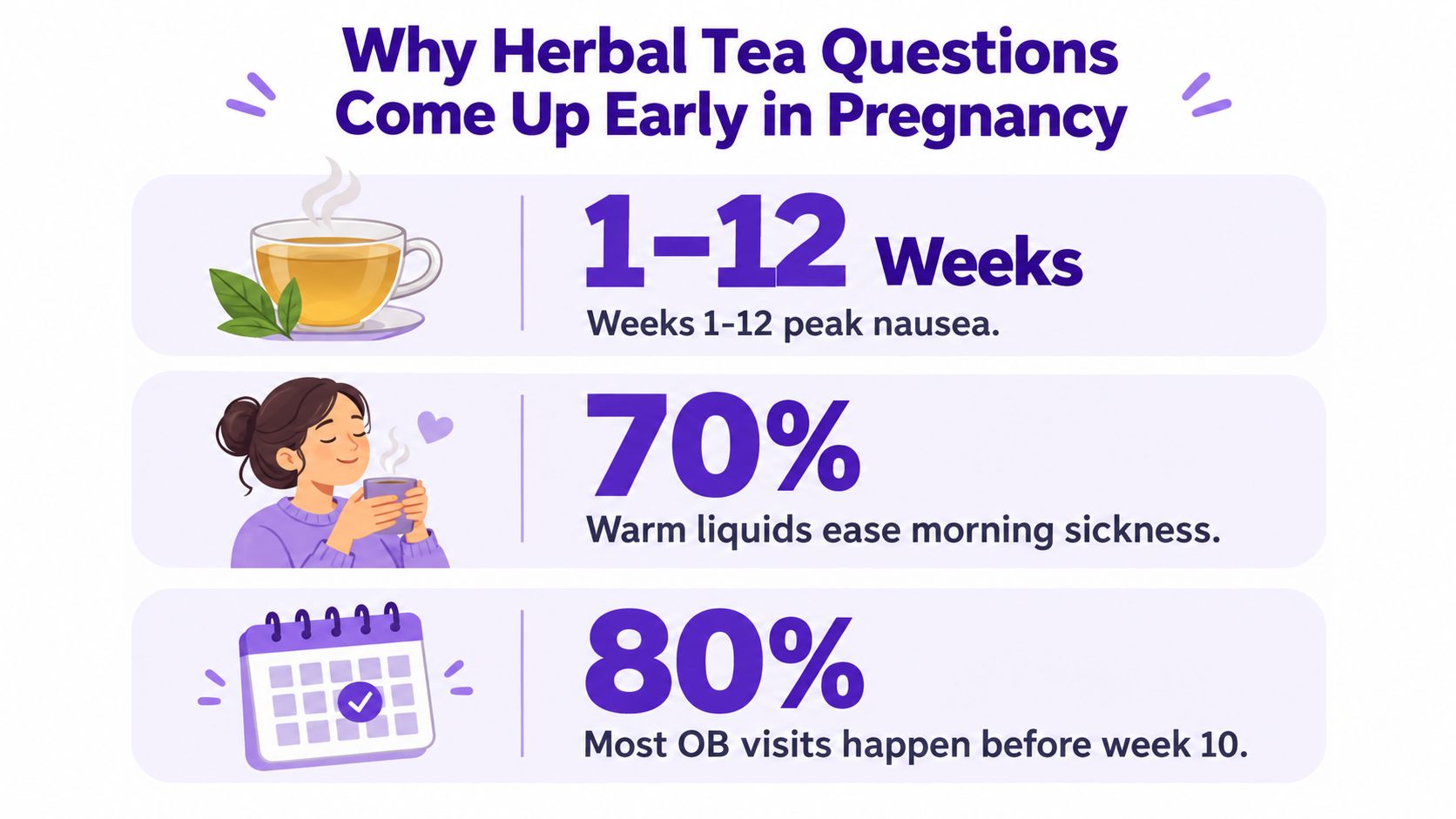
Why Herbal Tea Questions Come Up Early in Pregnancy
Early pregnancy often changes a simple drink into a real clinical question. Someone who usually starts the day with black tea may switch to peppermint when nausea hits. Someone else sips ginger tea repeatedly because warm fluids are the only thing they can tolerate. A family member may offer a traditional blend that sounds gentle, but the ingredients, strength, and purpose are not always clear.
Many people look for answers before the first prenatal visit, especially after they've just found out I'm pregnant. The question is immediate. Will this cup settle my stomach, or does it introduce a risk I do not recognize yet?
Herbal use is widespread, but the risk isn't uniform
Herbal medicine use in pregnancy is common, but patterns differ a lot by region, culture, and access to commercial products. A review of eight cross-sectional studies involving 2,729 pregnant participants in seven Asian countries found that 1,283 women, or 47.01 percent, used at least one herbal medicine during pregnancy. The most frequently reported products included peppermint at 22.8 percent, aniseed at 14.7 percent, olibanum at 12.9 percent, flixweed seed at 12.2 percent, and ginger at 11.5 percent. (Review of herbal medicine use during pregnancy)
That same review identified 33 herbs with uneven safety classifications. 13 were considered safe, five required caution, eight were potentially harmful, and seven lacked enough evidence for classification. In practice, that matters because the same herb may be taken as a light infusion, a long-boiled decoction, or a concentrated supplement. Product quality also varies. Two teas with similar names on the box may not expose a pregnant person to the same amount of the active plant compounds.
Other populations show different rates of use. The review also describes a multinational study involving pregnant women in 18 countries that reported herbal medicine use among 28.9 percent of participants, and another analysis that found use among 29.3 percent. Those numbers explain why this question comes up so early and so often. They do not make any specific tea safe.
Practical rule: Treat herbal tea as a plant-based product with an active ingredient, not as automatically harmless flavored water.
Why early pregnancy brings extra uncertainty
Early pregnancy is when symptoms are common, routines change fast, and reassurance is often hardest to get. Research on herbs in pregnancy is limited for ethical and practical reasons, so clinicians rarely have the kind of direct evidence people expect. The safer approach is usually individualized. Check the exact product, read the full ingredient list, consider how often it is used, and ask why the person is taking it in the first place.
That is especially important with traditional remedies and commercial blends. Common names can refer to different plants, and mixed products may include ingredients a person did not realize were there. In clinic, the safest decisions usually come from specifics, not from the word “natural” on the package.
What Makes Herbal Teas Different from Regular Teas
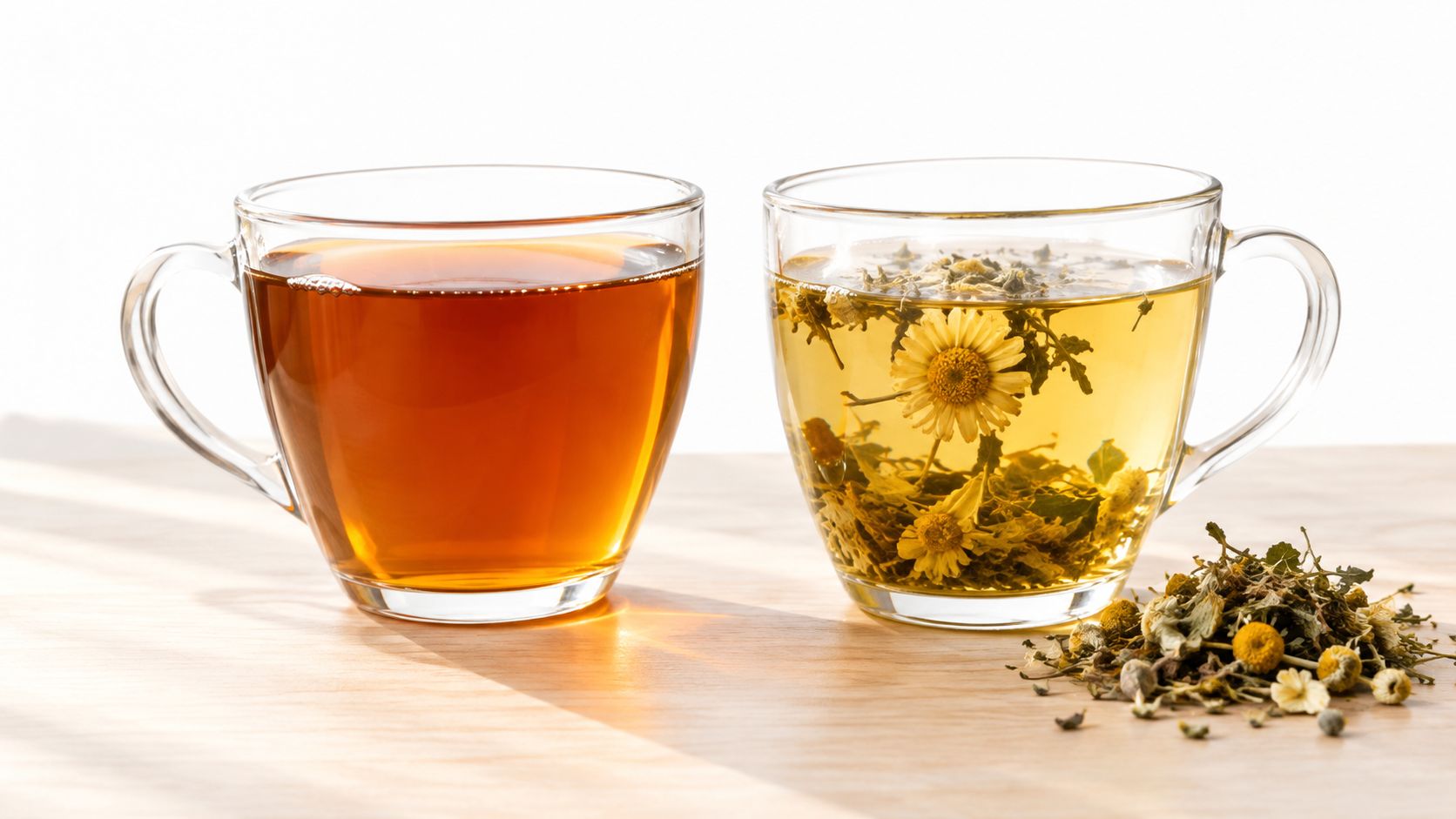
“Tea” describes the preparation, not always the plant in the cup. Green, black, white, and oolong teas all come from Camellia sinensis. Herbal infusions can be made from leaves, flowers, roots, bark, seeds, fruit peel, or several botanicals blended together.
Caffeine and plant identity are separate questions
A patient may swap her usual morning tea for a box labeled “herbal” and assume the main issue is solved. Often, only one part is solved. A true herbal infusion is usually caffeine-free unless the blend includes a caffeinated ingredient, but many products sold as wellness, energy, or detox teas still contain green tea, black tea, mate, guarana, or another stimulant source. The front label does not tell you enough. Read the full ingredient panel.
UK guidance recommends keeping total caffeine intake below 200 milligrams per day during pregnancy. That limit applies across drinks, including coffee and true teas made from Camellia sinensis. The amount can vary by brand and product, so the practical step is to check the package instead of assuming every cup is the same. (UK guidance on foods and drinks in pregnancy)
That leaves a real trade-off. Replacing coffee with an herbal blend may lower caffeine exposure, but it does not answer whether the herbs themselves make sense in pregnancy. In some cases, a plain black or green tea with clearly stated caffeine content is easier to assess than a mixed herbal product with unclear labeling.
Natural does not tell you the dose or the product quality
Plants have active compounds, and preparation changes exposure. A light tea made from a small amount of dried herb is different from a powdered extract, a tincture, or a product brewed much more strongly than directed. Even when two items use the same common plant name, the effect in practice may not be comparable.
This matters even more with traditional remedies and commercial blends. Common names may refer to different plants, and some mixtures combine several herbs chosen for effects on sleep, digestion, stress, or hormones. In clinic, I do not treat “natural” as a safety category. I look at the exact plant, the part used, the concentration, and how often the person drinks it.
Because supplement labeling is not uniformly verified, treat the ingredient panel as the buyer's most reliable quality check. A transparent label, sealed packaging, a reputable manufacturer, and a product intended for ordinary beverage use are generally easier to assess than an unlabeled loose mix or a concentrated liquid sold for medicinal effect.
Preparation changes the practical risk
How the tea is made affects the likely exposure. One tea bag steeped as directed is not the same as simmering roots for a long time, using multiple bags in one mug, or adding an extract to the cup. Providers may be comfortable with culinary or beverage use of an herb and still advise against stronger preparations.
A simple framework helps:
- Identify the plant. Use the common name and botanical name when available.
- Check the plant part. Leaf, flower, root, seed, and extract are not interchangeable.
- Review the full blend. Products marketed for detox, sleep, or hormone balance often contain several herbs.
- Separate tea from supplements. Capsules, powders, tinctures, and concentrated liquids need their own review.
- Ask about interactions. Herbal ingredients can affect blood pressure, clotting, glucose control, or prescribed treatment.
Which Common Herbal Teas Are Generally Safe During Pregnancy
A common early-pregnancy scenario is a person who cannot face coffee, feels nauseated, and reaches for herbal tea because it seems gentler. Sometimes that works well. Sometimes the tea itself is fine, but the blend includes extra botanicals, or the person starts drinking it several times a day for symptom control without realizing the product is stronger than a simple kitchen tea.
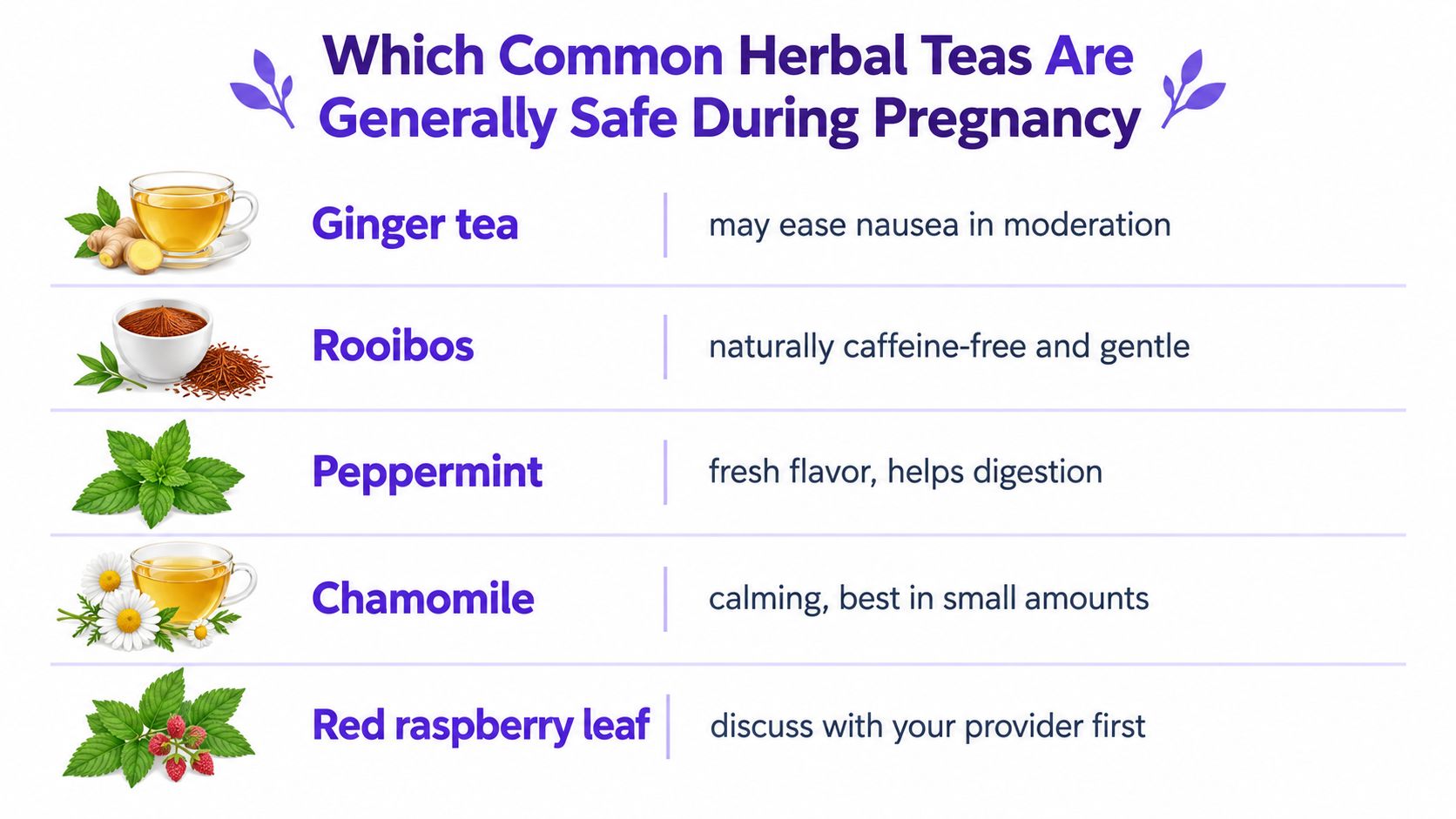
Some herbal teas are generally better tolerated in pregnancy when they are used as ordinary drinks, made from clearly labeled ingredients, and kept simple. In practice, the safest choices are usually single-herb or straightforward fruit infusions, not wellness blends marketed for detox, hormones, or sleep. Product quality also matters. Traditional use can guide choices, but it does not replace checking the exact ingredients and asking for medical advice if you plan to use an herb often.
Ginger for nausea
Ginger is one of the herbs with the most pregnancy-specific discussion behind it. MotherToBaby discussion of medication decisions in pregnancy notes that studies averaging about 1,000 milligrams per day did not find an increased risk of birth defects or miscarriage. That supports ginger as a reasonable option for nausea. It does not mean every ginger product is interchangeable, and it does not give concentrated supplements a free pass.
A normal mug of ginger tea is different from capsules, powders, tinctures, or a very strong homemade brew. If someone has reflux, takes medication that affects blood pressure, blood clotting, or glucose, or is using ginger repeatedly because vomiting is getting harder to manage, I would pause and review the full picture rather than treat it as a routine beverage choice.
Peppermint for flavor and digestion
Peppermint is another tea many pregnant patients already know and tolerate well. It is commonly used for taste, mild digestive discomfort, and a break from caffeinated drinks. For many people, a plain peppermint tea in moderate amounts fits comfortably into pregnancy.
The practical cautions are simple. Choose a product that is actually peppermint, not a “digestive” blend with several herbs tucked into the label. Keep in mind that peppermint essential oil is a concentrated product and should not be treated like tea. If peppermint reliably worsens heartburn, stop using it. A familiar herb is not automatically the right one for your symptoms.
Rooibos and simple fruit-based infusions
Rooibos is often a useful swap for people who want something warm without caffeine. It is naturally caffeine-free and tends to be easier to assess when the ingredient list is short. Fruit-based infusions can also work, especially when they stay close to food-like ingredients rather than medicinal blends.
MyHealth Alberta guidance on safe drinks in pregnancy lists orange peel and rose hip tea among options considered safe when prepared as directed. The same guidance recommends steeping for about 3 to 5 minutes and allows up to 3 cups, or 750 milliliters, per day. Those details matter because pregnancy advice is often about dose and preparation, not just the herb name.
The label still decides the answer. A tea sold as berry, citrus, or rooibos may also contain green tea, black tea, licorice, or other botanicals. Chai-style and seasonal blends are common examples. The front of the package may sound harmless while the ingredient panel tells a different story.
Chamomile needs a more careful approach
Chamomile is popular because people associate it with relaxation and sleep. In pregnancy, I treat it more cautiously than ginger or plain peppermint, not because one occasional cup is automatically dangerous, but because public guidance is not fully consistent and commercial products vary.
A sensible middle ground is to treat chamomile as an occasional drink rather than a daily habit. Keep it plain, avoid strong blends, and ask your maternity clinician before using it regularly, especially if you are using it to manage a symptom that needs assessment. That approach respects both traditional use and the fact that “chamomile tea” on a shelf is not always a simple, low-strength preparation.
A comparison that works in real life
| Tea or infusion | Practical position | What to check |
|---|---|---|
| Ginger | Often chosen for nausea in moderation | Medication interactions and concentrated forms |
| Peppermint | Commonly used in moderate amounts | Heartburn, essential oil products, large quantities |
| Rooibos | Naturally caffeine-free | Added herbs and flavoring blends |
| Orange peel or rose hip | Listed by MyHealth Alberta as options prepared as directed | Steeping instructions and full ingredient list |
| Chamomile | Better as an occasional tea, with advice for regular use | Blend contents and personal medical history |
Common use does not remove the need for clinical judgment. If there is bleeding, severe vomiting, significant abdominal pain, an allergic reaction, or trouble keeping fluids down, tea should not delay care. NHS pregnancy food guidance is one reminder that food and drink choices in pregnancy sit within a bigger safety conversation, and symptoms sometimes need treatment, not another cup.
How Tealyra Can Help
Tealyra is an online store selling a wide selection of loose tea, tea bags, and accessories. For pregnancy, its usefulness depends less on having many choices and more on whether you can inspect the exact ingredients, identify caffeine sources, and avoid blends that don't clearly explain what they contain.
The pregnancy-safe herbal teas collection can be a useful starting point for comparing simple infusions, but a category label isn't a substitute for checking each product. Review the ingredient panel, confirm whether the blend contains green or black tea, and ask your midwife or obstetric clinician about any herb you plan to drink regularly.
A loose-leaf store can also create a drawback. More variety means more responsibility for the buyer, especially when a product contains several botanicals or instructions encourage a strong brew. Choose plain ingredients when possible, use the stated preparation method, and keep a photo of the label for your appointment.
Tealyra is the right kind of resource when you want to compare product details before buying. It isn't the right place to obtain individualized medical clearance. Use the store to gather information, then use your care team to decide what fits your pregnancy, medications, and symptoms.
Herbal Teas to Avoid or Use Only with Medical Guidance
A tea can look harmless on the shelf and still be the wrong choice in pregnancy. I see this most often with blends that are sold as “natural support” but contain herbs that act very differently from a mild kitchen infusion. Products containing liquorice root, pennyroyal, sage, or blue cohosh belong in the avoid or ask-first category, because the concern is not just the plant name. Strength, preparation, other ingredients, and your medical history all change the risk.
The NHS specifically advises avoiding liquorice root in herbal tea. Pennyroyal and blue cohosh are also poor choices for self-treatment during pregnancy. Blue cohosh has been linked in case reports to uterine stimulation, which is why clinicians treat it very differently from an herb used casually in cooking. Sage is a good example of the dose problem. A small amount in food is not the same as drinking a concentrated tea or taking it as a supplement.
Why traditional remedies need respectful review
Traditional remedies deserve respect, not dismissal. They are part of routine pregnancy care in many families, and that matters in real clinical conversations.
At the same time, traditional use does not guarantee that a product is safe in pregnancy, especially when the exact plant, amount, or preparation is unclear. Research on traditional herbal use in sub-Saharan Africa reported associations with serious maternal and fetal outcomes, including preterm labor, postpartum hemorrhage, stillbirth, early neonatal death, low birth weight, congenital anomalies, and low Apgar scores. The review also noted that many studies did not identify herbs precisely or standardize dosage. (Review of traditional herbal use in sub-Saharan Africa)
That uncertainty is the practical issue. A family may refer to a remedy as a “warming tea,” a market seller may use a local plant name, and the package may list only part of the blend. Across regions, the same common name can refer to different plants or mixtures. Imported products may also have incomplete labels, and some are much stronger than an ordinary household brew.
Bring specific details to your appointment so your maternity clinician can assess the product properly:
- Product information: Photograph the front, back, and ingredient panel.
- Origin: Note the country of purchase and whether it came from a shop, market, relative, or practitioner.
- Preparation: Record whether you steeped leaves, boiled roots, used a powder, or prepared a tincture.
- Amount and frequency: Describe how much you use and how often.
- Purpose: Explain whether you're using it for nausea, sleep, digestion, hydration, pain, or a cultural practice.
Supplements and medicines change the decision
The tea itself is only part of the decision. Capsules, powders, tinctures, and extra-strong brews can behave more like supplements than beverages, and earlier in this article I noted that even familiar herbs can raise interaction questions.
This matters even more if you take prescription medication, have diabetes, have a bleeding disorder, or are being monitored for a pregnancy complication. If you are discussing aspirin for preeclampsia prevention, include every herbal product on your list. The point is not that tea automatically conflicts with aspirin. Your clinician needs the full picture to judge bleeding risk, blood pressure concerns, and whether a tea is masking a symptom that needs assessment.
How to Prepare Herbal Tea Safely and Limit Caffeine Exposure
A common real-life pattern is simple. Someone feels nauseated, tired, or bloated, buys a tea labelled “herbal” or “pregnancy friendly,” and assumes the preparation details do not matter much. In practice, they do. The way a tea is brewed, the number of cups across the day, and the quality of the product can change exposure more than people expect.
Use a simple preparation routine
Keep the routine boring and consistent. Read the full ingredient list, check the serving directions, and keep the box or a clear photo of the label available for your maternity team. That matters most with multi-herb blends, imported products, and teas bought through traditional medicine channels, where the plant name, strength, or intended use may not be obvious from the front of the package.
Public guidance does not give one perfectly matched rule, so it helps to use the most cautious practical approach. One source allows up to 3 cups, or 750 milliliters, per day when prepared as directed. NHS Wales advises a broader limit of 1 to 2 cups daily and notes that some herbs may be more concerning during weeks 1 to 12. (Pregnancy Birth and Baby and NHS Wales guidance)
Because those ranges do not line up neatly, I advise patients to stay at the lower end until the exact product has been reviewed, especially if the tea is a daily habit rather than an occasional cup. Use freshly boiled water, steep for the time stated on the label, and avoid doubling tea bags or extending the brew to make it “work better.” Once you start concentrating leaves, roots, or powders, the drink stops behaving like an ordinary cup of tea and starts acting more like a herbal preparation.
Check caffeine even when the package sounds herbal
Many blends sold as calming, digestive, or wellness teas still contain green tea, black tea, or matcha. Those ingredients come from Camellia sinensis, so they contribute caffeine even if the front label emphasizes the herbs more than the tea base. The NHS advises keeping total caffeine below 200 milligrams per day during pregnancy. (NHS advice on caffeine and herbal tea)
The practical difficulty is variation. A UK Committee on Toxicity scoping paper notes that caffeine content differs across products and that the 200 milligram pregnancy limit is roughly equivalent to about three cups of tea, though the exact amount depends on the drink and brand. (UK Committee on Toxicity scoping paper)
Count caffeine across the full day. Tea, coffee, cola, energy drinks, chocolate, and some supplements all add to the same total. If a product does not clearly identify whether it contains caffeinated tea, choose a simpler blend or leave it aside until your clinician or pharmacist can review it.
Keep quality and disclosure in the routine
Product quality is where safe versus unsafe lists become less helpful. Two boxes with similar names can contain different plant parts, different strengths, or incomplete labeling. MotherToBaby warns that herbal products may contain contaminants or alcohol and that labels may not list every harmful substance. (MotherToBaby safety information on herbal products)
Use a short screening checklist:
- Choose a sealed product with a complete ingredient list.
- Avoid blends with vague proprietary names or several unfamiliar herbs.
- Skip tinctures and liquid extracts unless your provider approves them.
- Store dried tea in a cool, dry place and discard it if packaging is damaged.
- Photograph the label before your appointment if you're unsure.
Herbal use in pregnancy is common, and many people do not mention it unless someone asks directly. That is one reason I tell patients to bring tea bags, boxes, or photos into routine visits. Normalizing disclosure is safer than guessing, especially with concentrated products, traditional remedies, or imported blends used every day.
For caffeine-specific questions, Bornbir's pregnancy guide can provide general context. Your own maternity provider should still interpret your total intake, the exact product, and your medical history together.
When to Talk to a Perinatal Provider About Herbal Tea Use
A common clinic moment goes like this. Someone is managing nausea, poor sleep, or constipation, then mentions at the end of the visit that they have been drinking a family herbal blend every day because it felt gentler than medication. That is the right time to pause and review it properly, especially in pregnancy, when the name on the box, the country of purchase, and the form of the product can all change the risk.
Talk with a midwife, obstetric clinician, pharmacist, or another qualified perinatal provider before you start using a new herbal product regularly. Make that conversation a priority if you take medication, have high blood pressure or diabetes, have bleeding concerns, are dealing with severe vomiting, or are thinking about using a concentrated product.
The same applies to teas rooted in traditional practice or products with labels you cannot fully interpret. In real practice, those are often the hardest products to assess quickly because plant names vary, blends may be incomplete, and commercial quality is not always consistent. A careful review is usually more helpful than a blanket warning because it gives you a clearer answer about what to stop, what may be reasonable, and what simpler option could meet the same need.

Take useful information to the appointment
Bring the tea package or clear photos of every side. Write down where you bought it, how you prepare it, how often you drink it, and why you started using it.
One simple script helps. Say: I drink this blend twice daily, I steep one bag for five minutes, and I started at week 9 for nausea. That gives your provider something specific to work with, and it avoids vague answers like “just herbal tea,” which can mean very different things.
If you are not sure who to ask, you can compare midwife providers. Providers listed on a marketplace are independent professionals, so check credentials, licensure where applicable, scope of practice, and whether they are comfortable discussing herbal products in pregnancy.
Act early when symptoms or treatment change
Ask sooner, not later, if any of these apply:
- bleeding or new cramping after starting a tea or blend
- reduced fetal movement
- severe vomiting, dehydration, or trouble keeping fluids down
- a new herbal tea started around the same time as a new prescription or supplement
- a product with several unfamiliar herbs, no full ingredient list, or a label in a language you cannot verify
Differences in guidance are a reason to ask for individualized advice, not a reason to guess. Recommendations can vary because products, preparation habits, and quality standards vary too. If your provider advises against a blend, ask which ingredient or feature creates the concern and what straightforward alternative may fit your symptoms more safely.
Herbal tea can still have a place in pregnancy. The safer choice is usually the simpler one: a clearly labeled product, a modest routine, and a care team that knows exactly what you are using.