
A live-in doula is a non-medical professional who moves into your home to provide continuous, around-the-clock support during the postpartum period. They are so much more than just an extra pair of hands. Think of them as a dedicated, guiding presence focused entirely on easing your family's transition into this new chapter.
What a Live-In Doula Really Does

Imagine a temporary, highly skilled family member whose whole job is to look after the new parent, the baby, and the harmony of the household. That's a live-in doula. Their role is completely immersive, adapting to whatever your family needs on any given day.
Their support is holistic, covering three key areas to help your family not just survive, but truly thrive during those first few intense weeks or months.
Emotional and Physical Support
A huge part of a live-in doula's role is caring for the birthing parent. This isn't just about bringing you water. It's about making sure you’re resting, eating well, and emotionally processing the massive life change you’re going through. They provide a safe space and a listening ear for your birth story, your anxieties, and your small victories.
Physically, they help you recover by preparing nutritious meals and snacks, keeping you hydrated, and handling the baby so you can actually sleep. The goal is to "mother the mother," creating a space for you to heal and bond with your newborn without the constant pressure of household chores.
A live-in doula's continuous presence offers a steadying hand during a time of immense change. They create a calm and supportive environment, helping to reduce parental anxiety and build confidence.
Newborn Care and Education
While caring for the parent is paramount, a live-in doula is also an expert in all things newborn. They can handle overnight feedings, endless diaper changes, and soothing a fussy baby, all while you get the restorative sleep you desperately need.
But they don't just do the work; they also act as your personal newborn guide. You can learn more about the specifics of this kind of care by understanding the role of postpartum doulas in our detailed article. Their support often includes:
- Feeding Guidance: Offering hands-on help with breastfeeding positions, bottle-feeding techniques, and figuring out a loose feeding schedule that works for you and your baby.
- Infant Cues: Teaching you how to decipher your baby's unique language of hunger, sleep, and comfort cues.
- Soothing Techniques: Demonstrating proven methods like swaddling, baby-wearing, and using white noise to calm your little one.
Household and Family Integration
A live-in doula helps keep the home running smoothly so you can focus on recovery and bonding. This isn't about deep cleaning or scrubbing floors. It’s about tackling the light tasks that can quickly pile up and weigh on your mind, like doing the baby's laundry, tidying the kitchen after a meal, or organizing the nursery supplies.
Beyond direct support, a doula can also be an incredible resource for information on common postpartum experiences. For parents dealing with physical changes, for instance, learning about navigating postpartum hair loss can offer useful insights. By managing these daily details, they help the entire family, including partners and older siblings, adjust to the new dynamic with less stress and more joy.
A Day in the Life With Your Live-In Doula
Ever wonder what 24/7 support actually feels like with a live-in doula? Forget rigid schedules. It’s a flexible rhythm of care that molds to your family’s unique needs, blending into your home to offer help exactly when and where you need it most.
Their day often starts before yours does. Your doula might quietly handle the last overnight feed, letting you grab another precious hour or two of uninterrupted sleep. When you finally wake up, you might find a warm breakfast and fresh coffee waiting, with the baby sleeping peacefully nearby.
This is the heart of their role: anticipating your needs and gently clearing away the little stressors that can feel overwhelming. Throughout the day, their attention flows between you, the baby, and the household, creating an atmosphere of calm and control.
More and more families are discovering this kind of support. The US midwives and doulas sector has grown into a $5.2 billion industry with over 3,400 businesses, expanding at a 5.6% rate since 2020. This isn't just a trend; it's a response to a real need for the personalized, continuous care a live-in doula provides, as highlighted in market research from IBISWorld.
Morning Support and Newborn Guidance
Once you’ve had a chance to eat and feel a bit more human, the morning often shifts to hands-on help and education. If you’re breastfeeding, your doula can offer tips on getting a better latch or show you different positions. If you're bottle-feeding, they can demonstrate paced feeding techniques and manage the sterilizing.
They’re also there to help you learn your baby's unique language. Is that cry a sign of hunger, a need for comfort, or just a wet diaper? A doula can help you interpret these early cues, which is a huge confidence-booster for any new parent.
While you take a much-needed shower or a quick nap, they might be tidying the kitchen, starting a load of baby laundry, or prepping ingredients for lunch. Their work is a quiet hum of activity in the background, making your day feel lighter and far more manageable.
Afternoon Household Help and Family Integration
The afternoon is often a time for practical household support that goes beyond direct baby care. Your doula might prepare a healthy lunch, run a quick errand to the grocery store, or help organize the nursery. Their goal is to keep the home from falling into chaos while you focus on healing and bonding.
This is also a great time for them to help integrate the new baby into the family. If you have older children, the doula can spend one-on-one time with them, helping them adjust to their new role as a big sibling and making sure they feel included and important.
A live-in doula’s job isn’t just about the tasks they check off a list. It’s about the emotional space they create, giving you permission to simply be with your baby without the weight of a long to-do list on your shoulders.
Their hours and responsibilities are naturally more fluid than other types of postpartum care. For a deeper dive into scheduling, you can explore our guide on how many hours a postpartum doula works. This flexibility is one of the biggest advantages of the live-in model.
Sample Live-In Doula Responsibilities
To give you a clearer picture, here’s a look at the common tasks a live-in doula might handle during the day and night to support a new family.
| Time of Day | Parent Support | Newborn Care | Household Support |
|---|---|---|---|
| Daytime | Breastfeeding/bottle-feeding guidance, emotional check-ins, preparing meals & snacks | Feeding, diapering, soothing, bathing, establishing routines, monitoring baby's cues | Light tidying, baby laundry, bottle sterilization, errands |
| Nighttime | Bringing baby for nursing, ensuring parent gets maximum uninterrupted sleep | Handling all night wakings, feedings, diaper changes, and resettling the baby back to sleep | Restocking diaper station, preparing bottles for the night |
This table is just an example, of course. The real beauty of a live-in doula is that their support is completely customized to what you need, moment by moment.
Evening Transition and Overnight Care
As evening rolls in, the doula helps create a calm transition into the night. They might help with the baby's bath, establish a gentle bedtime routine, and make sure everything is ready for the overnight feeds. This is where their 24/7 support really makes a difference.
Once you’re settled in for the night, the doula takes over completely. They handle all the wakings, feedings, and soothing, bringing the baby to you only if you’ve asked them to for breastfeeding. This dedicated overnight care is the secret to getting real, restorative sleep. That is absolutely critical for your physical recovery and mental well-being. A live-in doula makes that possible.
Is a Live-In Doula Right for Your Family? Let's Weigh the Pros and Cons
Bringing a new person into your home right after having a baby is a huge decision. It’s an intensely personal and vulnerable time, so really thinking through the benefits and potential downsides of a live-in doula is a crucial step. This isn't just a checklist; it's about figuring out what feels right for your family.
The biggest, most powerful benefit is having continuous, uninterrupted support. Think about it: this isn't just an extra pair of hands for a few hours. It’s a calm, experienced professional there for you around the clock. For many new parents, this constant presence dramatically lowers anxiety and has been shown to reduce the risks of postpartum depression.
The Clear Advantages of Around-the-Clock Care
With a live-in doula, you get the incredible gift of restorative sleep. They handle the middle-of-the-night wake-ups, feedings, and soothing, which allows the birthing parent to heal so much faster. That consistent rest is absolutely vital for both physical recovery and mental well-being.
Their expertise also smooths out the feeding journey. Whether you're navigating the early days of breastfeeding or figuring out a bottle-feeding rhythm, having an expert right there to offer immediate guidance can be a game-changer. Their support is practical, yes, but it’s also deeply emotional, a steadying hand during a beautiful but often overwhelming time.
At its heart, a live-in doula's role is to create a postpartum sanctuary. They manage the daily logistics so you can focus entirely on healing and bonding with your new baby. The positive effects of that protected time can ripple through your family for years to come.
For a wider look at how doulas can shape the fourth trimester, our article covering the general pros and cons of having a doula is a great read. It helps put the unique live-in model into context.
This decision tree can also help you visualize where a live-in doula fits based on what your family needs most.
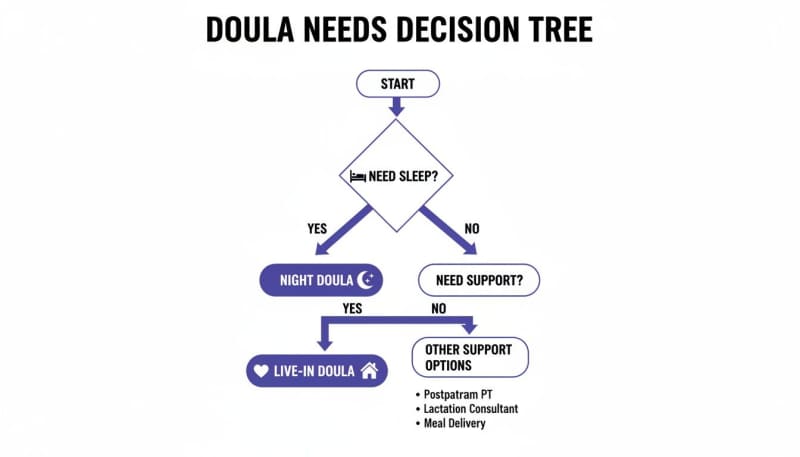
As you can see, while a night doula is an amazing solution for getting more sleep, a live-in doula provides a much more holistic support system for families who need help that extends beyond the overnight hours.
Practical Considerations and Potential Drawbacks
Of course, we have to be realistic about the practical side of things. For many families, the biggest hurdle is the cost. Because the support is so immersive and constant, the financial investment for a live-in doula is higher than for other types of postpartum care.
The other major factor is the personal dynamic of having someone living with you. This arrangement requires a huge amount of trust and, just as importantly, a great personality match. You're sharing your home during one of life's most intimate chapters, which means you will be giving up a certain amount of privacy.
It's an adjustment, and it's something every family needs to talk about honestly before signing a contract. Finding someone whose presence feels like a relief, not an intrusion, is everything.
- Financial Investment: The cost is the main consideration and is a larger upfront expense compared to hourly or nightly services.
- Loss of Privacy: Welcoming a non-family member into your home 24/7 is a significant change that requires some getting used to.
- Personality Match: The success of the whole arrangement hinges on finding a doula whose energy, communication style, and philosophy really click with yours.
In the end, it’s all about balance. You're weighing the immense benefits of constant, expert care against the financial and personal realities. For families who can make it work, a live-in doula can transform the postpartum period from something you just survive into a time you can truly cherish.
Understanding the Costs and Contracts
Alright, let's talk money. This part of hiring a live-in doula can feel a little daunting, but getting a clear handle on the costs and contracts is the best way to move forward with confidence. It’s all about understanding what you’re investing in and making sure everyone is protected and on the same page from day one.
Unlike hourly support, the cost for a live-in doula is almost always a flat rate, billed either daily or weekly. This makes sense, given the continuous, around-the-clock nature of their support. While it's a significant investment, it covers a huge range of services designed to make your postpartum transition as smooth and restorative as possible.
This level of in-depth care is definitely catching on. The global doula care service market was valued at USD 1.5 billion in 2023 and is expected to hit USD 3.8 billion by 2032. This jump shows just how many families are recognizing the incredible value of dedicated postpartum support. You can read more about these market trends if you're curious about the growing demand.
What Factors Influence the Price
Not all live-in doula rates are created equal. Several key factors can shift the overall cost, so it’s good to know what they are before you start your search. This will help you set a realistic budget for your family.
- Experience and Certifications: A seasoned doula with years under her belt and specialized certifications, like advanced lactation support or experience with multiples, will naturally have a higher rate.
- Your Location: Costs can vary a lot based on the cost of living in your city. Major metro areas like New York or San Francisco will have higher rates than smaller towns.
- Number of Babies: If you're expecting twins or triplets, the workload increases significantly, and the price will reflect that extra responsibility.
Think of the cost as an all-inclusive package for your fourth trimester. You're not just paying for a list of tasks. You're investing in expertise, peace of mind, and the priceless gift of rest and recovery during a truly critical time.
Figuring out how to budget for these services is a common question. For some creative ideas and practical advice, take a look at our guide on how to pay for your doula.
The Importance of a Professional Contract
A contract is your best friend in this process, seriously. It isn’t just a formality. It’s the document that outlines expectations, protects both you and your doula, and prevents any misunderstandings later on. Any true professional live-in doula will insist on a clear, written agreement.
This document should be detailed and specific, leaving no room for gray areas. Before you sign anything, read through every section carefully. Don't be afraid to ask for clarification or suggest changes. A solid contract is the hallmark of a true professional.
Key Components Your Contract Must Include
To make sure your agreement is rock-solid, it needs to cover all the essential bases. A thorough contract should clearly define the entire working relationship from start to finish.
1. Scope of Duties This is where you get specific. The contract should list exactly what the doula will and will not do. Be explicit about infant care, parent support, and any household help you've both agreed on.
2. Schedule and Breaks Even though they live in your home, a live-in doula isn't on call 24/7. The contract must define their on-duty and off-duty hours. It should also clearly state their daily break times and which full days they'll have off each week.
3. Payment Terms This section should outline the total fee, the payment schedule (for example, a deposit upfront with the rest due at specific milestones), and which payment methods are accepted.
4. Cancellation and Backup Policies Life happens. The contract needs to spell out what happens if you need to cancel and the policy if the doula has an emergency. This should include arrangements for a backup doula if needed.
How to Find and Interview Your Perfect Match

Finding the right person to welcome into your home during such a personal, transformative time is a huge decision. This isn't just about hiring help; it's about finding a personality and care philosophy that truly clicks with your family.
You're looking for someone whose presence feels like a deep, calming exhale. The first step is knowing where to find qualified, experienced professionals who not only have the right skills but also align with your family’s values and communication style.
Where to Begin Your Search for a Live-In Doula
You can start looking for a live-in doula in a few key places, each with its own advantages. A great starting point is exploring reputable online platforms and local agencies that specialize in postpartum care.
Well-regarded doula agencies often do a lot of the initial legwork for you. They vet their doulas, checking certifications and backgrounds, which adds a nice layer of security. Online marketplaces like Bornbir give you access to a much wider pool of candidates, letting you compare profiles, reviews, and rates all in one place.
- Doula Agencies. These organizations have a roster of pre-screened professionals, which can be a huge time-saver. They often handle contracts and payment processing, too.
- Online Marketplaces. Platforms built for perinatal care allow you to browse and message potential doulas directly, giving you more control over the selection process.
- Word-of-Mouth. Never underestimate the power of a personal recommendation. Ask trusted friends, family, or even your OB-GYN if they know anyone they’d recommend.
Once you’ve got a shortlist of candidates, it's time for the interview. This is your chance to get a sense of who they are beyond their resume.
Vetting Candidates and Checking Credentials
Before you hop on a call, do a little homework. A professional live-in doula should have her certifications and training information readily available. While doula work isn't regulated by a state license, certification from a respected organization shows a real commitment to professional standards.
Ask about certifications from groups like DONA International, CAPPA, or ProDoula. You should also absolutely ask for references from families they've worked with before. Speaking directly with people who have had this person in their home offers a kind of insight you just can't get from a written review.
The interview is less of a job screening and more of a chemistry check. You’re looking for someone you can trust implicitly during a vulnerable time. Their skills are important, but how they make you feel is everything.
Key Questions to Ask During the Interview
When you sit down to talk, whether it’s in person or over video, have a list of questions ready. You’ll want to cover everything from their hands-on experience to their personal approach to care. The goal here is to understand not just what they do, but how and why they do it.
Try to group your questions into categories so you don't miss anything important. You’ll want to cover their background, their specific philosophies on infant and maternal care, and the nitty-gritty logistics of how they work.
1. Experience and Philosophy These questions help you get a feel for their background and overall approach.
- "Can you tell me about your training and how long you've been a live-in doula?"
- "What's your philosophy on supporting a new parent's recovery?"
- "How do you approach infant sleep, and how flexible are you in following our family's preferences?"
- "What's your experience with [mention any specific needs, like twins, breastfeeding challenges, or previous C-sections]?"
2. Communication and Problem-Solving This is where you can gauge their interpersonal skills and how they handle pressure.
- "How do you prefer to communicate about daily needs or if a concern comes up?"
- "Could you describe a challenging situation you handled with a past family and how you resolved it?"
- "How do you support partners and other children in the home?"
3. Logistics and Boundaries These questions clarify the practical, day-to-day details of the arrangement.
- "What are your expectations for your living space and off-duty time?"
- "Can you walk me through what a typical 24-hour period looks like when you're on duty?"
- "Do you carry liability insurance, and do you have a sample contract we can look over?"
Choosing a live-in doula is a deeply personal decision. By taking your time to search thoughtfully and ask the right questions, you can find that perfect match who will make your postpartum journey feel supported, calm, and empowering.
Exploring Alternatives to a Live In Doula
While the idea of 24/7 support sounds like a dream, a live-in doula isn’t the only way to get help. It's also not the right fit for every family's budget, living space, or comfort level. Luckily, the world of postpartum support is incredibly flexible, with several other options that offer more targeted care.
Getting familiar with these different roles can help you pinpoint exactly what kind of support will make the biggest difference for your family. Maybe you only need an extra set of hands during the most chaotic hours, or perhaps your biggest stressor is figuring out breastfeeding. There’s a specialist for that.
The Postpartum Doula for Daytime Support
Think of a postpartum doula as a live-in doula who works in shifts. Instead of moving in, they come to your home for a set block of time, usually four to eight hours during the day. Their focus is nearly identical. They "mother the mother," help with newborn care, and pitch in with light household tasks.
This is a fantastic option for families who want hands-on guidance during the daytime whirlwind but prefer to have their home to themselves in the evenings. A postpartum doula provides that crucial support for recovery and learning without the full-time presence.
The Night Doula for Restful Sleep
If your number one goal is simply getting more sleep, a night doula might be your perfect match. Their role is laser-focused on the overnight hours, typically from around 10 p.m. to 6 a.m. They take over all the newborn care while you get the restorative, uninterrupted sleep your body desperately needs to heal.
A night doula will handle all the feedings (either bringing the baby to you for nursing or giving a bottle), diaper changes, and soothing. Waking up feeling rested can completely change your postpartum experience, boosting your mood, energy, and ability to handle the demands of a new baby.
The primary goal of a night doula is simple: to maximize parental sleep. They are sleep specialists who create a calm and predictable overnight environment for both you and your baby.
Lactation Consultants for Feeding Challenges
Sometimes, the biggest source of stress comes down to feeding. If you're running into challenges with breastfeeding, a lactation consultant provides expert, clinical-level support. They can help with issues like a painful latch, low milk supply, or tongue ties, offering evidence-based solutions and a personalized feeding plan.
While most postpartum doulas have solid lactation training, a certified lactation consultant (IBCLC) brings a much deeper level of specialized knowledge for complex situations. Many now offer home visits or remote support, and you can learn more about finding the right professional in our guide to virtual doula services. Choosing the right support means you don't have to navigate these early challenges alone.
Still Have Questions About Live-In Doulas?
Even after digging into all the details, it's totally normal to have a few more questions pop up. Let's tackle some of the most common ones we hear from families trying to figure out if a live-in doula is the right move for them.
The goal here is to clear up any lingering confusion so you can feel confident in your decision, whatever it may be.
What Are the Living Arrangements Like?
Your live-in doula will need a private, comfortable space to sleep and recharge when they're off the clock. This is almost always a dedicated guest room. It's really important to hash this out during the interview so everyone is on the same page from day one.
You'll also want to be clear about things like bathroom access and use of the kitchen. A good contract will spell out their on-call hours versus their protected, off-duty rest periods, making sure everyone's needs and boundaries are respected.
Are Live-In Doulas Licensed or Insured?
This is a great question. The doula profession isn't regulated by state or federal laws, so there's no official "license" they need to have. However, any doula worth their salt will be certified through a professional organization, which means they've completed extensive training and agree to a code of ethics.
When you're interviewing candidates, always ask about their specific certifications. It’s also a smart move to ask if they carry their own professional liability insurance. This isn't just a formality. It's peace of mind for everyone involved.
Seeing that a doula has invested in certification and insurance shows a true commitment to their profession and to your family's safety. It provides a layer of security for both of you.
What If We Just Don’t Click?
This is a huge fear for many parents, and it’s exactly why a thorough interview process and a rock-solid contract are non-negotiable. Your contract should always include a trial period and a clear termination clause. This gives both you and the doula a graceful exit strategy if the arrangement isn't the right fit.
Ultimately, open and honest communication is your best tool. If you feel like there's a mismatch in personalities or expectations, it's best to address it kindly and directly, referring back to the terms you both agreed to in your contract.
Will a Live-In Doula Help with My Older Kids?
The primary focus for any postpartum doula is, and should always be, the new baby and the recovering parent. That said, many are absolutely willing to help with light sibling care, but this needs to be discussed upfront and written into the contract.
Think of their role as helping your older child adjust to the new family dynamic, not as being their full-time nanny. Getting specific about these duties from the start is the key to preventing any misunderstandings down the road.
Finding the right support for your growing family is a huge decision. At Bornbir, we make it simpler by connecting you with vetted doulas, lactation consultants, and night nannies. You can compare profiles, read real reviews from parents, and find your perfect match at https://www.bornbir.com.