
Figuring out if you're really in labor can feel like a bit of a guessing game, especially if this is your first time. Your body gives you little hints and whispers long before the main event, and learning to interpret them can make all the difference. Think of these early signs not as a five-alarm fire, but as a gentle heads-up that things are starting to get ready behind the scenes.
Most people picture a dramatic movie scene where someone’s water breaks in a huge gush, but the reality is usually much quieter and more gradual. It often starts with feelings that are easy to brush off as just another late-pregnancy ache or pain.
Common Early Symptoms to Watch For
This initial phase, what we call early labor, is all about your cervix starting to soften, thin out (which is called effacement), and open up (dilation). This process kicks off several physical changes you can start paying attention to.
Some of the key signs to look for include:
- A Persistent Lower Backache: This isn't the kind of ache that goes away when you shift positions. It’s a dull, constant pain in your lower back that just sort of hangs around.
- Period-Like Cramps: You might start to feel some mild or moderate cramping in your lower belly, very similar to the cramps you get right before or during your period.
- Losing Your Mucus Plug: It sounds a little strange, but you might notice a thick, stringy bit of discharge that can be clear, pink, or even have a little blood in it. This is often called the "bloody show," and it’s a great sign that your cervix is starting to change.
- More Pelvic Pressure: As the baby starts to "drop" or settle deeper into your pelvis, you'll likely feel a new kind of heaviness or increased pressure down low. You can find more information about the various signs that labor is near in our detailed guide.

To help you keep track, here's a quick summary of what you might experience.
Quick Guide to Early Labor Symptoms
This little table breaks down the most common signs that labor might be just around the corner, what they feel like, and the "why" behind them.
| Symptom | What It Feels Like | Why It Happens |
|---|---|---|
| Dull Backache | A constant, nagging ache in your lower back that doesn't go away. | Baby's position is putting pressure on your back, and ligaments are loosening. |
| Menstrual-Like Cramps | Mild to moderate cramping in your lower abdomen, like period pains. | Your uterus is starting to practice with small, preparatory contractions. |
| Losing Mucus Plug | A thick, jelly-like discharge, sometimes tinged with pink or brown blood. | As your cervix starts to open, the plug that sealed it off is released. |
| Increased Pelvic Pressure | A feeling of heaviness or fullness in your pelvis and vaginal area. | The baby has "dropped" lower into your pelvis to get into position for birth. |
Remember, these symptoms are your body's way of getting ready. While they don't usually mean you need to grab your hospital bag and rush out the door just yet, they are important signals to start paying closer attention.
What's Going On In There?
All these physical signs are the direct result of hormonal shifts and your body’s amazing prep work. For example, a hormone called relaxin is busy loosening up all the ligaments and joints in your pelvis, which can lead to that achy feeling in your hips and back.
At the same time, the cramps and pressure are signs that your uterine muscles are starting to tone up for the hard work ahead. Recognizing these early labor pains is the very first step in understanding the incredible process your body is about to go through.
Distinguishing True Labor from False Alarms
As your due date gets closer, it can feel like your body is running drills for the main event. These are called Braxton Hicks contractions, and they can be surprisingly realistic. Think of them like a fire drill. The alarm sounds and everyone practices, but it's not a real fire. True labor, on the other hand, is the real fire.
Learning to spot the difference can save you a few unnecessary trips to the hospital and dial down that late-pregnancy anxiety. These "practice" contractions are just your body's way of toning the uterine muscles for the work ahead. They can pop up as early as the second trimester but really make themselves known in the third. While they might catch you off guard, they aren't actually causing your cervix to dilate.
The Feel of a False Alarm
So, what do these practice runs feel like? Most people describe Braxton Hicks as an unpredictable tightening or hardening feeling across the front of the belly. They come and go without any real rhyme or reason.
They are typically:
- Irregular: They don’t get closer together or follow any kind of schedule. You might feel a few within an hour, then nothing for the rest of the day.
- Unpredictable: They don’t build in strength over time. A strong one might be followed by one you barely notice.
- Relieved by Change: Often, all it takes is changing your position, walking around, or drinking a glass of water to make them fade away.
These sensations are usually more uncomfortable than truly painful. They can be triggered by things like a full bladder, a very active baby, or even just being a little dehydrated. For many, simply upping their water intake can make a big difference.
Identifying True Symptoms of Labor Pains
True labor pains are different because they have a clear purpose: to open your cervix. And they won't stop until the job is done. Unlike the random nature of a fire drill, a real event follows a clear, progressive pattern.
True labor contractions build in three specific ways: intensity, duration, and frequency.
The most reliable signs of true labor are contractions that grow stronger, last longer, and come closer together over time. This consistent progression is the key signal that your body has shifted from practicing to performing.
Imagine a wave in the ocean. A true labor contraction starts small, builds to a peak, and then recedes. With each new wave, the peak gets a little higher and the time between them gets a little shorter. This is your body finding its rhythm, and it won’t be stopped by a walk around the room. In fact, movement often makes true labor pains feel even more intense.
To help you tell the difference at a glance, here’s a straightforward comparison.
True Labor Pains vs Braxton Hicks Contractions
This table gives a side-by-side look to help you easily spot the difference between true labor and a false alarm.
| Characteristic | True Labor Pains | Braxton Hicks (False Labor) |
|---|---|---|
| Frequency | Contractions become regular and get closer together over time. | Irregular and unpredictable, with no consistent pattern. |
| Intensity | Steadily increase in strength. You won't be able to talk through them eventually. | Usually weak and do not get progressively stronger. |
| Duration | Each contraction lasts longer, often from 30 to 70 seconds. | Vary in length and don't show a pattern of getting longer. |
| Location | Pain often starts in the lower back and wraps around to the front. | Tightening is typically felt only in the front of the abdomen. |
| Effect of Movement | Contractions continue and may intensify when you walk or change positions. | Contractions may slow down or stop completely with rest or activity. |
Ultimately, the key giveaway is that true labor contractions show a clear, undeniable pattern of progression, while Braxton Hicks do not.
Timing Your Contractions: The 5-1-1 Rule
A fantastic guideline for knowing when it’s time to call your provider is the 5-1-1 rule. This is especially helpful for first-time parents trying to figure it all out.
It means your contractions are:
- Coming every 5 minutes.
- Lasting for 1 full minute each.
- This pattern has continued for at least 1 hour.
Once you hit this milestone, it's a very strong sign that you're in active labor, and it’s time to get in touch with your doctor or midwife. While this is a general rule, always follow any specific instructions your provider has given you.
And remember, sometimes other issues like gas can feel surprisingly similar. If you're ever uncertain, you can learn more about differentiating gas pains vs contractions in our article.
A Symptom Breakdown of Labor's Three Stages
Labor isn’t just one big event. It’s a journey that unfolds in distinct stages, each with its own rhythm and intensity. Think of it like climbing a mountain. Early labor is the gentle, winding trail at the base, active labor is the steep, challenging ascent, and the transition phase is that final, intense push to the summit.
Knowing what’s coming is incredibly empowering. When you can anticipate the next phase, you can better prepare your mind and body, turning what could be an overwhelming experience into a manageable one. It’s like having a roadmap that shows you where you are and what to expect around the next bend.
Stage 1, Phase 1: The Early Labor Trail
Early labor is the longest and often most unpredictable part of the process. It can last anywhere from a few hours to a couple of days, especially for first-time parents. During this phase, your cervix is doing the important background work of thinning out (effacing) and beginning to open (dilate) from 0 to about 6 centimeters.
The signs here can be subtle, easily mistaken for general late-pregnancy aches and pains.
- Mild, Irregular Contractions: These might feel a lot like period cramps or a dull ache in your lower back. They are usually far apart, maybe every 15 to 20 minutes, and don't follow a predictable pattern yet.
- Losing the Mucus Plug: You might see a thick, jelly-like discharge that could be tinged with pink or brown blood (often called the "bloody show"). This is a great sign that your cervix is changing, but labor could still be hours or even days away.
- A Buzz of Nerves and Excitement: Emotionally, you’ll probably feel a mix of anticipation and anxiety. It’s finally starting!
This is the time to be at home, conserving as much energy as you can. Try to rest, sip water, eat light snacks, and distract yourself with a movie or a slow walk.
Stage 1, Phase 2: The Active Labor Ascent
This is when things really kick into gear. There's no mistaking active labor for a false alarm. Your cervix begins dilating more quickly, typically from 6 to 8 centimeters, and the symptoms become much more intense, demanding your full attention.
Contractions are a whole different beast now. They get stronger, last longer, and come much closer together. You’ll find yourself needing to use coping techniques like focused breathing or changing positions to manage each one. Talking or walking through them like you might have in early labor is pretty much off the table.
This infographic gives a great visual of how the patterns change as you move from early signs into true, active labor.
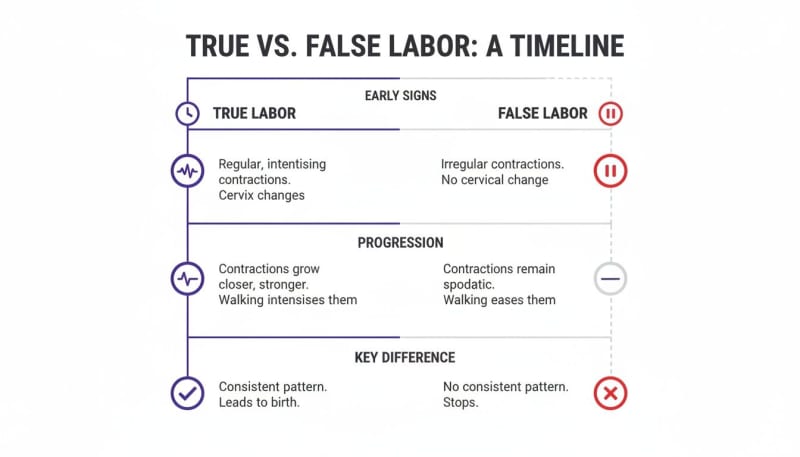
The key thing to notice is the undeniable progression. Real labor pains don't just happen randomly. They build in a steady, predictable rhythm that you can actually time and track.
During active labor, your focus will naturally turn inward. The outside world starts to fade away during each contraction as you concentrate on your body and your breath. It’s a powerful, transformative part of the process.
Most people head to their hospital or birth center during active labor. Your care provider will have given you specific instructions on when to come in, often based on the "5-1-1 rule" (contractions every 5 minutes, lasting 1 minute, for at least 1 hour).
Stage 1, Phase 3: The Transition Summit
Transition is the shortest but by far the most intense phase of labor. This is the final push as your cervix finishes dilating from about 8 to the full 10 centimeters. The symptoms are powerful and can feel overwhelming, but remember: this means you are incredibly close to meeting your baby.
Contractions are at their absolute peak. They are very strong, can last up to 90 seconds, and may come every two to three minutes with very little rest in between.
You might also experience:
- Intense Pressure: A strong, downward pressure in your pelvis and rectum is very common as your baby descends.
- Physical Shaking: It's normal for your arms and legs to shake or tremble uncontrollably. This is just your body’s response to the hormonal shifts and intense physical effort.
- Nausea or Vomiting: The sheer intensity of this phase can sometimes lead to an upset stomach.
- The Urge to Push: As your baby moves down, you may feel a powerful, involuntary urge to bear down, which can feel a lot like needing to have a bowel movement.
This phase is emotionally challenging. It's common to feel irritable, exhausted, or even say things like, "I can't do this anymore." This is a completely normal reaction and a classic sign that the first stage of labor is almost over. Lean hard on your support team for encouragement. Their reassurance is absolutely crucial during these final moments.
For an even deeper look into this journey, you can learn what to expect during labor in our comprehensive guide.
Understanding the Intensity of Labor Pains
Let’s get real about what labor pains feel like. They're far more than just a strong cramp. Labor is a powerful, all-encompassing physical experience. Understanding why it feels the way it does can help you approach it with knowledge instead of fear.
This pain isn't random; it has a clear purpose. Every sensation is a signal that your body is working incredibly hard to bring your baby into the world. It’s a productive, functional pain, driven by a few key physiological events.
What Causes Labor Pains to Be So Intense?
The primary engine behind labor is your uterus, a muscle so powerful it has to contract with enough force to open your cervix and guide your baby down the birth canal. This process kicks off a cascade of intense physical sensations that define labor pain.
The main sources of this intensity are:
- Powerful Uterine Contractions: Think of your uterus as the strongest muscle in your body, and during labor, it's performing the most demanding job it will ever do. These contractions squeeze and pull to open the cervix, creating a deep, powerful, and often overwhelming sensation.
- Cervical Dilation: Your cervix has to stretch from being completely closed to 10 centimeters open. The stretching of these tissues is a significant source of the pain you feel.
- Pressure on the Pelvic Floor: As your baby descends, their head puts immense pressure on your pelvic bones, muscles, ligaments, and nerves. This can feel like an incredibly strong ache or even a sharp pain deep within your pelvis and back.
This trio of muscular work, tissue stretching, and deep pressure is what makes labor such a profound physical event. The sensations are strong because the job they are doing is monumental.
The Mind and Body Connection
The intensity of labor isn't just physical. Your emotional state plays a huge role in how you perceive and manage the pain. Fear and anxiety can physically make the pain feel worse.
When you're scared, your body releases stress hormones like adrenaline, triggering a "fight-or-flight" response that makes your muscles tense up. Tense muscles work against the process of labor, creating resistance that can make contractions feel even more painful and less effective.
Understanding that fear can amplify pain is the first step toward managing it. By using relaxation techniques, creating a calm environment, and relying on a solid support system, you can help keep anxiety at bay, allowing your body to work more efficiently.
This connection is exactly why so much of birth preparation focuses on both physical and mental readiness. Learning what’s happening in your body can replace fear of the unknown with a sense of respect for the process.
The Reality of Labor Pain Intensity
It helps to have a realistic perspective. Studies worldwide confirm that a staggering 70-80% of women endure severe to excruciating pain during childbirth, making it one of the most intense experiences imaginable. This isn't just anecdotal. Research echoes global findings where the majority of participants rated their labor pain as severe, stemming from uterine contractions, cervical dilation, and the stretching of the birth canal.
The International Association for the Study of Pain (IASP) reports even higher figures, noting that over 95% of women experience pain during labor, with 60% of first-time mothers and 45% of women who've given birth before describing it as severe. You can review one such study on maternal pain levels and satisfaction during labor.
Knowing these statistics isn't meant to scare you. It's meant to validate the experience. When you know that the intensity is normal, you can better prepare for it. Exploring different pain management options ahead of time is a great way to feel more in control. Whether you're considering medical options or non-pharmacological methods, having a plan is key. You can also explore our comparison of nitrous oxide during labor vs an epidural to better understand some of the choices available.
Other Physical Symptoms That Accompany Labor
Labor isn't just about contractions. Think of contractions as the main event, but there's an entire crew of supporting actors playing important roles. As your body gears up for childbirth, a whole host of other physical symptoms can show up, turning the experience into a full-body event.
Understanding these additional signs helps paint a more complete picture of what to expect, which can go a long way in reducing worry when they appear. From a nagging backache to a sudden case of the shakes, your body is communicating that things are progressing.
The Aches and Pressures of Labor
Beyond the tightening in your belly, you might feel a persistent, dull ache deep in your lower back. This is often called “back labor,” and it can be especially intense if your baby is in a certain position. While the ache might peak during a contraction, it often lingers in between. Many women experience intense lower back pain during labor, so understanding natural lower back pain relief options can be a huge help.
You'll also likely feel a significant increase in pelvic pressure. As your baby descends into the birth canal, it can create a feeling of intense heaviness or even pressure on your rectum. Many describe this sensation as feeling like they need to have a bowel movement, a very common sign that you’re getting closer to the pushing stage.
Shakes, Chills, and Nausea
As labor ramps up, especially during the transition phase, it’s completely normal to experience a range of other physical responses. These symptoms might seem alarming at first, but they are typically a normal part of the process.
You might notice:
- Shaking or Trembling: Uncontrollable shaking in your legs and arms is common. It’s a physical release of tension and a response to the powerful hormones coursing through your body.
- Nausea or Vomiting: The sheer intensity of labor can sometimes upset your stomach. It's your body's way of conserving energy for the huge task at hand.
- Hot and Cold Flashes: Feeling suddenly very hot or getting a case of the chills is also normal as your hormones fluctuate and your body works hard.
These symptoms, while uncomfortable, are often signs of progress. They signal that your body is working exactly as it should be, moving you closer to meeting your baby.
It’s also important to remember that the body’s response to labor doesn’t end at delivery. For instance, abdominal pain is a very frequent symptom after vaginal delivery, affecting 58% of multiparous women with moderate to severe intensity. That's almost double the rate for first-time mothers. This pain can worsen during breastfeeding, yet it's often undertreated.
Knowing about all these potential symptoms, including the loss of your mucus plug, can help you feel more prepared for the entire labor journey. For more context, you might want to read our guide on what a mucus plug is.
How Your Support Team Can Help You Cope
You were never meant to go through labor alone. Having a strong support system, whether that's a partner, a trusted friend, or a professional like a doula, can completely transform your birthing experience. They provide physical comfort and emotional reassurance right when you need it most.
Simply having the right people in the room with you helps create a calm, safe atmosphere. This sense of security can actually make the physical sensations of labor feel less intense. Think of them as your personal advocate, your cheerleader, and a steady hand to hold when things get tough.

Practical Ways Your Team Can Offer Support
Your birth team can do a lot more than just offer words of encouragement. Their active, hands-on involvement can bring real, tangible relief during the most intense parts of labor.
Here are a few game-changing ways they can help:
- Applying Counter-Pressure: If you're dealing with intense back labor, having someone apply firm, steady pressure to your lower back can feel like a miracle. It directly counteracts the pressure from the baby's head.
- Guiding Your Breathing: When a powerful contraction takes over, it's easy to lose your rhythm and forget to breathe. A support person can breathe with you, giving you a calm, steady pattern to follow.
- Helping You Move: Changing positions is key to helping labor progress and managing pain. Your team can suggest new positions, like leaning over a birth ball or getting on all fours, and physically help you get there.
The Role of Emotional Support
Don't underestimate the power of emotional support. It's just as vital as physical comfort. Fear and anxiety can dramatically amplify your perception of pain. One study found that 66% of women experienced fear during labor, and this was strongly linked to higher pain ratings. When you feel scared, everything can feel much more overwhelming. You can read more about women’s perceptions of pain assessment and relief in the full study.
The calm presence and encouraging words of a support person can stop fear from taking over. Simple phrases like, "You are so strong," or "Each contraction brings you closer to meeting your baby," can truly make all the difference.
Having a professional guide, like a doula, can be invaluable. Doulas are trained to provide continuous physical and emotional support, and their experience helps them anticipate your needs and offer effective coping strategies.
Finding the right support shouldn't add more stress to your plate. Bornbir makes it easy to connect with vetted doulas, midwives, and other perinatal professionals. You can compare providers, read real parent reviews, and build a birth team you feel completely confident in, ensuring you have the best possible support to manage your labor pains.
Common Questions About Labor Pains
As your due date gets closer, it's completely normal for a million questions to start swirling in your head. Getting clear answers to the most common ones can make a world of difference, helping you trade anxiety for a sense of calm and preparedness.
Let's walk through some of the biggest questions we hear from expecting parents. Having this info in your back pocket will help you feel much more confident when the time comes.
When Should I Go to the Hospital for Labor Pains?
For many first-time parents, the "5-1-1 rule" is a fantastic guideline. It’s likely time to head to the hospital when your contractions are coming every 5 minutes, each one lasts for 1 full minute, and this pattern has held steady for at least 1 hour.
However, some situations require a more immediate call to your doctor or midwife. You should call them right away if your water breaks (especially if the fluid isn't clear), if you have any significant bleeding, or if you notice your baby is moving less than usual. Always trust your gut. Your care provider is there to give you specific advice for your unique situation.
Can Labor Pains Start and Then Stop?
Yes, absolutely. It's not uncommon for labor pains to start up, feel quite real, and then fizzle out. This is often called prodromal labor, and while it can be incredibly frustrating, it's a good sign.
These contractions might even fall into a regular pattern for a while, but they aren't causing your cervix to change and will eventually fade. It’s your body doing some important prep work! A good clue is that if the contractions stop when you change position, drink some water, or rest, it's probably not active labor just yet. If they keep getting stronger and closer together no matter what you do, you’re likely on your way.
What Does Back Labor Feel Like?
Back labor is a whole different beast. It’s typically an intense, relentless pain centered in your lower back. While it often peaks during a contraction, the aching pressure might not fully disappear between them. This usually happens when the baby is "sunny-side up" (posterior), causing the back of their head to press right against your tailbone.
Many describe it as a severe, deep ache that’s hard to escape. Finding the right coping strategies is key to managing it.
Having a partner or doula apply firm, steady counter-pressure on your lower back can feel like a lifesaver. Getting on your hands and knees or doing pelvic tilts can also work wonders, as these positions can encourage the baby to shift and take some of that intense pressure off your spine.
Finding the right support shouldn't add more stress to your journey. Bornbir makes it easy to connect with vetted doulas, midwives, and lactation consultants. You can compare providers, read real parent reviews, and build a birth team you feel confident in. Find your perfect match on Bornbir.