
Mara used to be the doula everyone called when a family needed steadiness. Then she started turning down clients because another 36-hour on-call stretch felt impossible, and the guilt landed hard. That mix of exhaustion, loyalty, and second-guessing is where a lot of doula burnout starts, not with one dramatic collapse, but with a slow loss of recovery.
Doula burnout is not the same as having a rough week or leaving one hard birth feeling shaky. It builds when emotional labor, broken sleep, trauma exposure, and money pressure keep outrunning a doula's chance to recover. In practice, that means the work stops feeling sustainable even when the care still matters.
When the Work Starts to Feel Impossible
Mara still cares about birth work. That's what makes this so painful. She isn't bored, and she isn't failing. She's just tired in a way that rest doesn't seem to fix, and every new inquiry now comes with a flash of dread because she knows what the calendar can turn into.
That kind of strain gets misread as personal weakness all the time. It's more useful to treat it as an occupational warning sign, especially when the problem comes from being on call, carrying trauma, and trying to make the business side work at the same time. The 2023 federal issue brief on doula workforce listening sessions pointed to poor interactions with medical providers and exposure to traumatic births as the two main drivers of burnout, and it noted that hospital culture mattered more than reimbursement alone, especially for newer doulas without much support (U.S. Department of Labor issue brief).
Burnout is a job design problem
A doula can love the work and still be worn down by how the work is set up. That's why generic advice about “take a bath” misses the point. If a doula is absorbing unpredictable labor, sleeping badly, and getting dismissed in hospitals, the problem isn't attitude. It's load.
Practical rule: if rest days, peer support, and boundaries keep getting overruled by client demand or income anxiety, burnout is already moving from stress into structure.
A useful working definition is simple. Doula burnout happens when the job keeps asking for more emotional, physical, and relational energy than the doula can replenish. That's why the rest of this article stays close to causes, symptoms, and real fixes, not vague wellness language.
Recognizing the Signs of Doula Burnout
The first signs usually show up in more than one place at once. Emotionally, doulas may feel numb during labors that once moved them, replay traumatic births long after the shift ends, or notice a sharper edge toward clients and providers. That doesn't make someone uncaring. It usually means the system is asking for more empathy than the person has left.
The cognitive signs are quieter but just as useful. Scheduling slips, decision fatigue sets in, and preparation starts to feel pointless because nothing seems able to prevent a bad outcome. A doula who once felt grounded may begin to second-guess every message, every plan, and every consent conversation.
The physical side can be easy to dismiss because doula work already involves irregular hours. But sleep that stays disrupted even off-call, headaches, appetite changes, frequent illness, and libido changes all matter. They're the body's way of saying the job has moved from demanding to depleting.
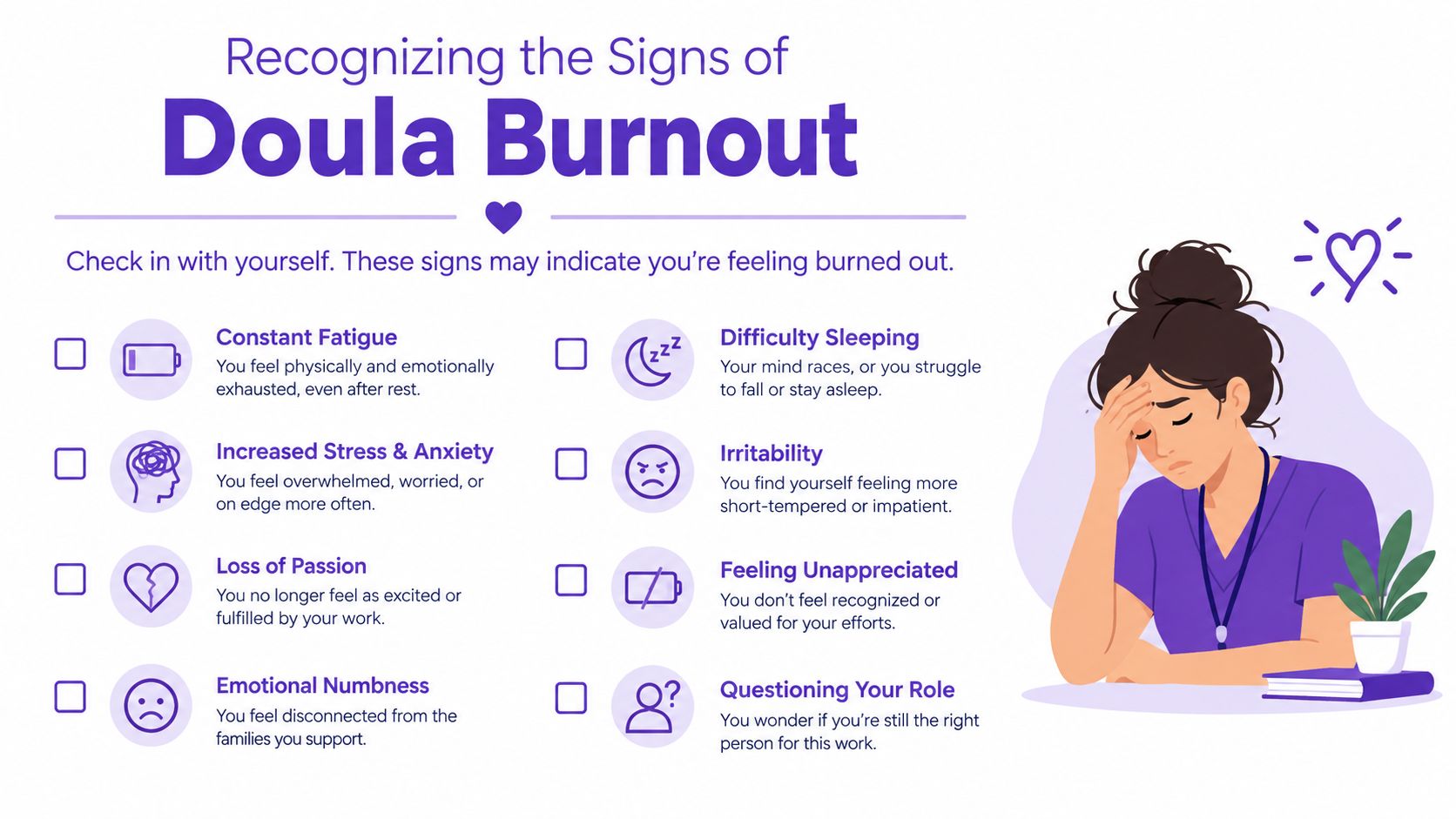
A 2023 birth worker survey summarized by The Bump reported that many doulas felt unwelcome and disrespected in hospital settings, had trouble being heard in client care, and struggled with unpaid labor and poor working conditions (The Bump's summary of the Mama Glow Foundation survey). Those patterns fit what many doulas already know, the stress often looks occupational before it looks emotional.
If you want a quick self-check, ask this: am I tired because the work was hard, or because the work keeps taking more than it gives back? If the second answer feels closer, the body is already giving you information.
For a helpful symptom checklist that's written with burnout in mind, Therapsy expat burnout therapy is a practical place to compare what you're feeling with common warning signs.
What Drives Doula Burnout Behind the Scenes
A doula can have the right skills and still feel worn down because the job keeps asking for more than one person can hold. On-call life breaks sleep, scrambles family time, and pushes recovery out of reach. Newer doulas, or those with less financial cushion, often absorb that strain first.
The work is emotionally expensive
Trauma exposure sits underneath the schedule pressure. Doulas stay with loss, NICU stays, obstetric emergencies, and births that do not go as planned. Many then debrief alone, after everyone else has gone back to ordinary life. Over time, that isolation hardens emotional load into burnout.
Money makes the load heavier. When income is unstable, doulas overbook, return to postpartum work too quickly after a birth, or use sliding-scale care in ways that subsidize the system. The 2025 national U.S. doula workforce survey presented at APHA reported strains tied to on-call demands, work-life balance, hospital friction, balancing client needs with charging rates, low wages, financial strain, finding clients, and reimbursement issues (APHA 2025 session PDF). Burnout here is not just a feeling. It is a scheduling problem, a cash-flow problem, and a survival problem.
Poor clinical interactions make the job harder the next day too. For a useful overview of spotting signs of caregiver stress, the warning signs often show up before a doula has words for burnout.
Hospital culture adds another layer of friction. Being brushed off in the OR, blocked during inductions, or left to coordinate around understaffed teams forces a doula to spend energy proving legitimacy before she can support the family. A federal workforce brief makes the point clearly, reimbursement alone will not fix job quality unless hospital culture also changes (GOVINFO brief).
That is why support has to be structural. Paid on-call time, supervision, and clear scope reduce burnout more reliably than inspirational messaging ever will. For a practical look at balancing workload, you can find client load strategies on Bornbir, especially if you are trying to keep your calendar workable instead of merely full.
Prevention and Recovery Strategies for Doulas
The first move is not to add a wellness ritual on top of an overloaded week. It's to reduce what keeps the system overloaded. For doulas early in practice, prevention may be about setting habits before the calendar gets chaotic. For doulas already deep in burnout, the priority is usually exposure reduction first, not optimization.
Five buckets that actually help
Structural self-care means sleep protection, real meals, therapy when needed, and honest recovery time. It sounds basic because it is, but basic only works when the workload leaves room for it. If there's no room, the business model needs work.
Boundary-setting has to be specific. Define on-call windows, write response-time rules, and use scripts for texts that come in after hours. If the income is so low that every request feels mandatory, boundaries won't hold for long, which is why pricing and policies matter too.
Scheduling should include client caps, due-date clustering, rest days, and backup doula coverage. A packed calendar can look efficient until one delayed birth blows up the whole week. That's when smart spacing starts to matter more than taking every inquiry.
Peer supervision is different from casual venting. Debrief circles, mentorship, and supervision agreements help doulas process difficult births without dumping trauma into the next client interaction. Confidentiality matters here. Without it, the group becomes another place to perform strength.
Business workflows protect energy in boring but powerful ways. Flat-rate deposits, cancellation policies, batching admin, and a bookkeeping routine reduce the constant background noise that eats attention. Those systems don't cure burnout, but they stop money stress from leaking into every part of the job.
The UTS study on doulas linked burnout to unpaid volunteer work, long hours, and being on call, and it noted that these patterns match broader evidence on unpaid doulas and the toll of on-call labor (UTS study). That's why what to expect as a doula matters before someone commits to the career, not after they're already drained.
For a broader recovery lens, burnout prevention for busy professionals from Acheloa Wellness, Inc. can be a useful companion read, especially if you're comparing what general burnout care looks like versus the specific realities of birth work.
How Organizations Can Better Support Doulas
Agencies, hospitals, and community collectives can do more than offer goodwill. Onboarding should cover the emotional reality of on-call work, not just scope and logistics. New doulas need to hear early that missed meals, trauma exposure, and tense hospital interactions are part of the job. That honesty is easier to absorb at the start, including through practical onboarding steps like joining the doula network, than after a doula is already stretched thin.
Compensation and debriefing need to be built in
Paid on-call stipends matter because per-birth fees leave too much unpaid time in the background. If a doula is expected to keep a phone on, stay available, and rearrange life around a client, that time deserves real compensation. Caseload caps and PTO policies for contracted doulas matter for the same reason. Without them, flexibility turns into endless availability.
Debrief protocols need to exist before a hard birth happens. That can mean access to a clinical supervisor, a perinatal mood disorder specialist, or a trauma-informed therapist after especially difficult cases. Waiting until a doula is ready to quit is too late.
Hospitals should treat doulas as documented care team members, with access, ID badges, and staff who understand their role. That does not erase conflict, but it lowers the daily friction that drains attention. Workforce discussions on doulas have also pointed to heavy workload, reimbursement problems, and friction with hospital staff, which is why these supports cannot be treated as optional.
Organizations that want stable doula teams also need clear supervision, backup coverage, and a direct path for raising concerns without retaliation. Burnout grows faster in settings where doulas are expected to absorb stress in silence and keep going. That is a structural problem, not a personal failing.
Practical rule: if an organization cannot name who supports the doula after a traumatic birth, it has not finished designing the job.
What Clients and Parents Can Do to Help
Clients do help when they act like the doula is a working professional, not an always-on emotional buffer. The cleanest thing you can do is agree on response times, then respect them. That keeps every late-night message from becoming another small stressor.
Pay deposits on time, follow cancellation policies, and don't treat scope as fluid just because pregnancy gets complicated. A doula who is asked to absorb financial risk or unlimited emotional labor is carrying more than care. She's carrying the hidden cost of everyone else's uncertainty.
Small habits that lower a doula's load
- Respect the agreed channel: use the communication method and window you set together.
- Keep the scope steady: avoid adding new tasks at the last minute unless you're ready to revisit the agreement.
- Ask direct questions early: how does this doula handle workload, rest, and backup coverage?
- Pay on schedule: don't delay the money that keeps the work sustainable.
Respectful clients lower cognitive load fast. Chaotic, boundary-crossing clients do the opposite. That's not a moral judgment, it's just how attention works.
If you're deciding what kind of support you need, what is night doula is a useful starting point for understanding how timing and scope affect the care relationship. The more clearly parents understand the job, the less likely they are to unintentionally drain it.
Racialized and Migration-Related Burdens Often Overlooked
Generic burnout advice misses a lot of doulas. Recent work on birthworkers of color describes racialized burnout, tying burnout to unequal racialized and gendered labor that can push practitioners out of maternal health work (PubMed study on birthworkers of color and doulas serving migrants). That matters because witnessing disparities in care is not the same as witnessing care without context. Racism adds another layer of fatigue.
Different load, different risk
For Black, Indigenous, and other doulas of color, the job can include emotional labor around racial discordance, advocacy inside biased systems, and the stress of watching unequal outcomes repeat. That's not a side issue. It changes the cost of showing up.
Doulas serving migrants, asylum-seeking families, and undocumented parents carry another set of demands. They often take on translation work, navigation through hostile systems, and the emotional weight of family separation. In that setting, standard scheduling templates and one-size-fits-all wellness advice fall apart fast.
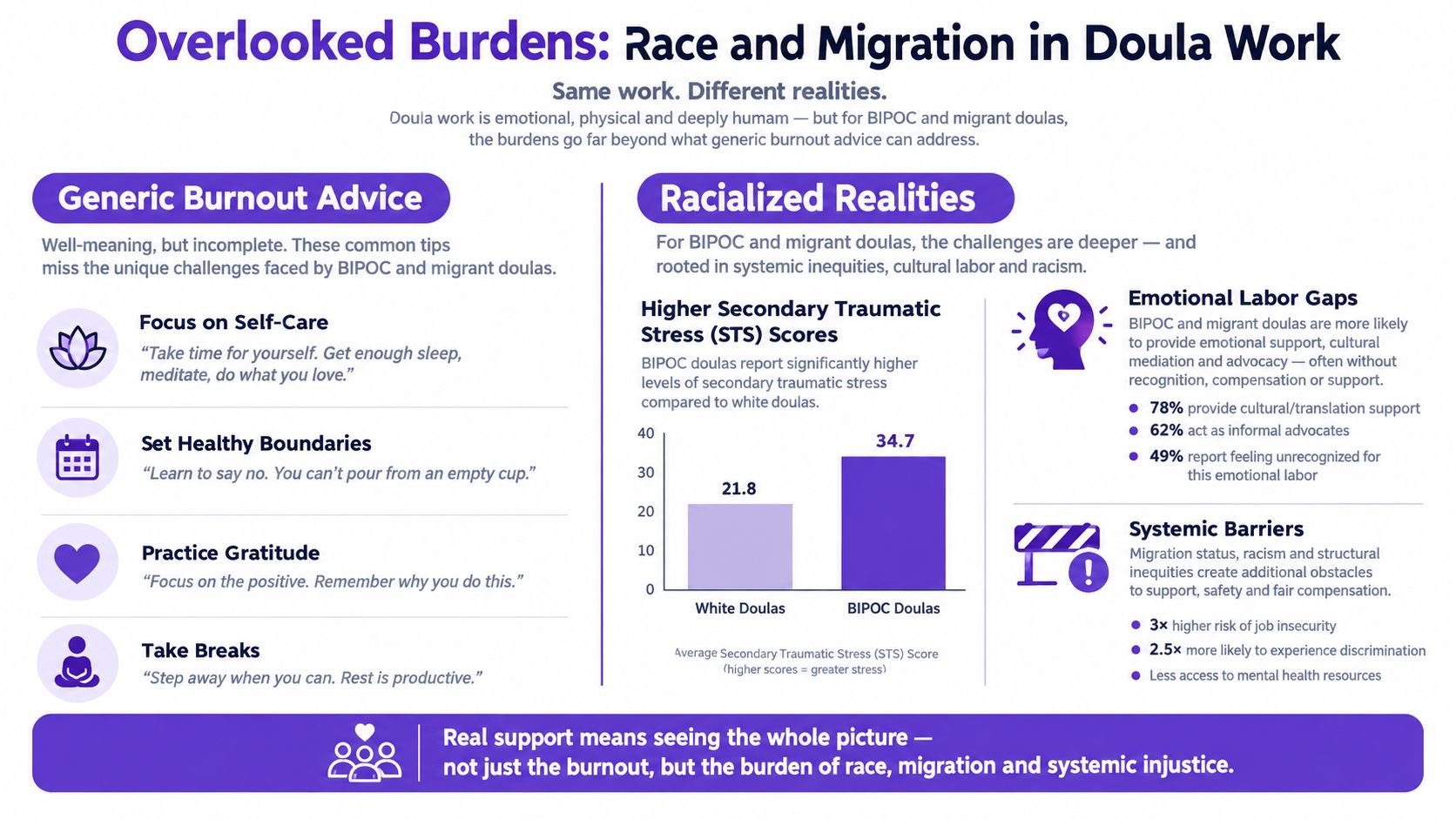
Peer support groups, mentorship pipelines, and culturally matched supervision help more than wellness apps do because they address the actual workload and the actual context. A doula who is always translating, always advocating, and always absorbing structural harm needs relational support and practical relief, not another app reminder to breathe.
The main point is simple. Sustainable doula work depends on structural change, and that has to include racial and migration realities instead of treating them as special cases.
Resources and Referrals for Further Support
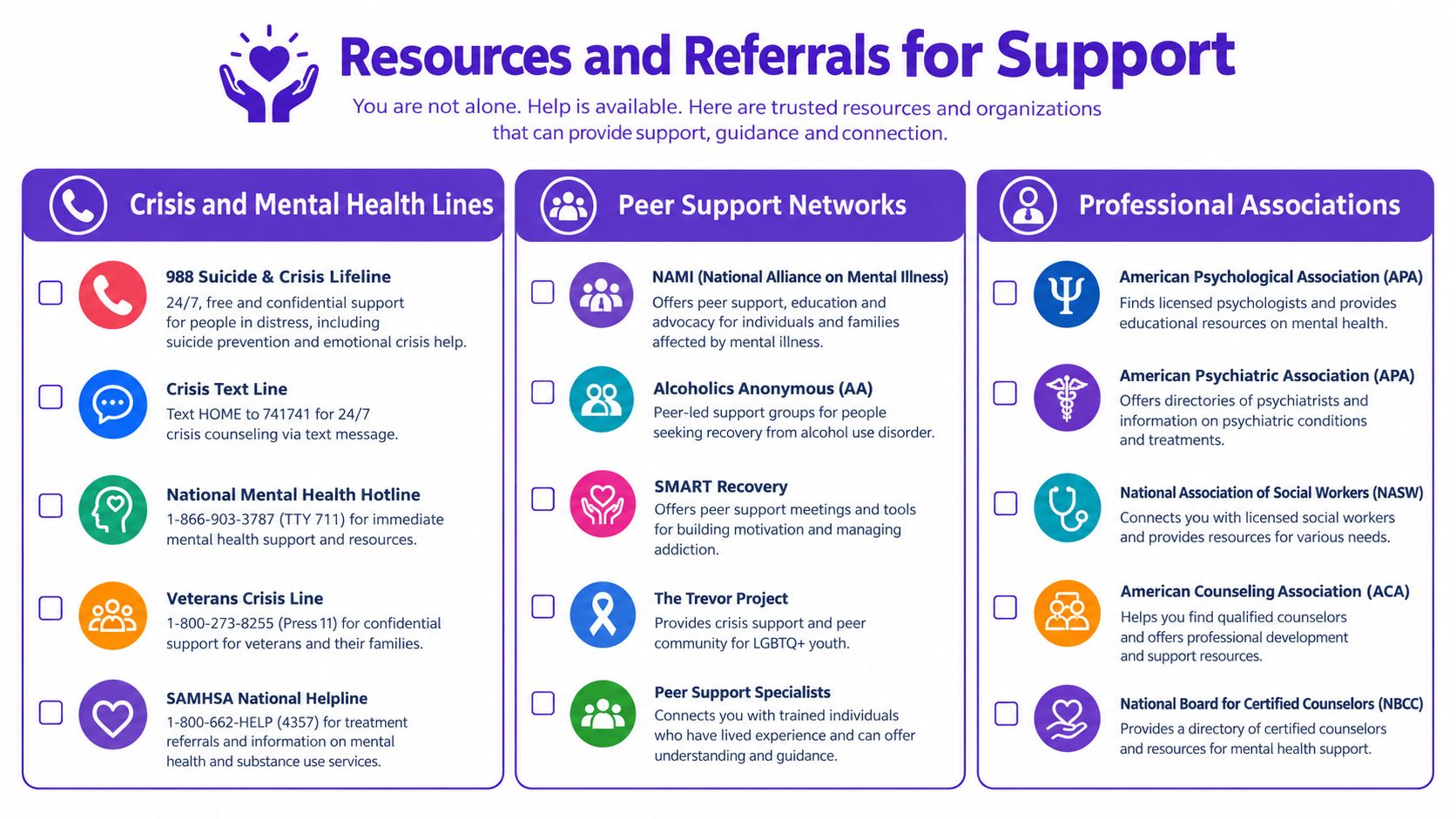
If burnout is already affecting sleep, mood, or safety, start with human support rather than trying to self-manage everything. Crisis lines, perinatal mental health providers, and culturally competent therapists are not luxuries. They're part of staying in the work.
Where to look first
- Crisis and mental health lines: use local crisis services, perinatal mental health hotlines, or community mental health access points if you're at risk of harm or feel out of control.
- Trauma-informed therapists: ask whether they have experience with birth workers, perinatal stress, vicarious trauma, and cultural humility.
- Peer support circles: look for doula supervision groups that protect confidentiality and discuss real cases, not just encouragement.
- Professional associations: ask your certifying body whether it offers member assistance, referrals, or continuing education on vicarious trauma.
- Low-cost care: sliding-scale clinics and trainee clinics can help when private therapy isn't realistic.
If you want to find perinatal counselling online, start by checking whether the provider can speak to birth work, not just general anxiety. Ask how they handle cultural competence, reproductive trauma, and the realities of on-call work before you book.
A few quick vetting questions help a lot. Do they understand perinatal language? Have they worked with care workers before? Can they handle race, migration, and trauma without flattening the story?
The core takeaway is still the same. Doula burnout is structural, prevention needs systems change, and recovery starts with naming what is happening. Burnout is not proof that you're not meant for the work. It's often proof the work needs to change.
If you're trying to build a doula career that lasts, Bornbir can help you look for support providers, compare services, and connect with people who fit your needs. Visit Bornbir to find perinatal care options and keep your practice or search more sustainable.