
The first few days at home can feel strangely quiet after the hospital noise fades. A baby is waking often, your body still feels like it belongs to someone else, and simple questions start stacking up fast. Is this bleeding normal? Why does feeding take so long? Why do I feel fine one hour and overwhelmed the next?
That gap between discharge and feeling settled is where fourth trimester care matters most. It treats the first 12 weeks after birth as a real recovery period, not a quick check-in and move on. It also gives you a way to organize what's happening, so you can match support to the part of recovery that needs it most.
Introduction to Fourth Trimester Care and Why It Matters
A parent may leave the birth setting expecting relief, then find home is where adjustment begins. One person is healing, another is learning how to feed a newborn, and both are short on sleep. Small choices can start to feel unusually large.
Fourth trimester care gives that period a clear frame. It covers the weeks after birth when physical healing, emotional adjustment, feeding, and family routines are changing at the same time. The World Health Organization treats the early postnatal period as a time that needs planned contact, not a single check-in, with care points at within 24 hours, day 3, day 7 to 14, and again at 6 weeks postpartum (WHO postnatal care guidance).
That schedule fits how recovery often unfolds. Some concerns show up right away, such as bleeding or pain. Others appear later, including mood changes, feeding trouble, blood pressure issues, infection, and wound healing. A staged care model works like a series of checkpoints on a long trip, each one catching different problems before they grow harder to address.
If you are figuring out who can help, finding perinatal support providers is a practical place to start. Some families need medical follow-up first. Others need feeding support, mental health care, or someone who can help organize the pieces into a plan that matches recovery needs.
Understanding the Fourth Trimester Timeline and Care Model
Recovery does not happen all at once. In the first 12 weeks, different problems can peak at different times, so care works best when it is timed and matched to the issue in front of you.
What happens across the first 12 weeks
The first 24 hours after birth are the most time-sensitive for some complications, especially postpartum hemorrhage. WHO defines primary postpartum hemorrhage as blood loss of at least 500 mL within 24 hours after birth, or at least 1000 mL after cesarean birth, and notes that most morbidity and mortality happen in that first day (WHO hemorrhage definition). That is why discharge instructions about bleeding, pain, and warning signs deserve close attention.
After the first day, the focus shifts to the early weeks, when bleeding, blood pressure issues, infection, mood changes, feeding problems, and wound healing can appear together. WHO postnatal care guidance uses contact points at within 24 hours, day 3, day 7 to 14, and 6 weeks because recovery often changes along that path. ACOG also says postpartum care should start with contact within the first 3 weeks after birth, then continue as needed until a visit no later than 12 weeks after birth (ACOG postpartum care guidance).
Why staged care fits the body's timeline
The old idea of a single 6-week check does not match how recovery works. Hormones shift, sleep breaks up, and tissues keep healing while a parent is already caring for a newborn. It is a little like repairing a room while the lights are still on. You fix one part, then notice the next part that needs attention.
A staged model keeps contact going across the full fourth trimester, so support can change as needs change. The first days may call for medical monitoring. Later weeks may call for feeding help, mental health support, or help sorting out daily routines. postpartum healing and bonding tips can help with the home side of that process, but the care model itself is about timing and matching support to risk.
If recovery is steady, the plan can stay simple. If bleeding increases, mood symptoms grow, pain worsens, or feeding becomes harder, the next step should be sooner rather than later.
Physical Recovery in the First 12 Weeks After Birth
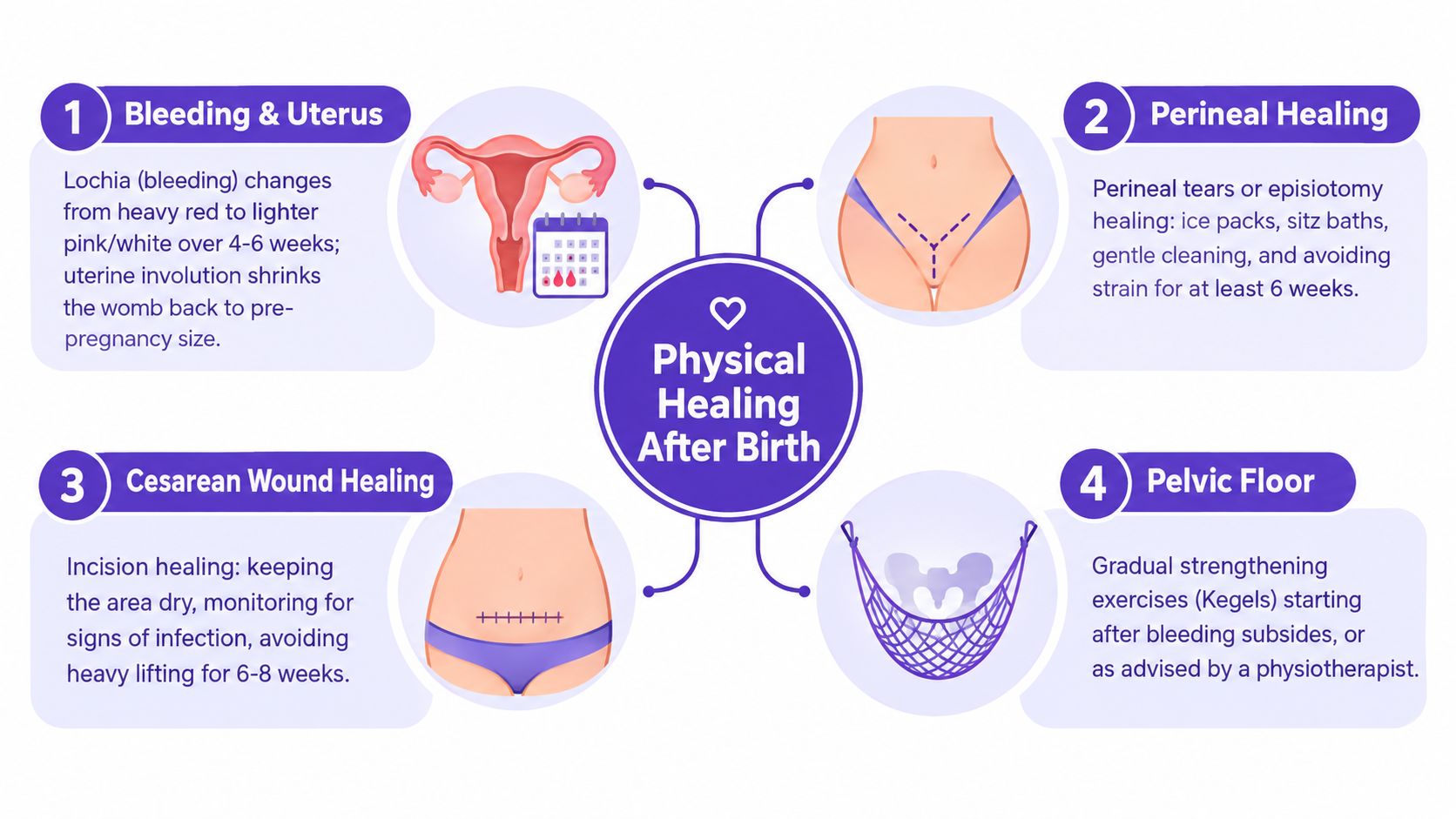
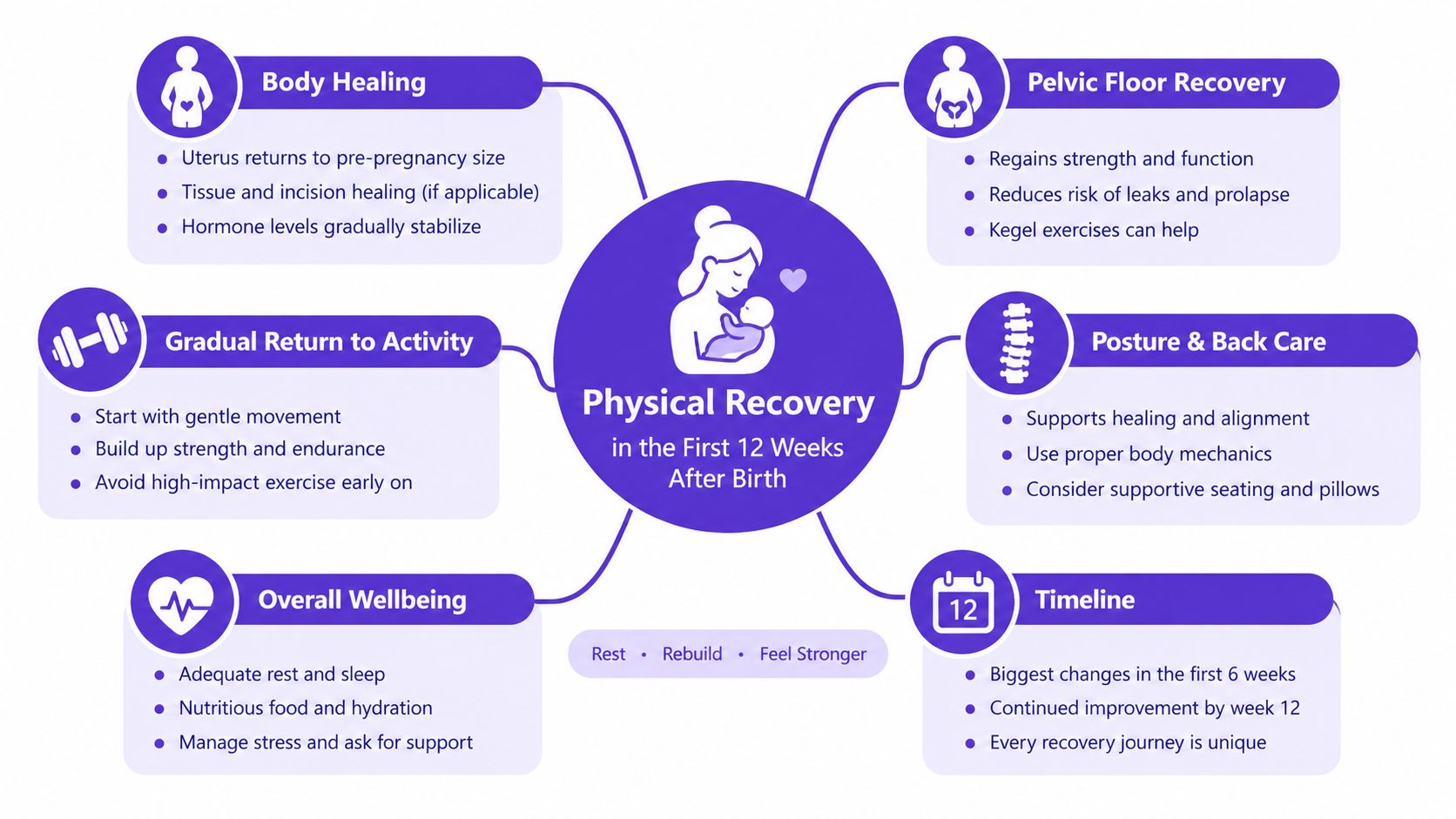
Physical recovery in the fourth trimester is easier to manage when you split it into body systems instead of treating it like one vague process. Bleeding, wound healing, blood pressure, and movement all follow different timelines. That's why a symptom that feels minor one day can matter a lot the next.
Bleeding and uterine recovery
Bleeding after birth can still be normal for weeks, but the pattern matters. WHO defines secondary postpartum hemorrhage as abnormal or excessive bleeding from the birth canal between 24 hours and 12 weeks after birth (WHO postpartum hemorrhage guidance). That window overlaps the fourth trimester, which is one reason discharge is not the end of monitoring.
The main thing to watch is whether bleeding is easing, staying stable, or suddenly increasing. A heavier flow after too much activity can happen, but a sharp increase, dizziness, large clots, or feeling faint needs medical attention. Uterine cramping, often called afterpains, can also show up as the uterus shrinks back down, especially with feeding.
Wounds, blood pressure, and infection
Perineal tears and cesarean incisions need different care, but both deserve close attention in the first weeks. Cleanliness, rest, and symptom tracking matter more than trying to “push through” discomfort. If pain is getting worse, the area looks more red or swollen, or you notice discharge or fever, that's a reason to call.
Blood pressure deserves its own schedule. ACOG says people with high blood pressure during pregnancy should get a postpartum check 3 to 10 days after birth instead of waiting for the routine later visit (ACOG postpartum checkup guidance). That tighter timing helps catch a complication that doesn't always feel dramatic at first.
Don't assume a symptom is harmless just because it happens after discharge. Early postpartum problems often show up before the routine visit.
Movement and healing without overdoing it
Once the body starts to settle, many parents want to move more, stretch more, or “get back to normal” faster. That urge is understandable, but recovery doesn't follow willpower. Gentle walking, position changes, and gradual return to activity are usually more useful than pushing through pain.
For a more detailed look at rebuilding movement, Bornbir's guide to exercise after birth is a useful companion resource. The main point here is simple. Movement should support healing, not compete with it.
Mental Health and Emotional Adjustment After Birth
Mood changes after birth can feel confusing because they often arrive in layers. You may be happy about the baby and still cry over nothing. You may feel bonded one minute and detached the next. That doesn't mean you're failing, it means your mind and body are under real strain.

What's common and what needs more help
The first thing many people notice is how much sleep loss changes everything. A short night can make emotions feel sharper, decisions feel harder, and patience disappear faster than expected. That's not a character flaw. It's a nervous system under load.
Some emotional shifts are expected, especially in the early days. But if sadness, anxiety, intrusive thoughts, panic, numbness, or hopelessness are sticking around or getting stronger, that deserves attention. The postpartum period is one of the reasons early and repeated contact matters, because mood symptoms don't always show up neatly at one appointment.
Why help-seeking should feel routine
Mental health support is part of postpartum care, not a separate issue. Some parents need therapy, some need medication, and some need both, depending on the pattern of symptoms and their history. If you're looking for a clinical overview of options, postpartum depression treatment gives a straightforward starting point.
For everyday support and peer-facing guidance, PPD support for new parents can also help you think through what's normal, what's not, and when to reach out. The useful mindset is this, if you'd talk to a provider about a fever or bleeding change, you should also talk to one about a mood change that feels off.
Emotional recovery isn't about staying positive. It's about getting the right support early enough for it to work.
The 12-week model matters here because it gives mood changes more than one chance to be seen. That's better than assuming a single visit can catch everything.
Feeding Sleep and Daily Rhythms for Parent and Newborn
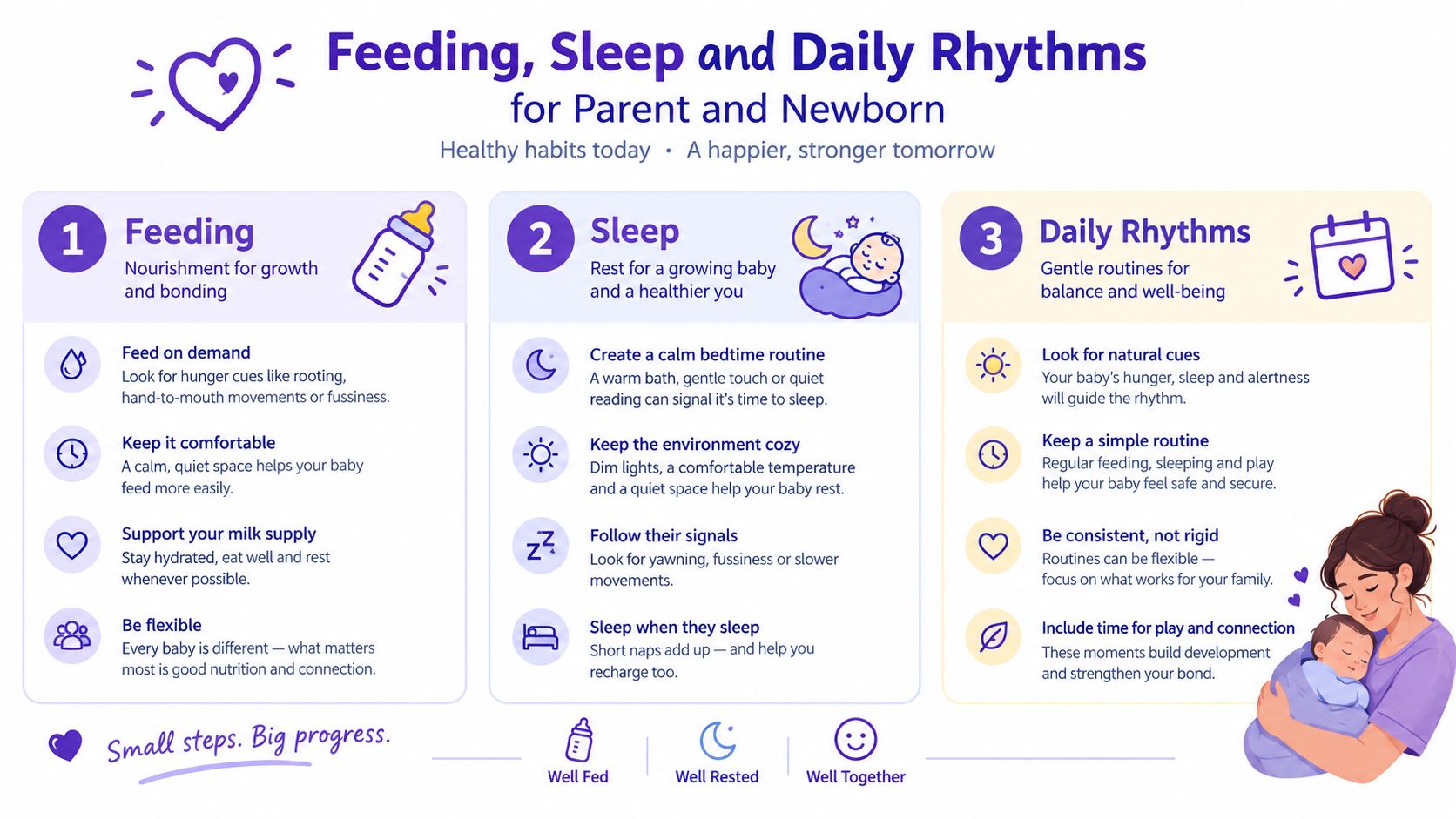
Feeding and sleep are tied together from the first days. A newborn eats often, wakes often, and does not follow a clock. Parents feel that rhythm quickly, because each feeding choice also shapes rest, recovery, and mood.
Feeding support works best when it starts early
Feeding help works best when it starts before small problems become big ones. Systematic reviews found that breastfeeding education, advice, and support from peers or professionals, whether started before birth or within the first 8 weeks postpartum, improved any and exclusive breastfeeding at 6 to 12 weeks and again at 16 to 26 weeks (NCBI lactation evidence summary).
That does not mean every family should breastfeed. It means feeding usually goes better when support is early, repeated, and flexible. A short check-in after a rough latch, a video consult, or a peer group can help more than one long conversation after trouble has already piled up.
Sleep needs structure, not perfection
Newborn sleep is broken into pieces by design. The goal is not to force it into an adult pattern. The goal is to make nights workable, with shifts, handoffs, and small rest windows so one tired parent is not carrying every wake-up alone.
For a plain-language guide to sleep arrangements and safety, SouthShore Fine Linens co-sleeping advice can help families sort through the topic. Whatever setup a family uses, adults need a plan that protects feeding and leaves enough rest to function.
A simple way to organize the day
- Feed before exhaustion builds: waiting until everyone is frantic usually makes feeding harder.
- Protect one rest block: even a short stretch of uninterrupted sleep can change the next day.
- Share the non-feeding work: diaper changes, burping, soothing, washing pump parts, and prepping bottles still take time.
- Keep supplies close: water, snacks, burp cloths, diapers, and chargers should be within reach.
A day like this will not feel polished. It is more like setting up stations in a small kitchen, so every task is easier to reach. That kind of repetition helps parents and babies get through the early weeks with less friction.
Choosing Support Providers and Services for Fourth Trimester Care
Different families need different kinds of help, and that's where provider choice matters. A person who wants feeding help may not need the same support as someone recovering from a cesarean or someone who's struggling to sleep at all. The right match is usually the one that fits the current problem, not the most far-reaching option.
How the main supports differ
Postpartum doulas usually focus on practical in-home support, newborn care, rest protection, and family adjustment. Midwives may be the right fit when medical follow-up or birth-related continuity is needed. Lactation consultants focus on feeding mechanics, milk supply questions, and positioning. Night nannies and sleep coaches are more useful when the main problem is overnight logistics or sleep planning.
For a broad search option, Bornbir's local doula matching service can be one way to compare providers, services, and availability side by side. The same advice still applies with any platform, verify licensure where relevant, check experience, and read reviews with a clear eye for fit.
Comparing Common Fourth Trimester Support Options
| Provider Type | Primary Focus | Typical Timing | In Person or Virtual |
|---|---|---|---|
| Postpartum doula | Home support, newborn care, rest, light household help | Early postpartum and ongoing through the first weeks | Both |
| Midwife | Clinical follow-up, recovery monitoring, care coordination | Birth through postpartum follow-up | Mainly in person, sometimes virtual |
| Lactation consultant | Feeding assessment, latch, milk supply, pumping support | Early feeding issues and ongoing check-ins | Both |
| Night nanny | Overnight infant care and parent rest | Nights, often in the earliest weeks | In person |
| Sleep coach | Sleep routines and family sleep planning | When families want a structured sleep approach | Both |
| Peer or virtual support | Emotional reassurance, practical advice, shared experience | Flexible, often as-needed | Virtual |
What to compare before booking
- Credentials: Make sure the provider's training matches the service they offer.
- Availability: Some help is useful only if it's available during the week you need it.
- Fit: A calm, clear communicator can matter as much as technical skill.
- Access: If wait times are long, virtual support may fill the gap while you keep looking.
- Cost structure: Ask how visits, follow-ups, and travel are handled so there are no surprises.
This is also where navigation support matters. A lot of families don't just need care, they need help finding care quickly, understanding what each role does, and deciding what to book first.
Putting Your Fourth Trimester Care Plan Into Action
A workable plan for the first 12 weeks does not need to be elaborate. It needs to match the order of recovery. Start with medical check-ins that fit your risk, then add feeding help, mood support, and daily rest around them.
A short checklist can keep the early weeks organized.
A simple checklist for the first 12 weeks
- Book early contact: use the first few weeks for symptom review, not just a later appointment on the calendar.
- Track changes: write down bleeding, pain, mood shifts, feeding issues, and sleep patterns.
- Match support to need: feeding help for latch or pumping issues, medical follow-up for blood pressure or wound concerns, emotional support for persistent sadness or anxiety.
- Protect rest: ask family or partners to take on the tasks that keep the house moving.
- Revisit the plan often: if symptoms change, the support should change too.
The old single 6-week visit does not fit every recovery. ACOG postpartum care guidance recommends care starting within the first 3 weeks and continuing through a visit no later than 12 weeks after birth. That timing leaves room for support when the first plan is not enough.
Recovery, feeding, mood, and sleep shift at different speeds, so the plan should shift too. A sore incision, a baby who will not latch, and rising anxiety each need a different response. Treat the plan like a set of tools, not one fixed appointment. If one piece gets harder, add help there instead of trying to handle everything at once.
Bornbir helps new and expecting parents find vetted perinatal support providers for postpartum care, feeding help, and other fourth trimester needs. You can compare options, availability, and services in one place, then message providers directly to see who fits your situation. Visit Bornbir if you want a simpler way to line up the right support for the first 12 weeks after birth.