
It's 3 a.m. and you're awake again, not only because the baby stirred. Your top is stuck to your back, the sheet feels damp, and you're wondering if you should change everything or try to fall back asleep. Then the worry starts. Is this normal sweating after birth, or are these chills? Postpartum night sweats and chills aren't the same thing, and learning to tell them apart on the same night can help you decide what to do next.
How Long Night Sweats Last After Birth
By the third day after birth, you may wake with damp sheets and wonder whether every night will be this intense. For many parents, postpartum night sweats ease over the first few weeks as the body adjusts after pregnancy.
A Cleveland Clinic summary on postpartum night sweats estimates that about 35% of people who have recently given birth experience them. The summary also reports figures from a Japanese study: sweating was reported by 58.6% of participants at three days postpartum, 33.1% at two weeks, and 15.2% at one month. These figures show a decline in how many participants reported sweating over time, not a peak at two weeks.
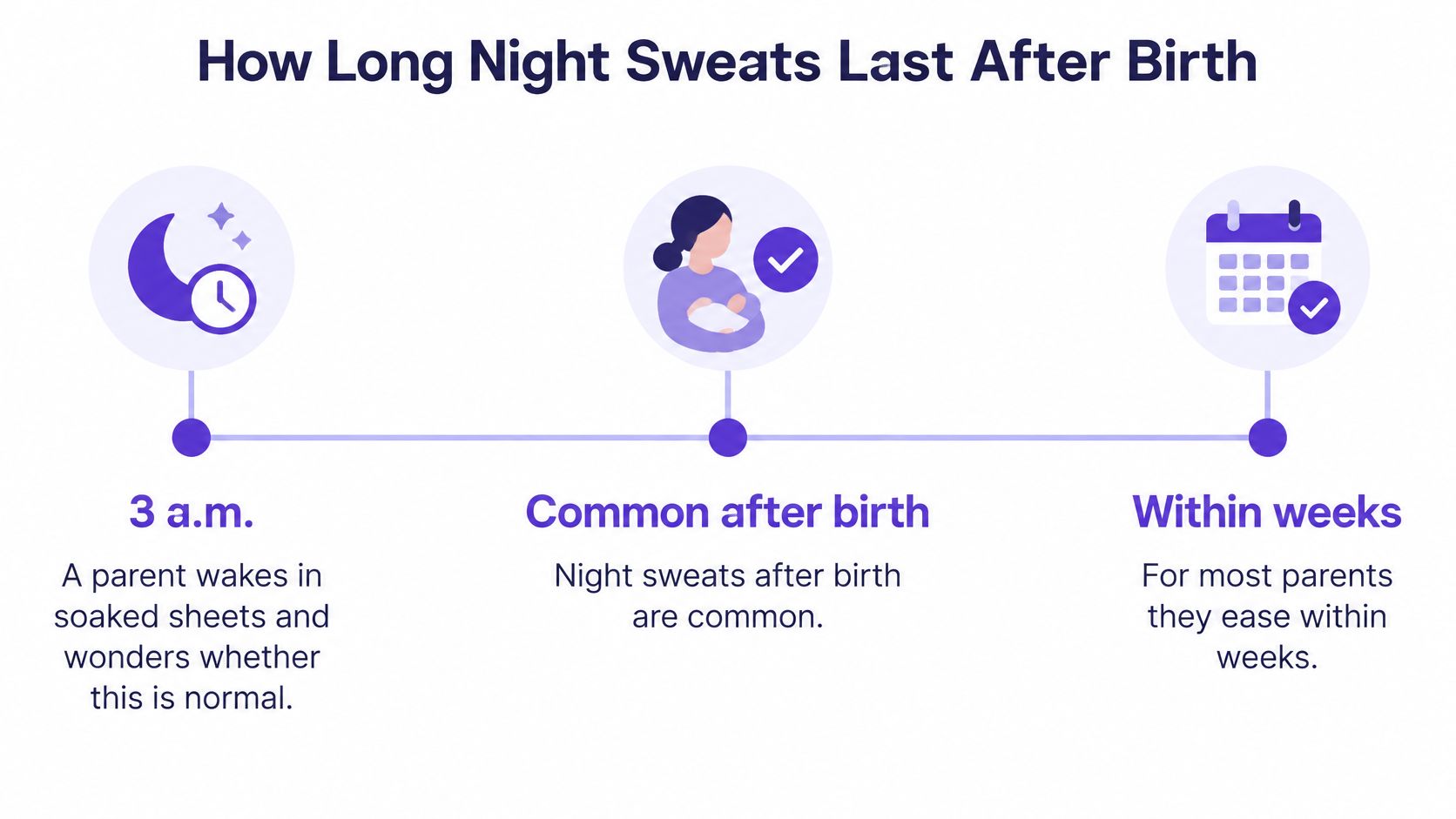
What the Timeline Looks Like
The Japanese study found the highest reported share at three days postpartum. That does not mean every person's sweats are worst on that day: symptoms can vary from night to night, even as they become less common overall.
Postpartum night sweats by time after birth
| Time After Birth | Typical Pattern | Reported Share |
|---|---|---|
| Day 3 | Sweating was reported by the largest share in the study | 58.6% (Japanese study) |
| Two weeks | Fewer participants reported sweating than at day 3 | 33.1% (Japanese study) |
| One month | Fewer participants reported sweating than at two weeks | 15.2% (Japanese study) |
| Recent parents overall | Cleveland Clinic's estimate for postpartum night sweats | About 35% (Cleveland Clinic) |
| Beyond about three weeks | If sweating persists, soaks bedding, or disrupts sleep, discuss it with a clinician | No single share reported |
One particularly wet night does not predict how the rest of the month will go. A downward trend in a study describes the group, not a guarantee for each person. If drenching sweats continue beyond roughly three weeks or keep interrupting sleep, contact a clinician rather than waiting indefinitely.
Normal Sweats or Infection Warning Signs
Start with one number. An oral temperature of at least 38.0°C (100.4°F) on any two of the first 10 days after birth warrants evaluation, according to clinical guidance on postpartum fever evaluation. The first 24 hours are excluded from that threshold because a brief fever then is relatively common.
Chills are the clue that changes the picture. Drenching sweats with no fever and no chills usually point toward hormonal and fluid change. Sweats with shaking chills, also called rigors, point more toward possible infection and need a different response.
Patterns That Need Different Actions
Possible causes include endometritis, which is infection of the uterus lining, wound or cesarean site infection, mastitis, urinary infection, and pyelonephritis, which is a kidney infection. If breast pain and redness are part of the picture, it helps to know the mastitis symptoms that warrant a call.
Sweats and chills by pattern and action
| Pattern | What It Can Point To | What to Do |
|---|---|---|
| Drenching sweats, no fever, no chills, easing day by day | Hormonal and fluid shift | Self-care and tracking for about three weeks |
| Sweats with temperature 38.0°C (100.4°F) or higher on two readings in the first 10 days | Possible postpartum infection | Contact an obstetric clinician the same day |
| Chills with uterine or abdominal tenderness, or foul-smelling lochia | Possible endometritis | Urgent assessment |
| Chills with breast redness, hardness or pain | Possible mastitis | Same-day clinician contact |
| Chills with burning urination, back or flank pain | Possible urinary infection or pyelonephritis | Urgent assessment |
| Redness, swelling or drainage at the wound or cesarean site | Possible wound infection | Same-day review |
| Chills with confusion, rapid breathing or marked weakness | Possible sepsis | Emergency care now |
Postpartum fever with chills calls for prompt contact with an obstetric clinician. Delay matters because postpartum infections can progress to sepsis, a serious whole body response to infection.
Decision Points You Can Use Tonight
- Tonight. Chills with a temperature of 38.0°C or higher, confusion, rapid breathing, or marked weakness mean calling the obstetric emergency line or emergency services now.
- Within 24 to 48 hours. Sweats are soaking bedding most nights, but your temperature is normal and you have no infection signs. Book a visit with a GP or obstetric clinician.
- Within the first three weeks. Sweats are still disrupting sleep. Schedule a review and bring the seven day log described in the self-care section below.
Rule of thumb: When you're unsure, make the call. A short phone call costs little compared with a delayed infection.
Why Your Body Sweats at Night After Delivery
Think of your body's thermostat after a sudden change in the house. For months it adjusted to one heating load. After birth that load changes fast, so for a while it overcorrects, especially at night.
After the placenta is delivered, estrogen and progesterone fall sharply. Lower estrogen can alter how the hypothalamus, the brain area that helps control temperature, regulates heat. That can trigger brief heat release episodes similar to menopausal hot flashes, as explained in a guide to postpartum sweating and temperature control.
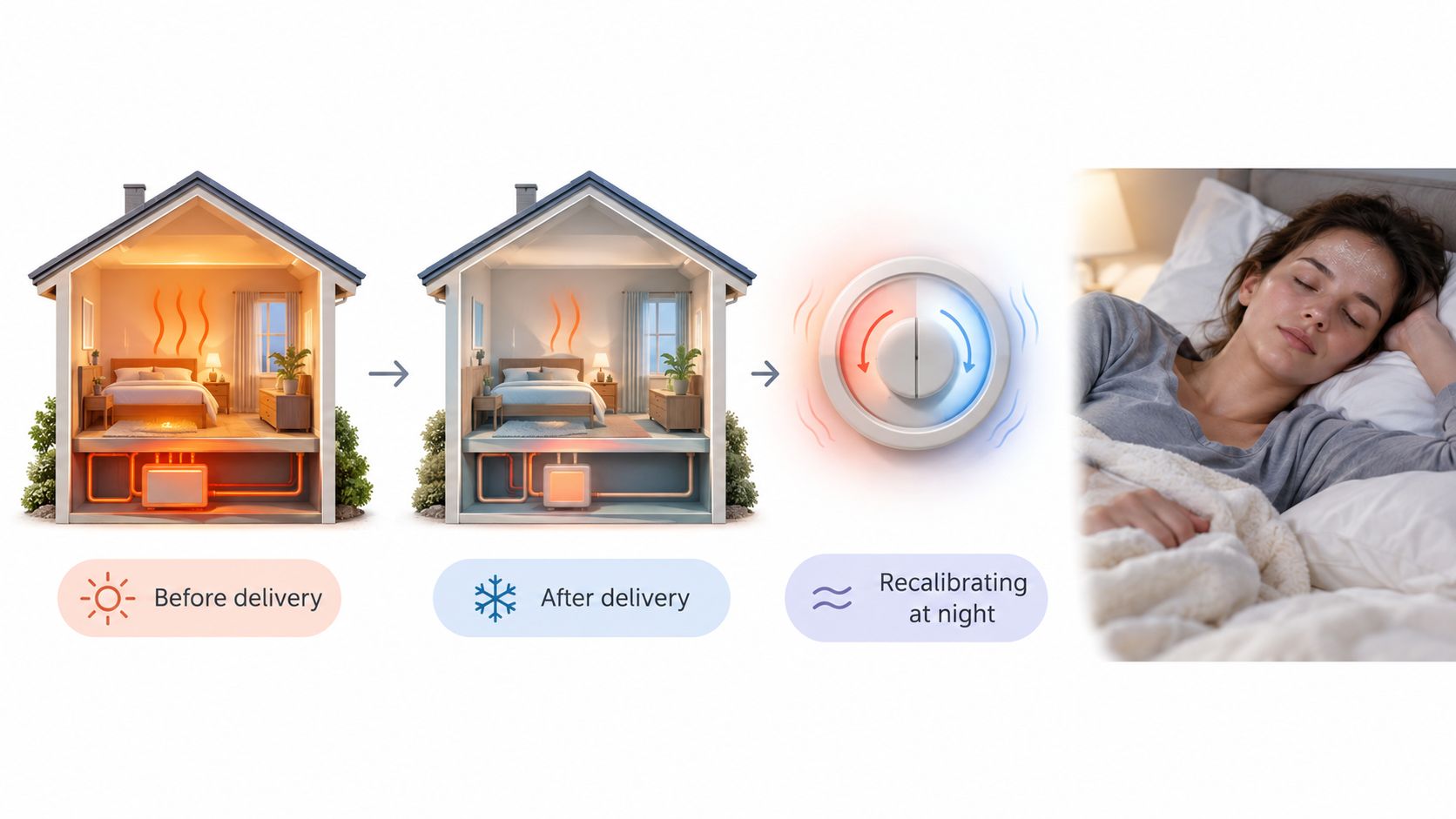
At the same time, your body clears extra fluid built up during pregnancy through urine and sweat. It's a bit like a bathtub draining after the tap is turned off. Episodes often cluster at night because sleep itself changes body temperature and hormone patterns.
Sweating is your body's cooling response. It isn't, by itself, the infection.
Breastfeeding needs an honest answer. Some studies link early breastfeeding with sweats, but prospective evidence didn't find a significant association with sleep-disturbing hot flashes after adjustment. Depressive symptoms remained associated instead, so breastfeeding shouldn't be presented as the simple cause.
Other factors can also matter, including sleep loss, anxiety about money or family, anemia, thyroid disease, and medication effects. If you're reading about hormones more broadly, use caution with product claims and check pregnancy hormone supplements and safety against advice from your own clinician. You can also explore postpartum changes with Bornbir to see how sweating fits into wider recovery.
Mood, Sleep Loss and Night Sweats
At 3 a.m., waking drenched can make it hard to tell whether you are just exhausted or becoming unwell. Sweating alone does not show that mood changes caused it, and an association between symptoms does not prove cause and effect. Anxiety, low mood, and interrupted sleep can still make recovery feel harder.
A report on postpartum night sweats describes links between more sweating and anxiety about family finances and higher depressive symptom scores. It did not establish that these factors cause sweating. The same report found no significant association between sleep duration and sweating, so short sleep should not be treated as an explanation for the sweats.
The practical concern is how the symptoms affect you. A difficult cycle can develop: sweating interrupts sleep, and a tired, worried day can make it harder to rest the next night.
A short check you can do this week
- Timing. Note whether low mood or worries about money or family are affecting your day, and whether sleep loss is making daily tasks harder.
- Safety. Persistent sadness, loss of interest, or thoughts of harming yourself deserve attention. Seek urgent help if you have thoughts of harming yourself or your baby.
- Daily function. Contact a perinatal mental health clinician if mood symptoms or poor sleep are interfering with daily life. You can also find compassionate help for postpartum overwhelm.
Small wind-down steps may help you reduce bedtime stress and restlessness, but they are not a substitute for assessment. If drenching sweats come with a temperature of 100.4°F (38°C) or higher, contact your postpartum provider promptly, especially if you also have chills or feel unwell.
Self-Care Measures That Ease Night Sweats
Self-care won't speed up hormone changes, but it can make a wet wake up shorter and less miserable. Set up the room before bed so you're not searching in the dark.
- Keep a reset kit close. Put spare sleepwear, a clean towel, and a dry sheet within reach so changing takes minutes.
- Choose lighter sleepwear. Breathable cotton or moisture wicking fabric works better than heavy layers that trap heat.
- Layer the bedding. Use layers you can remove one at a time, with a washable pad under the sheet to protect the mattress.
- Cool the room. Use a fan or open window, aiming for about 16 to 19°C where the season allows.
- Drink steadily. Sip water across the day and keep a glass nearby at feeds. Limit alcohol and late caffeine, since either can worsen sweating for some people.
- Change damp clothes quickly. Staying in wet fabric can leave you chilled and irritate skin.
- Log the pattern. Note the time, how long it lasted, and how much sleep it cost. A simple record helps a clinician see frequency and impact.
For more home setup ideas, see a recovery guide for new parents.
Self-care suits drenching sweats without fever. It doesn't replace evaluation when chills, fever, pain, or mood changes appear.
Which Postpartum Provider Helps With Which Problem
At 3 a.m., you may wake with soaked pajamas and feel cold while changing. Drenching sweats without a fever can happen as your body adjusts after birth. Chills with a temperature of 38°C (100.4°F) or higher, or chills with worsening pain or feeling very unwell, call for prompt medical advice. Choose a provider based on the symptom that concerns you most.
| Provider | What They Can Help Assess | When to Contact |
|---|---|---|
| Obstetric clinician or midwife | Fever, possible infection, and wound or uterine concerns | A temperature of 38°C (100.4°F) or higher, chills, or worsening pain |
| Family physician or GP | Possible thyroid problems, anemia, medication effects, or other causes | Sweats that persist or come with other ongoing symptoms |
| Lactation consultant | Feeding concerns and breast symptoms | Breast pain or feeding difficulties |
| Perinatal mental health clinician | Low mood, anxiety, or distress affecting sleep and daily life | Mood symptoms or sleep distress that feels hard to manage |
| Postpartum doula or night nanny | Overnight practical help and protected rest | Exhaustion, alongside medical care when symptoms need assessment |
| Sleep coach | Sleep routines and structure | After a clinician has considered possible medical causes |
A doula or night nanny can help you change bedding and get a stretch of rest. They cannot assess or treat an infection. A sleep coach can help with routines after a clinician has considered medical explanations for persistent sweats.
For support with low mood, Therapy for postpartum depression can help you prepare questions for a clinician. Learn what a midwife may offer after birth in Bornbir's guide to postpartum midwives.
Bornbir lists profiles for doulas, midwives, lactation consultants, night nannies, and sleep coaches, with reviews and availability to compare. Providers are independent, so check their licensure, experience, and fit before booking.
If you need practical support while a clinician assesses concerning symptoms, Bornbir lists postpartum providers you can review. Compare profiles and contact providers about the help you need.