
Newborns can grin from birth, but those first grins are reflexive. The first genuine social smile usually appears around 6 to 8 weeks, in the second month.
It's late. Your baby has just finished a feed and is going heavy in your arms, eyes closed, and then their lips curl into a shape that looks unmistakably like a smile. You say something soft. Nothing comes back, and the face goes slack again.
Over the next few days you watch for it, and you end up searching for when do newborns start smiling, only to find five different answers. Two separate things happen in your baby's face, and only one of them is about you. Once you can tell them apart, the waiting gets much calmer.
Smile Timeline From Birth to Four Months
Read the timeline from the top down and the pattern is clear. Early smiles are muscle movement. Later smiles are messages.
| Age | Smile type | What parents usually see | Reference note |
|---|---|---|---|
| Birth to 2 weeks | Reflex | Brief lip curves during sleep or drowsiness | Not a response to a person |
| 2 to 6 weeks | Reflex, with early social signs possible | Smiles mostly asleep, awake smiles inconsistent | Timing varies widely |
| 6 to 8 weeks | Early social smile | Smiles back at a familiar face or voice | Earliest common window |
| About 2 months | Social smile | Smiles when talked to or smiled at | Milestone reference point, not a deadline |
| 2 to 4 months | Reliable social smile | Frequent smiles during face-to-face play | Smiles increasingly communicate |
| About 4 months | Spontaneous social smile | Smiles at people and sustains interaction | Discuss with a clinician if absent |
Birth to 2 weeks. The curve is brief and usually happens in sleep or drowsiness. It isn't a reaction to your face, and plenty of babies barely do it at all in this window.
2 to 6 weeks. Smiles still cluster around sleep. Awake smiles come and go with no obvious trigger, so one day feels promising and the next feels flat.
6 to 8 weeks. This is the earliest common window for a smile that answers you. NHS child-development guidance notes that babies from about 6 weeks may smile back when a familiar adult smiles at them, and may also smile at the sound of that adult's voice, as they begin linking a face and a voice with a pleasant exchange.
About 2 months. Smiling when you talk to your baby or smile at them settles into a recognizable milestone instead of a lucky one-off.
2 to 4 months. Smiles become frequent during face-to-face play and need less perfect conditions. They also start doing a job, pulling you in and keeping the game going.
About 4 months. Smiles arrive spontaneously, get aimed at people, and last long enough for a back-and-forth.
Why the Numbers on the Chart Don't Match Every Answer You'll Read
Newborn has a technical meaning, and it's narrow. It covers the first 28 days, while most milestone resources only begin tracking social smiling at 2 months, a gap developmental researchers have flagged as the reason online answers for when do newborns start smiling appear to contradict each other. Both are true. They're describing different weeks.
Treat every age on that chart as a reference point, not a deadline. Alertness, feeding, sleep, and temperament all push the timing around, and a baby who is sleepy at 8 weeks may not show you a clean social smile until 10.
The patience you'll need in a few months, when you're celebrating your child's first wobbly steps, starts here. For the adult side of these early weeks, our guide to postpartum care for new parents covers recovery, rest, and what to line up before the first smile arrives.
Reflex Smiles Versus Social Smiles
Two very different events share one name, and that's where most of the worry comes from.
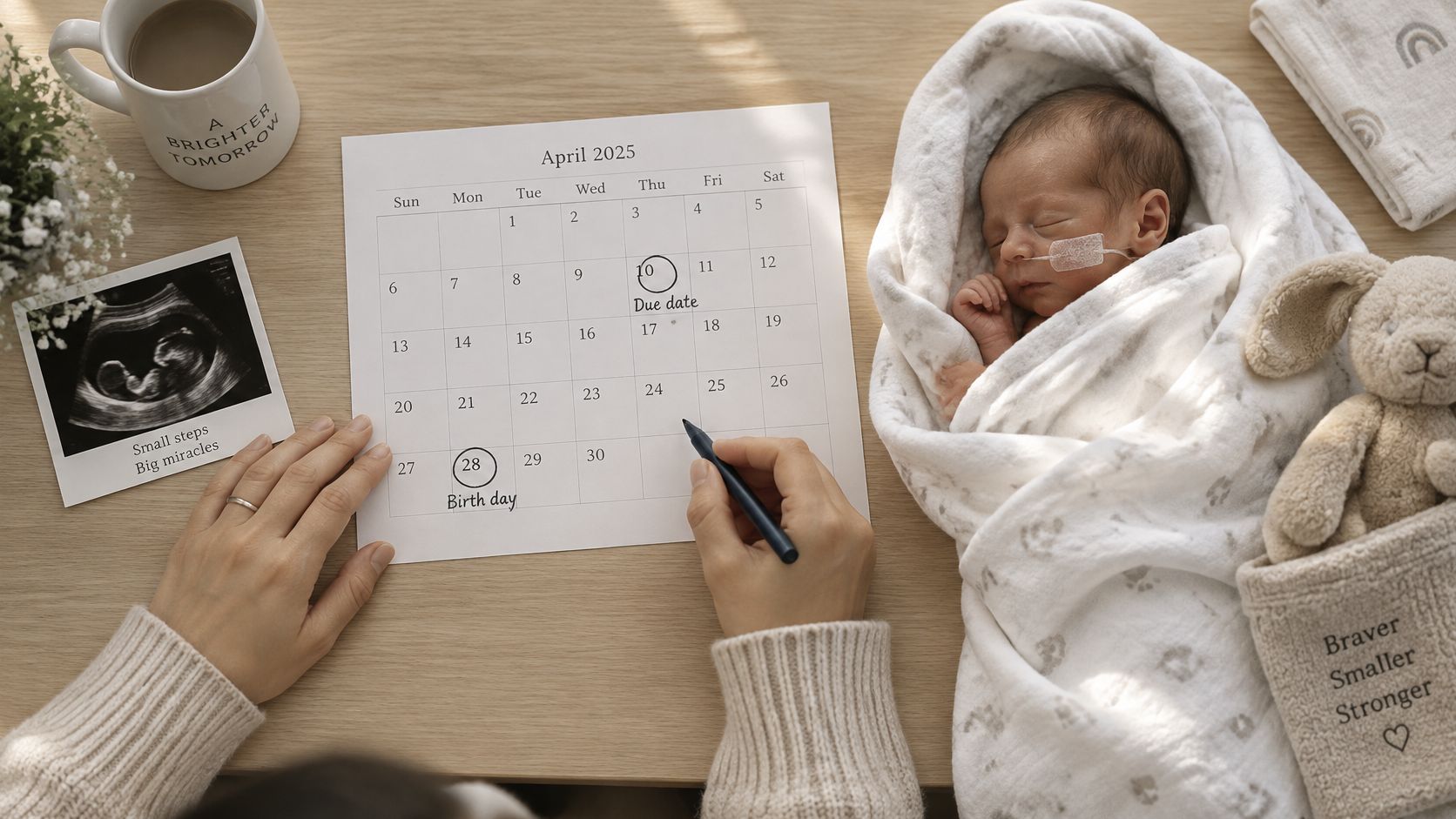
A reflex smile is involuntary. Reviews of infant smiling development describe the earliest expressions as appearing during sleep, drowsiness, or spontaneous facial activity, and as not reliably triggered by a caregiver's face or voice. A social smile is aimed. It arrives when your baby is looking at you and something about you prompts it.
Five Differences That Settle It
| Feature | Reflex smile | Social smile |
|---|---|---|
| When it appears | During sleep, drowsiness or random facial movement | Awake, during face-to-face moments |
| Triggered by a face or voice | Not reliably | Yes, often from about 6 to 8 weeks |
| Eye contact | Usually absent | Usually present |
| What it signals | Involuntary facial movement | Early social engagement |
| Typical age | From birth | Usually from 6 to 8 weeks |
Watch it in real time. A newborn who grins halfway through a feed with their eyes shut isn't answering anyone, even when the timing feels too perfect to be random. A baby who turns toward your voice, finds your face, and then smiles is showing an early social response. That second one is what you're waiting for.
Reflex smiles don't switch off the day social smiles begin. Your baby may show both in the same week, one in the crib with their eyes closed and one in your arms at eye level. That overlap is normal, and it's why a single smile proves very little on its own.
Try this when your baby is calm and awake. Sit close enough that your face fills most of their view. Speak softly, then smile slowly and hold it. Watch the eyes before the mouth. A smile that follows your face counts for more than one that arrives while they're drifting off.
Run that check a few times over a week or two. You're reading a pattern, not a moment.
Why the First Smile Arrives at Different Times
Two babies born on the same day can start smiling weeks apart and both be on track. The gap usually comes down to a few ordinary factors.
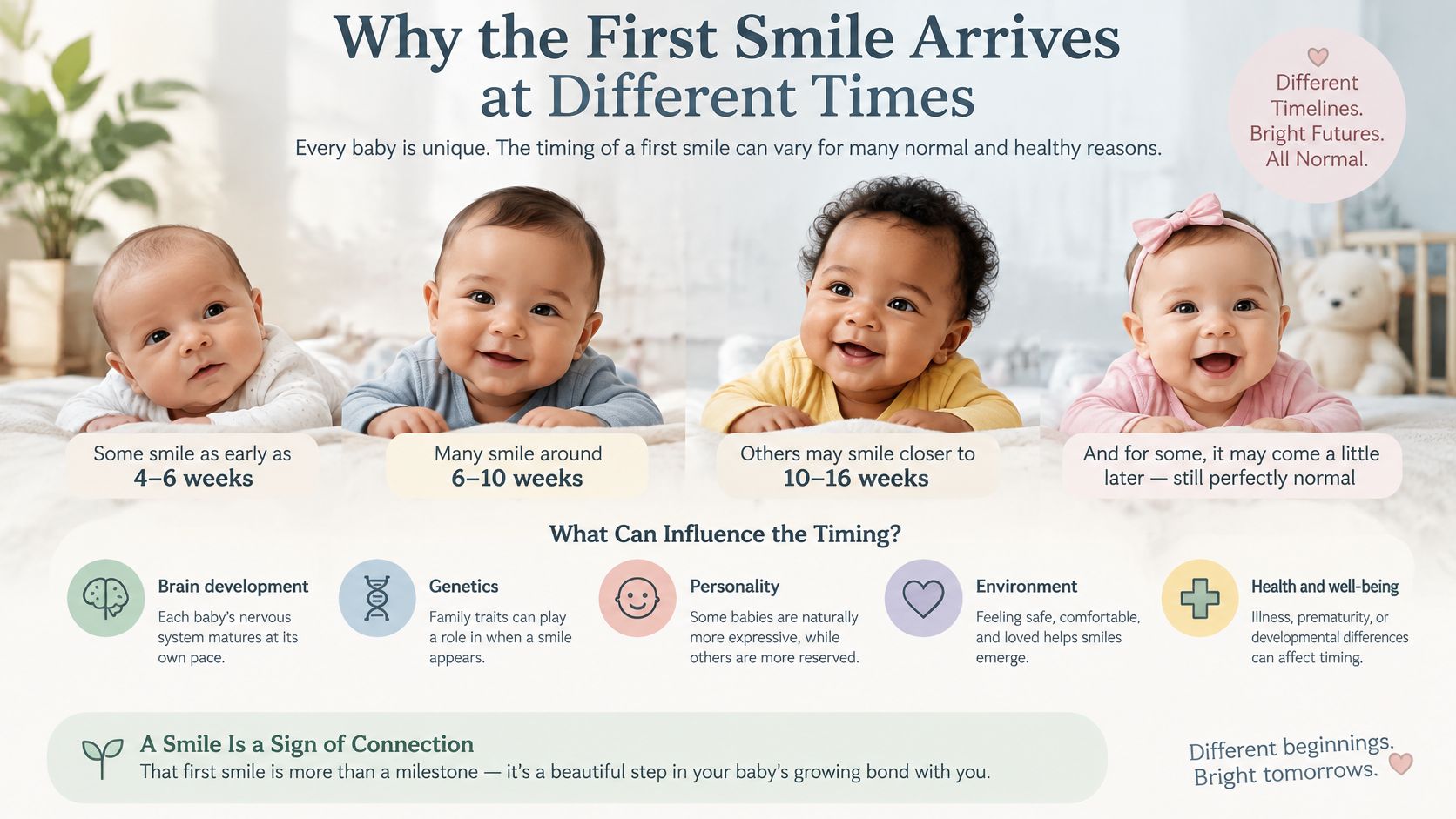
Corrected age. A baby born several weeks early is generally assessed from the due date rather than the birth date, so a smile that looks late on the calendar can be right on time. Bornbir's premature baby care resources explain corrected age and the other timing adjustments that come with it.
State. Babies smile when they're calm and alert. A baby who is hungry, overtired, or working through a growth spurt won't produce a social smile on request, and that tells you about their state, not their development.
Visual access and temperament. Some babies lock onto faces and hold eye contact easily. Others take in a little and turn away before they get overwhelmed, so their smiles arrive in shorter bursts.
Familiarity. The first smiles usually go to the face and voice a baby knows best. One parent gets the grin and a visiting relative gets a steady stare, and that's a preference rather than a verdict.
Say a parent props their 7 week old up after a feed, waits, and gets nothing but a level stare. Nothing is wrong there. The baby sits at the early edge of the window, has just done the hard work of eating, and is likely ready to sleep. Another parent notices smiles only with one caregiver and assumes the other is being rejected. In practice, the baby has paired one familiar face with the payoff.
Before you draw a conclusion, check the plain things. How alert was your baby? How long since the last feed? Was the room quiet or busy? Who was doing the smiling? Then judge the pattern across several weeks instead of one afternoon.
A missed smile at 7 weeks is information about a single moment. A month of no smiles in a baby who is calm, awake, and looking at you is information worth sharing with your clinician.
How Social Smiling Becomes Reliable by Four Months
Between roughly 2 and 4 months, smiling stops being occasional and becomes a dependable part of how your baby communicates.
The clearest picture comes from a longitudinal study of infant-caregiver interaction that followed 20 mother-infant pairs in Münster, Germany, and 24 pairs in rural Nso, Cameroon, at 6, 8, 10, and 12 weeks. The researchers tracked mutual gaze, caregiver smiling, and infant imitation, and identified the second month as the key transition. By 12 weeks, infants in Münster were displaying more social smiles than infants in Nso in the observed interactions.
That difference is worth sitting with. Same developmental window, different caregiving context, different frequency of smiles. A loud household and a quiet one, a home where someone chats face to face all day and one where babies are carried close and spoken to less directly, all of it shapes how often a smile shows up on any given afternoon.
The same body of work notes that infant smiling increased significantly across the first 9 weeks, with a particularly measurable rise between weeks 5 and 9. The change is gradual, not a switch.
What Four Months Actually Changes
By about 4 months, smiles hold up during face-to-face interaction and start doing specific jobs. They attract your attention and they keep the exchange going. A smile at this stage is a request: stay, keep talking, do that again.
A Simple Count to Keep
Instead of testing your baby once, count. Over a day, notice how many interactions end with a smile, and whether your baby looks back at you, pauses, or makes a sound to keep you talking. Those small moves matter more than the smile itself.
Day-to-day swings inside this window are normal. A quiet day tells you about sleep and feeding, not about development. If your baby is intense, hard to settle, and wants constant contact, our high need baby coping strategies are a practical companion while you keep watching the pattern.
How to Encourage Social Smiles at Home
Smiling grows out of back-and-forth play, not lessons. Your job is to make the exchange easy and worth repeating.
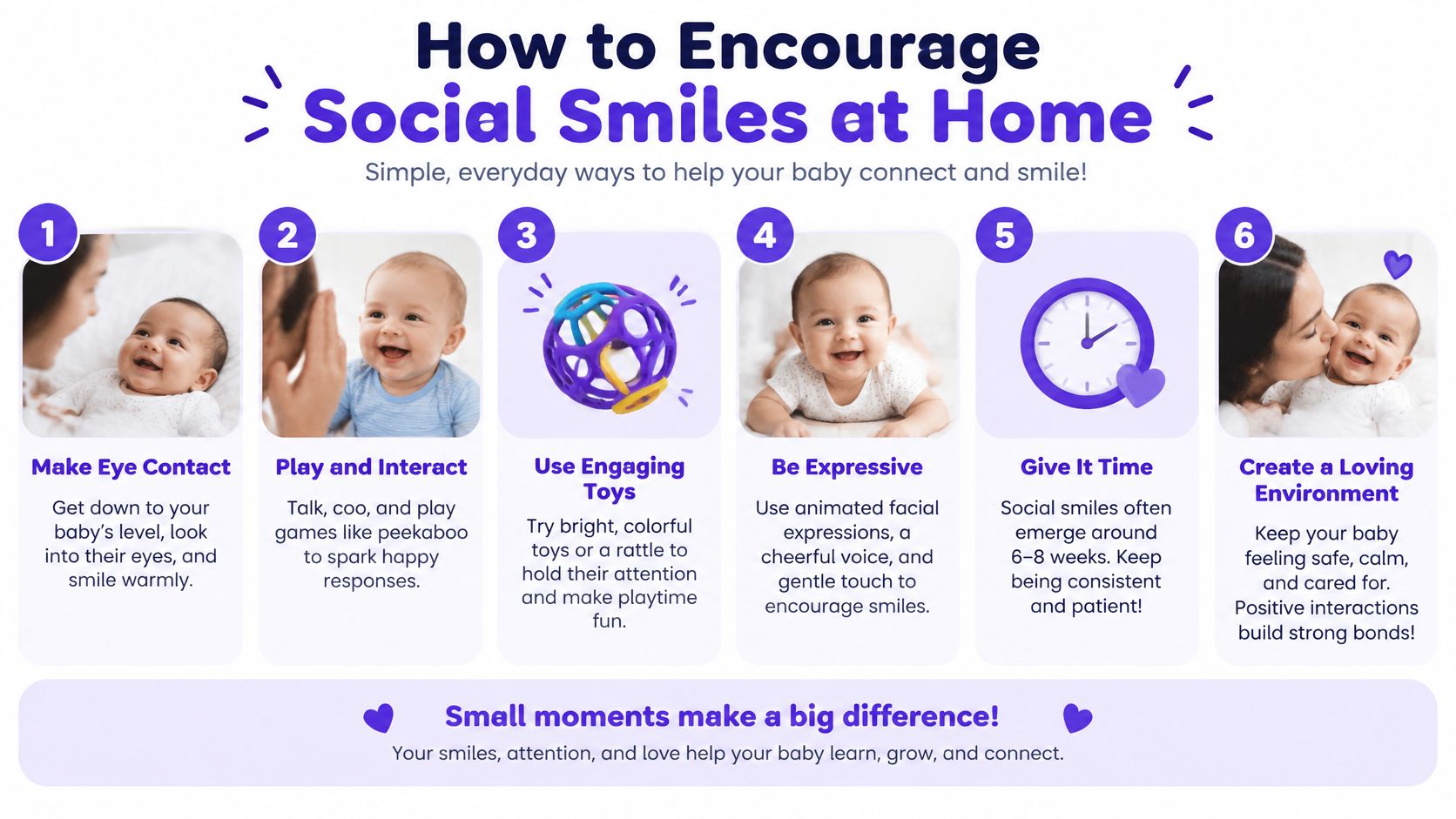
Get face to face while your baby is alert. Close enough that your face fills their view, because a newborn's comfortable focus distance is short. Ten minutes after a feed usually works better than the moment they wake up hungry.
Smile when your baby smiles. Returning the expression teaches the basic rule of conversation. What I do gets an answer.
Copy their sounds, then pause. A coo followed by silence invites a second coo, and that rhythm is the same one smiles ride on.
Talk or sing with a little extra lift. Slightly exaggerated faces and a warmer tone hold attention longer than flat narration.
Stop when they look away or fuss. A turned head is a request for a break. Ending on a good note keeps the game appealing.
Repeat daily with the same two or three caregivers. Familiar faces get faster responses, so consistency does part of the work for you.
CDC's Milestone Moments booklet groups smiling with other 2-month social skills: looking at a caregiver's face, seeming happy when a caregiver approaches, and using smiles or sounds to get or keep attention. Read that list as one package. A smile that arrives with eye contact or a small sound is further along than a smile on its own.
Three things to skip. Don't test your baby on a schedule like a skill being drilled. Don't chase a smile with tickling, which produces a startled reflex rather than a social exchange. And don't read a missing smile as a verdict on your parenting.
Holding your baby against your chest puts you in the right position for these exchanges, and the science-backed newborn holding benefits explain why that closeness helps both of you settle.
Bring Your Observations to the Next Checkup
You're the observer. Your pediatric clinician is the assessor. Keeping those roles separate is what stops ordinary variation from turning into an online diagnosis.
Birth to 6 weeks. Reflex smiles alone aren't a reason to worry, even if they're rare.
Around 2 months. If your baby isn't smiling at all and isn't looking at caregivers, raise it at the visit instead of waiting.
2 to 4 months. Little back-and-forth, few smiles, and limited interest in faces or voices is worth discussing.
About 4 months. No smiling at people at all should be raised promptly.
CDC milestone checklists treat smiling when a caregiver talks or smiles at the baby as part of social-emotional development rather than a pass or fail test, which is the right way to hold it.
Bring notes rather than a memory. Write down how many days a week smiles appear, whether they happen awake or asleep, which caregivers get a response, whether your baby makes eye contact and reacts to your voice, and any recent change in feeding or sleep.
A short video helps more than a description. One to two minutes of a face-to-face play session shows the clinician the timing, the eye contact, and how your baby moves in and out of engagement.
Sorting a developmental question from a same-day concern is its own skill, and our guide to toddler fever and breathing red flags helps you tell the two apart when something feels urgent.
Then book the next well-baby visit, bring the notes and the video, and ask directly about social smiling, hearing, and vision. If your baby arrived early, ask for the assessment in corrected age.
Bornbir is free for parents and matches you with local doulas, lactation consultants, night nannies, and postpartum professionals in about 30 seconds, so you can get an experienced second set of eyes on feeding, sleep, and the small changes you're tracking between checkups. Share what you need once and compare providers side by side, with real reviews from parents near you. Visit Bornbir to get matched and find the right support for this stage.