




Free event
Midwives & Home Birth Midwives Near Me in Airdrie, AB
Answer a few questions, and match directly with top-rated and certified midwives and home birth midwives near you in Airdrie, AB - all in 30 seconds, and it's entirely free!
5.0
Average rating from 105 reviews
28
Midwife providers near Airdrie
From providers and requests on Bornbir. Updated October 2026.
Midwife rates near Airdrie
Prices midwives list on Bornbir · October 2026
Packages
Flat rate · typical $944–$1,488
$1,100
median
Hourly rate
Per hour · typical $35–$40
$40/hr
median
Based on 17 package prices from 8 midwives listed on Bornbir within 150 miles of Airdrie, AB.
See the midwife cost guide28 midwives near Airdrie, AB
Availability by due month
Pick your due month to see which midwives near Airdrie are open for it.
taking clients due in .
Oct 2026Sep 2027
From 5 midwives who confirmed their availability in the last 30 days.
Midwife rates near Airdrie
Midwives set their own prices on Bornbir.
Packages
Flat rate
Near Airdrie
$1,100
$944–$1,488
Alberta
$1,000
$750–$1,300
Canada
$1,000
$458–$1,599
Hourly rate
Per hour
Near Airdrie
$40/hr
$35–$40
Alberta
$40/hr
$35–$40
Canada
$40/hr
$32–$45
Based on 17 package prices from 8 midwives listed on Bornbir within 150 miles of Airdrie, AB. Typical range is the middle 50% of prices. Updated October 2026.
Recent midwife reviews near Airdrie
5.0
105 reviews of 28 midwives
We had a wonderful experience with Angela and are grateful that she was a part of the birth of both of our babies. Angela provided lots of helpful resources during pregnancy to prepare for birth and to use during labour. I appreciated the books she loaned me, the use of her tens machine and I loved having the galaxy projector to create a calming atmosphere at both of my births. During our prenatal sessions she really listened to what we wanted and tailored her support to help us meet our goals. Throughout labour she was calm, reassuring and incredibly encouraging. We are so thankful for Angela and would absolutely recommend her to anyone looking for a compassionate and knowledgeable doula.
— Cassandra, review of Angela Wolfe
We have used Angela for the birth of both of our sons - she was amazing both times, providing personalized care and support and making us feel heard loved and supported through all stages of birth - also support before and after as well. I would highly recommend her services she is calm, peaceful and genuinely cares about her clients.
— Jessalyn, review of Angela Wolfe
Angela is the best! She supported me and my wife through our first and second baby's births. Extremely supportive, on your side, knowledgeable and great to deal with. Easily the best money we spent during this phase of life! Thx again.
— Kevin Brown, review of Angela Wolfe
Midwife FAQs for Airdrie, AB
How much does a midwife cost in Airdrie, AB?
Flat-rate midwife packages listed on Bornbir within 150 miles of Airdrie, AB have a median price of $1,100, and most fall between $944 and $1,488. Hourly rates have a median of $40 per hour, typically $35 to $40. Based on 17 package prices from 8 midwives, updated October 2026.
Are midwives near Airdrie taking new clients?
5 midwives near Airdrie have confirmed their availability in the last 30 days. January 2027 is the most open due month, with 4 midwives taking clients due then. Pick your due month above to see who is open.
Can I hire a virtual midwife in Airdrie, AB?
21 of the 28 midwives near Airdrie (75%) offer virtual support, on its own or alongside in-person care.
What is a midwife?
A midwife is a licensed medical professional who cares for low-risk pregnancies and mothers who want no-to-low intervention deliveries (e.g., home birth, birthing center delivery, water birth).
Can you pay for a midwife with HSA or FSA funds in Airdrie, AB?
Yes, you can use Health Savings Account (HSA) or Flexible Spending Account (FSA) funds to pay for midwifery services, as long as those services are related to medical care. Always check the specific rules of your HSA or FSA plan, as there can be variations in what expenses are considered eligible between different plans.
Are midwives covered by insurance in Airdrie, AB?
Airdrie has no midwives listed within 60 miles, so families may need to look farther afield for care. Midwife support is generally arranged and paid for privately, while reimbursement varies by health plan. Before booking, ask what the provider charges and whether a sliding scale or payment plan is offered, then confirm what your provincial health plan or private insurer reimburses under your specific policy.
What's the difference between a midwife and a doula?
A midwife is a trained health professional who helps women during labor, delivery, and after the birth of their babies. Midwives can provide gynecological examinations, prenatal care, and postpartum support. They are qualified to deliver babies and are trained to handle certain complications during childbirth. A doula, on the other hand, is a non-medical professional who provides emotional, physical, and educational support to a mother who is expecting, is experiencing labor, or has recently given birth. The doula's role is to help women have a safe, memorable, and empowering birthing experience. They are known for their continuous support, beginning during pregnancy and lasting through the postpartum period. While midwives have a broad scope of practice that is clinical in nature, doulas specialize in the non-clinical aspects of care. They might be preferred by mothers who are looking for continuous bedside support that is not typically provided by the medical staff. Doulas are known for their advocacy for the mother's wishes during childbirth, which can be especially valuable in hospital settings where the mother may desire a birth plan that deviates from standard procedures.
What's the difference between a midwife and an OBGYN?
A midwife is a healthcare professional who specializes in low-risk pregnancies, childbirth, and postpartum care. They typically emphasize a natural and holistic approach, focusing on minimal medical interventions. Midwives often work in birth centers, at home births, or in hospitals, depending on their certification and location. They provide personalized care and support throughout pregnancy and labor and may also assist with breastfeeding and newborn care. An OBGYN is a medical doctor who has completed extensive training, including medical school and a residency, specializing in obstetrics and gynecology. They care for all types of pregnancies, including high-risk cases, and are trained to handle medical complications, perform surgeries (like C-sections), and provide comprehensive reproductive healthcare beyond pregnancy. OBGYNs typically work in hospitals or clinics and can manage a broader range of medical situations.
Can I see a midwife for an IVF pregnancy?
Yes, you can see a midwife for an IVF pregnancy. Midwives are trained to provide care during pregnancy, including for those conceived through IVF, as long as the pregnancy is low-risk. They can help with prenatal care, labor, and delivery, and provide postpartum support. However, if your IVF pregnancy is considered high-risk or involves complications, you may need to work with an obstetrician in collaboration with the midwife to ensure proper care. Always consult with your healthcare provider to determine the best care plan for your situation.
How much does it cost to use Bornbir?
Bornbir is entirely free for new and expecting parents to use. To begin, simply tell our community of midwives what you need in your job posting and let the right providers come to you. You can then engage in direct conversations with top-rated midwives to learn more and make informed decisions. Our goal is to facilitate a seamless and accessible experience for you as you embark on this transformative journey. Get started.
How to find a midwife in Airdrie, AB
-
01
Tell us your midwife needs
Share details about your due date, birth plan, preferred birth setting, and any special needs.
-
02
Match with midwives
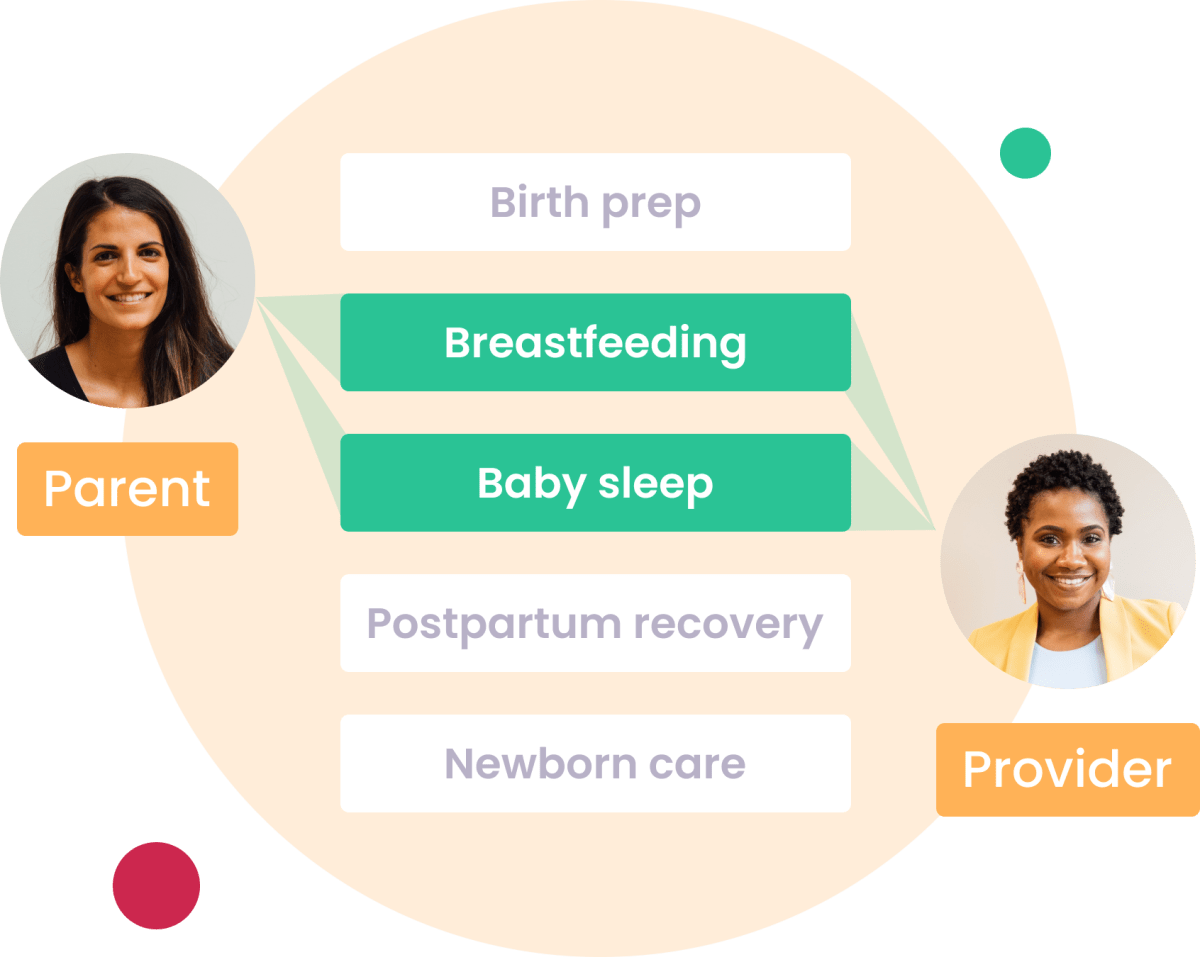
We'll instantly match you with midwives in Airdrie from our network who fit your birth plan and preferences.
-
03
Start messaging
Chat with your matched midwives, compare options and schedule consultations to find the right fit.
Upcoming classes
Online classes from Bornbir providers that you can join from Airdrie, AB.
- Learn more
- Learn moreFree event
- Learn moreFree event